TESTS & EXPERIENCES
Canon 10x42 L IS WP: A Real-World Review
Currently the best binoculars on the market for me
As a wildlife photographer, I need more than a sharp image: binoculars must be ready immediately, provide a steady handheld view and perform reliably in changing weather. This is exactly where the Canon 10x42 L IS WP impressed me.
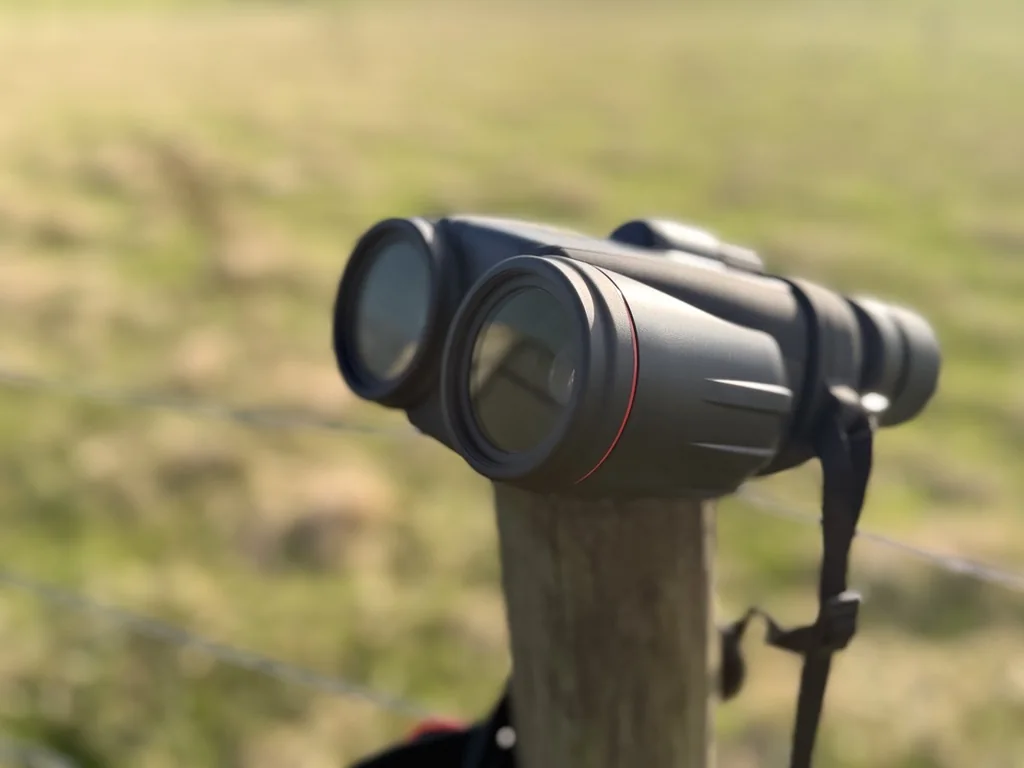
Let me say this from the outset: for my requirements, the Canon 10x42 L IS WP is currently the best pair of binoculars on the market. This is, of course, a personal assessment. For intensive wildlife observation, however, no other model offers me the same combination of first-class optics, strong low-light performance, robust construction and, above all, exceptional image stabilisation.
For me, image stabilisation is not merely a convenience but a genuine working tool.
Image stabilisation makes the difference
At ten-times magnification, even small hand movements become clearly visible. The image shakes, fine structures blur and details on a distant animal become difficult to identify with confidence. As soon as I switch on the stabiliser, the view settles immediately – the subject appears almost fixed in place.
Without a tripod, I can recognise plumage, contours and small movements that would easily disappear in an unsteady view. Especially with distant birds, I can observe an animal for longer, more comfortably and follow its behaviour more precisely.
Canon uses gyro sensors to detect movement and a moving Vari-Angle Prism to correct the optical path. The specified correction angle is ±0.8 degrees. What matters to me, however, is the result – and it is simply excellent.
L-series optical quality
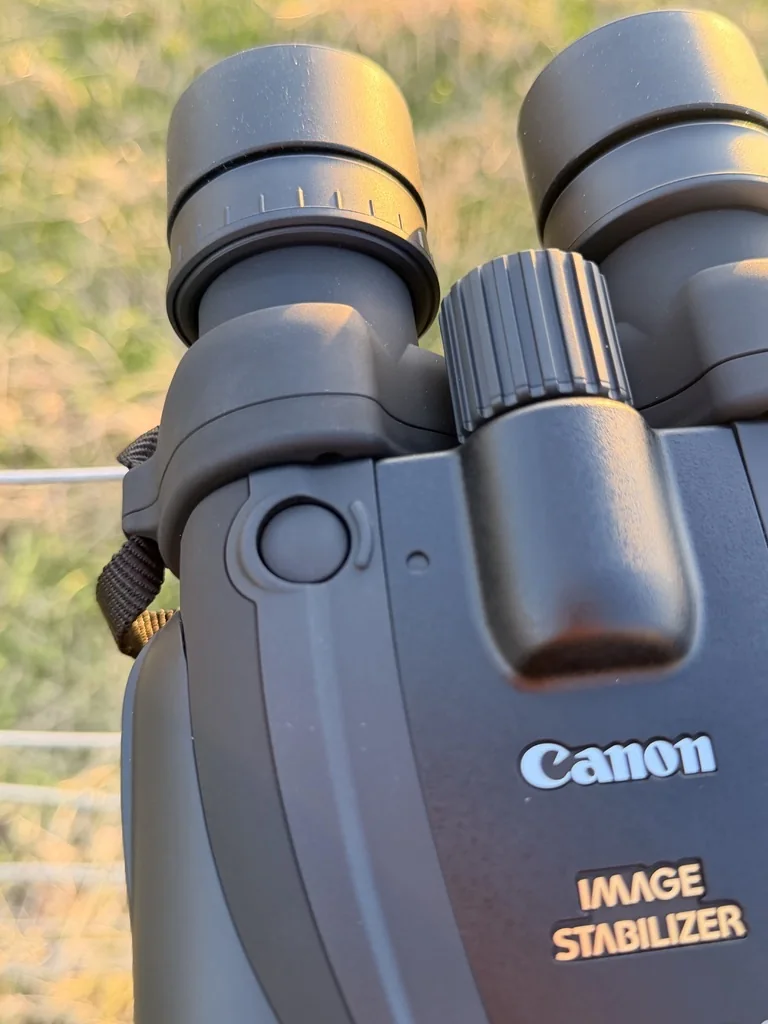
Even without the stabiliser, the binoculars deliver very high optical quality. Two UD lens elements on each side reduce colour fringing and contribute to a clear, high-contrast image.
Colours appear natural, fine details are rendered cleanly and the image remains convincing well into the edges. The combination of ten-times magnification and 42-millimetre objective lenses provides ample reach without narrowing the field of view too severely. A 4.2-millimetre exit pupil keeps observation comfortable in the early morning, evening or beneath dense foliage.
Find wildlife faster and observe it better
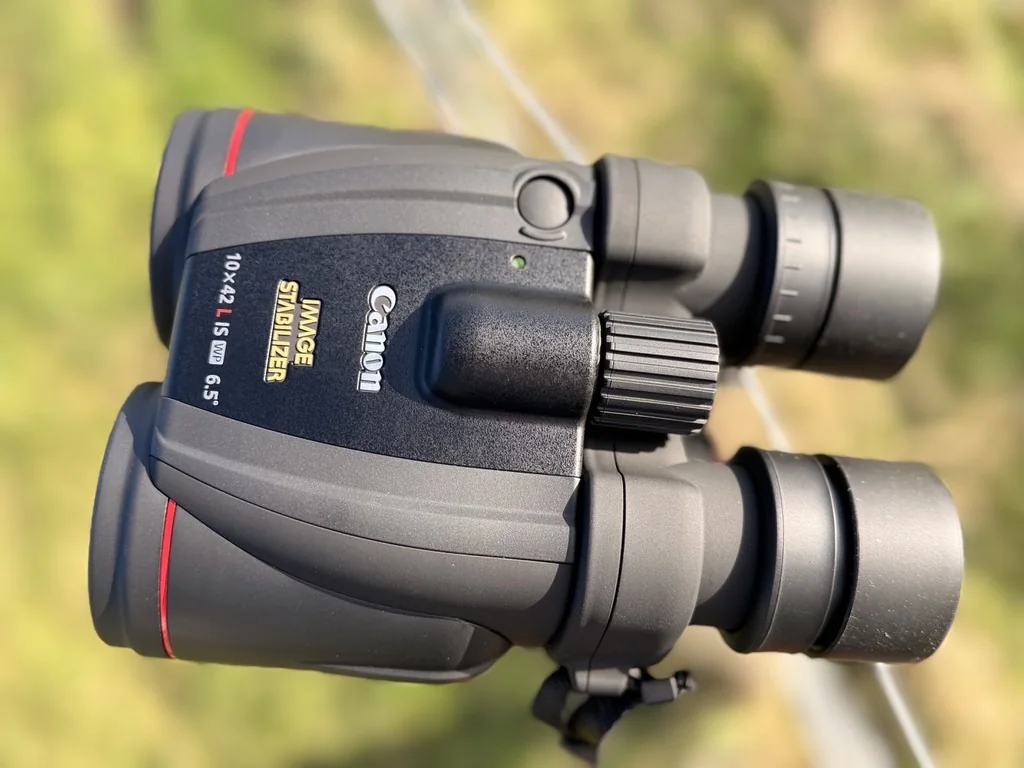
The real field of view is 6.5 degrees, or around 114 metres at a distance of 1,000 metres. I find this very comfortable for ten-times binoculars. Birds are easier to locate and track in motion.
This is where the considered interaction of a wide field of view, good edge sharpness and stabilisation becomes apparent: first I scan a larger area. Once I have found the animal, I activate the stabiliser and concentrate on the details. The close-focus distance of around 2.5 metres also allows observations at short range.
Build quality and handling
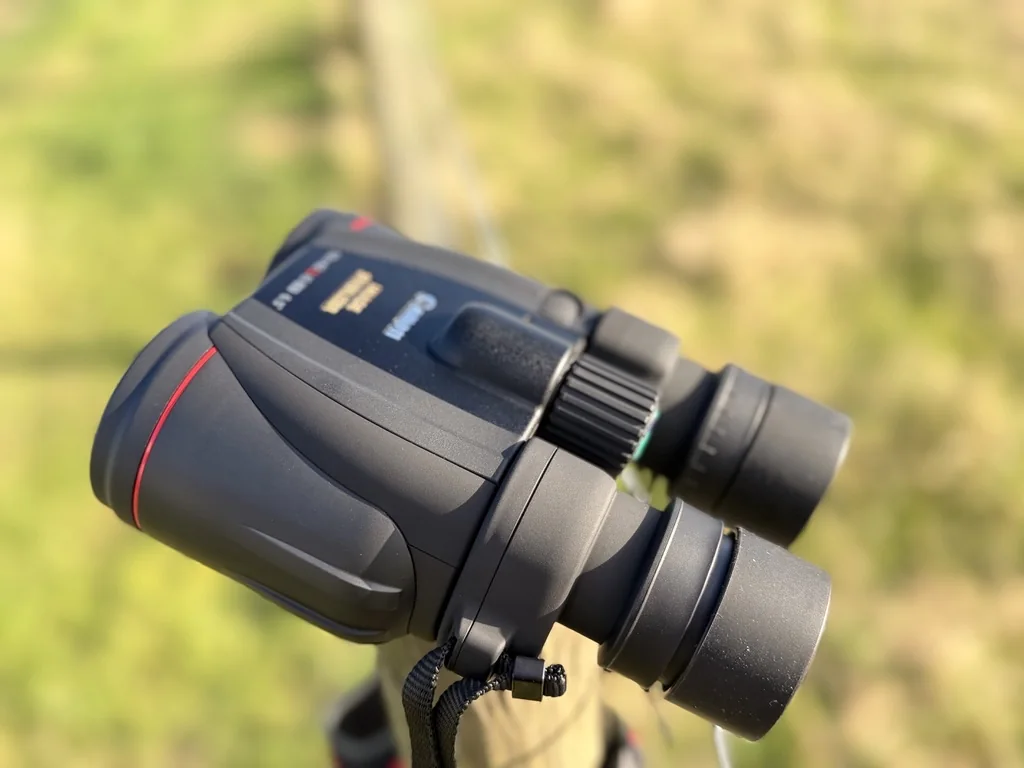
The Canon feels very robust and is built for demanding outdoor use. Its grippy rubber armour sits securely in the hands. The binoculars are water protected to JIS 7, making them ready for rain and difficult conditions.
The large focus wheel is easy to reach and precise to operate. The dioptre adjustment can be locked. Sixteen millimetres of eye relief and twist-up eyecups allow individual adjustment.
Power comes from two standard AA batteries. This is practical when travelling because replacements are available almost everywhere. The binoculars can still be used without batteries; only stabilisation is unavailable.
Are there any drawbacks?
The Canon 10x42 L IS WP is neither small nor light. At around 1,110 grams without batteries, it weighs considerably more than many conventional 10x42 binoculars. Anyone travelling light or carrying it all day on a simple neck strap will notice the weight. A good harness can be worthwhile.
The price is firmly in the premium class as well. You are paying for high-quality optics, sophisticated stabilisation and weatherproof construction. The design is functional rather than elegant. That does not bother me, because ergonomics and performance are what count outdoors.
Key technical specifications
| Feature | Canon 10x42 L IS WP |
|---|---|
| Magnification | 10× |
| Objective diameter | 42 mm |
| Real field of view | 6.5° · approx. 114 m at 1,000 m |
| Exit pupil | 4,2 mm |
| Eye relief | 16 mm |
| Close-focus distance | ca. 2,5 m |
| Image stabilisation | Vari-Angle-Prisma · ±0,8° |
| Water protection | JIS 7 |
| Power supply | 2 × AA batteries |
| Weight | approx. 1,110 g without batteries |
| Dimensions | ca. 137 × 175,8 × 85,4 mm |
Technical specifications are based on manufacturer information. The assessment reflects my personal experience in nature and wildlife observation.
MY CONCLUSION
Currently the best choice for my wildlife photography
The Canon 10x42 L IS WP has not only met my expectations but clearly exceeded them. The optics are excellent, the build robust, and image stabilisation fundamentally changes the viewing experience.
Its weight and price should not be underestimated. For me, however, the benefits clearly outweigh them: I find animals faster, recognise more detail and can observe far more comfortably.
Once you have used truly good stabilised binoculars, you will be reluctant to go without them again.