TESTS & EXPERIENCES
GPO PASSION APO 20–60x85: A Real-World Review
Together with the GPO Carbon Fiber Tripod & Ballhead
Observing wildlife over long distances demands reach, fine detail and a completely steady image. The GPO PASSION APO 20–60x85 combines a large 85 mm objective with APO optics and, together with the lightweight carbon tripod, forms a convincing system for coasts, wetlands and open country.
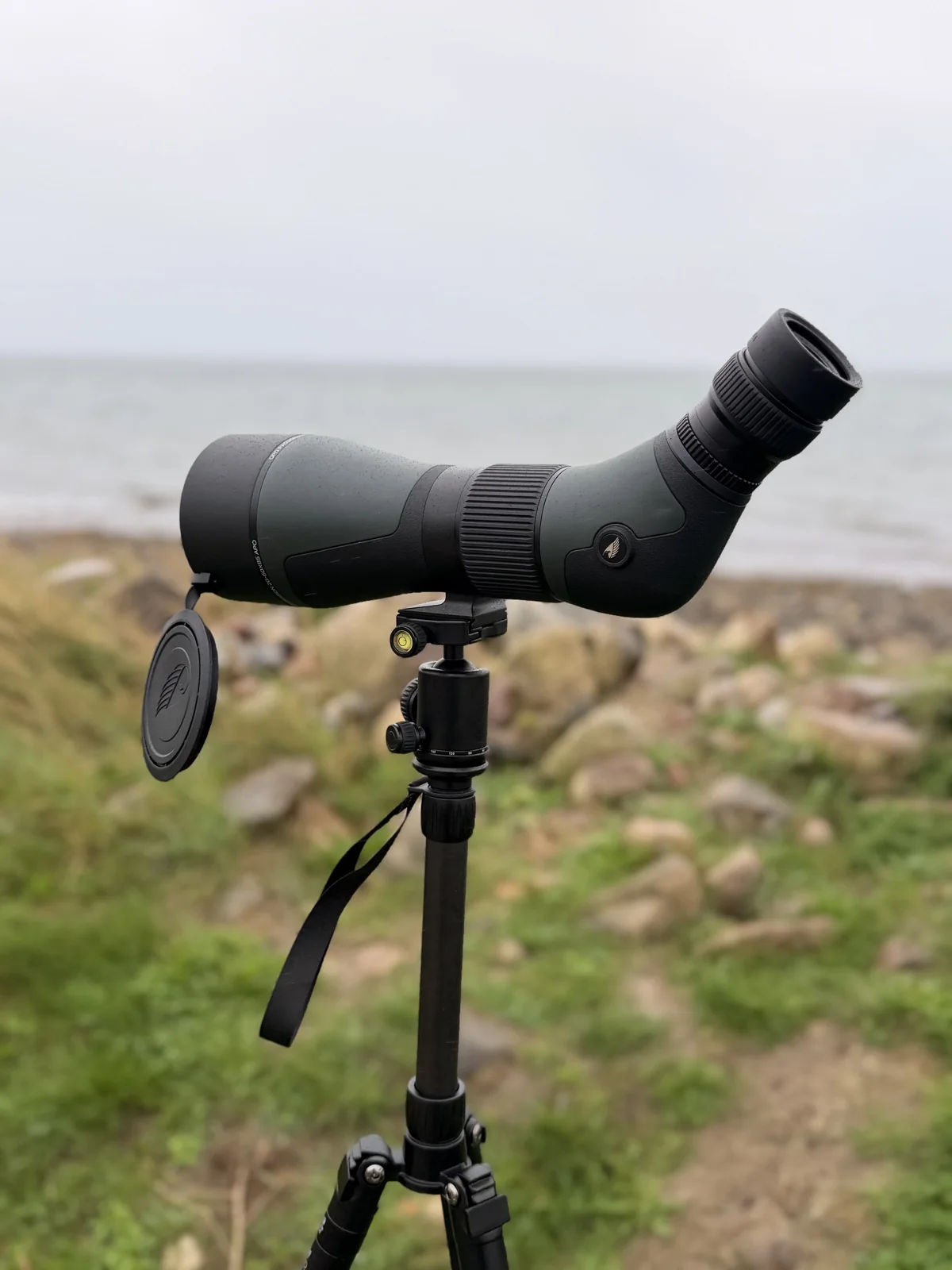
Binoculars remain my fastest tool for scanning an area. But when a bird sits far out on the water or I need to identify plumage details reliably, a spotting scope is in another league. That is exactly why I tested the GPO PASSION APO 20–60x85 together with the matching GPO Carbon Fiber Tripod with Ballhead .
The great strength of this set is the combination of high detail resolution and a comparatively mobile support system.
Optical performance: steady, bright and detailed
The 20–60× zoom range is highly versatile in practice. At 20× I find subjects quickly and retain a good overview. For distant birds or small details, I can then zoom in smoothly. The 85 mm objective gathers plenty of light and delivers a pleasantly bright image, especially at medium magnification.
The apochromatic optics are designed to reduce colour fringing. In my experience, contours remain clean, colours natural and fine structures clearly visible. At 60×, atmospheric shimmer, rain and tripod stability naturally become more apparent – unavoidable with a scope in this performance class.
Focusing and handling
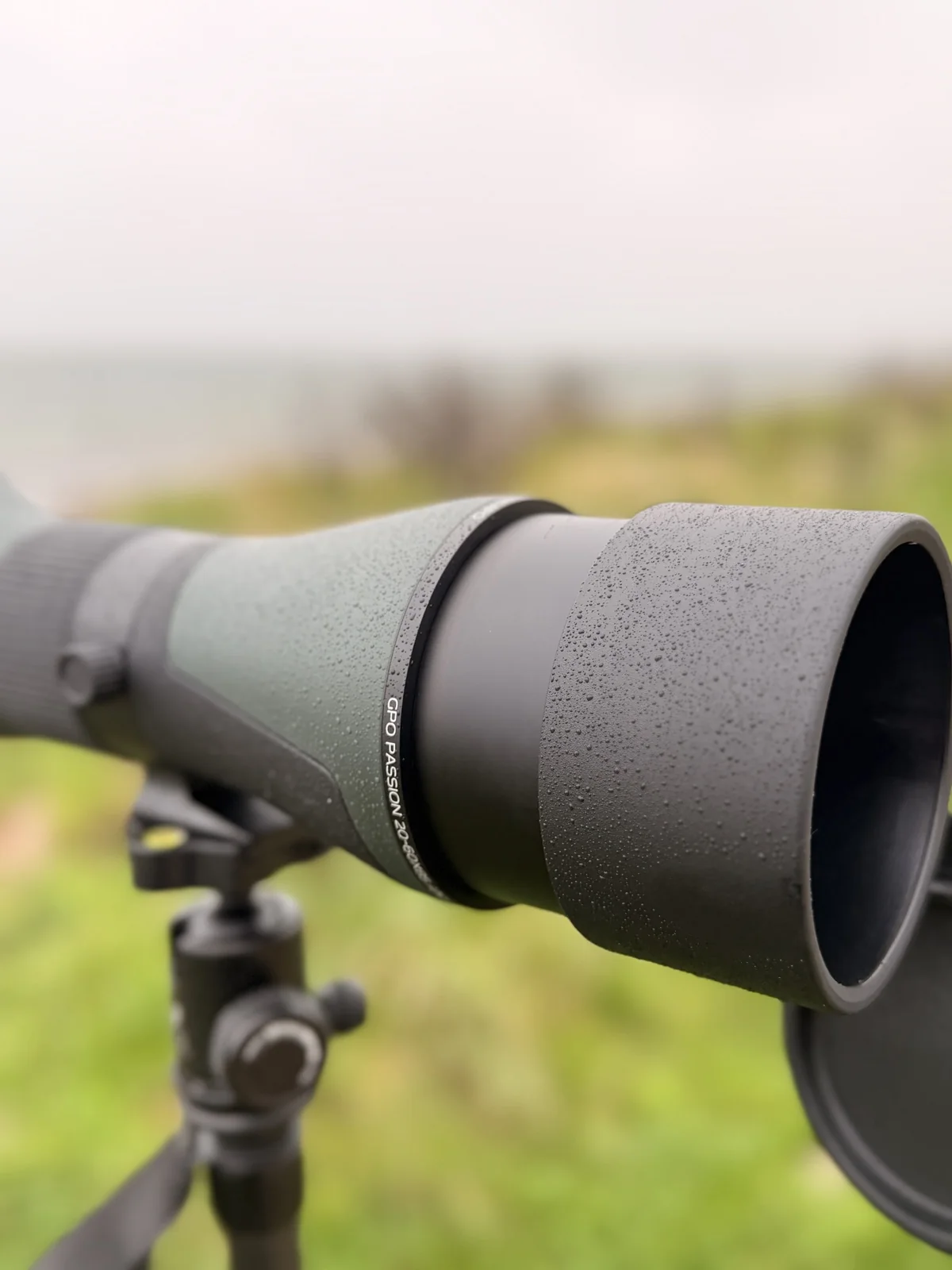
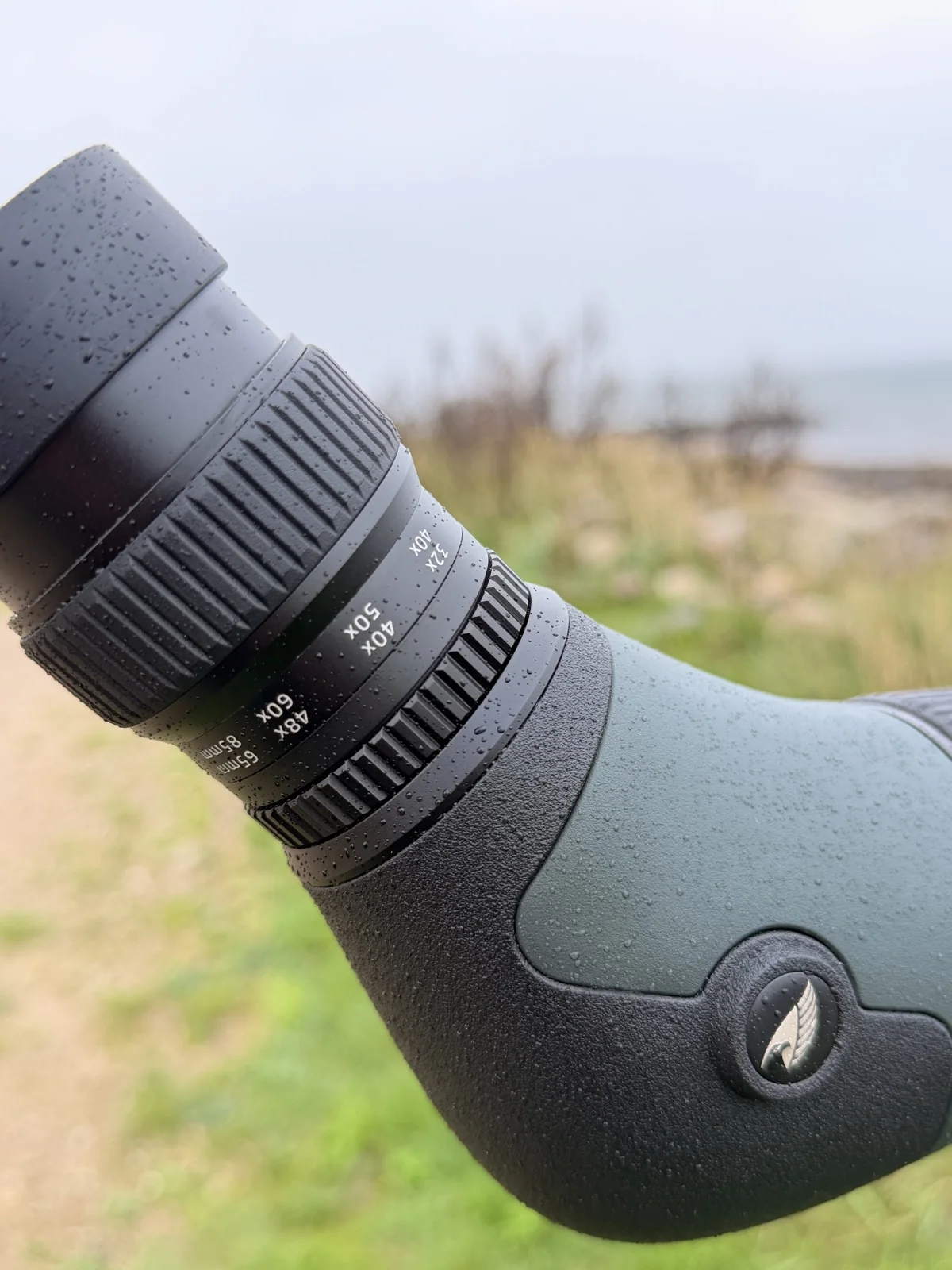
The broad focus ring is easy to grip even with wet hands. GPO uses a brass helical gear system designed for precise, smooth focusing. I particularly like not having to search for a small control wheel: my hand finds the large ring intuitively.
The angled eyepiece supports a relaxed posture, especially when several people observe in turn. The rotating, lockable tripod foot lets the scope be positioned laterally. The extending sunshade helps with side light and also protects the large front lens from rain.
Robust in real coastal weather
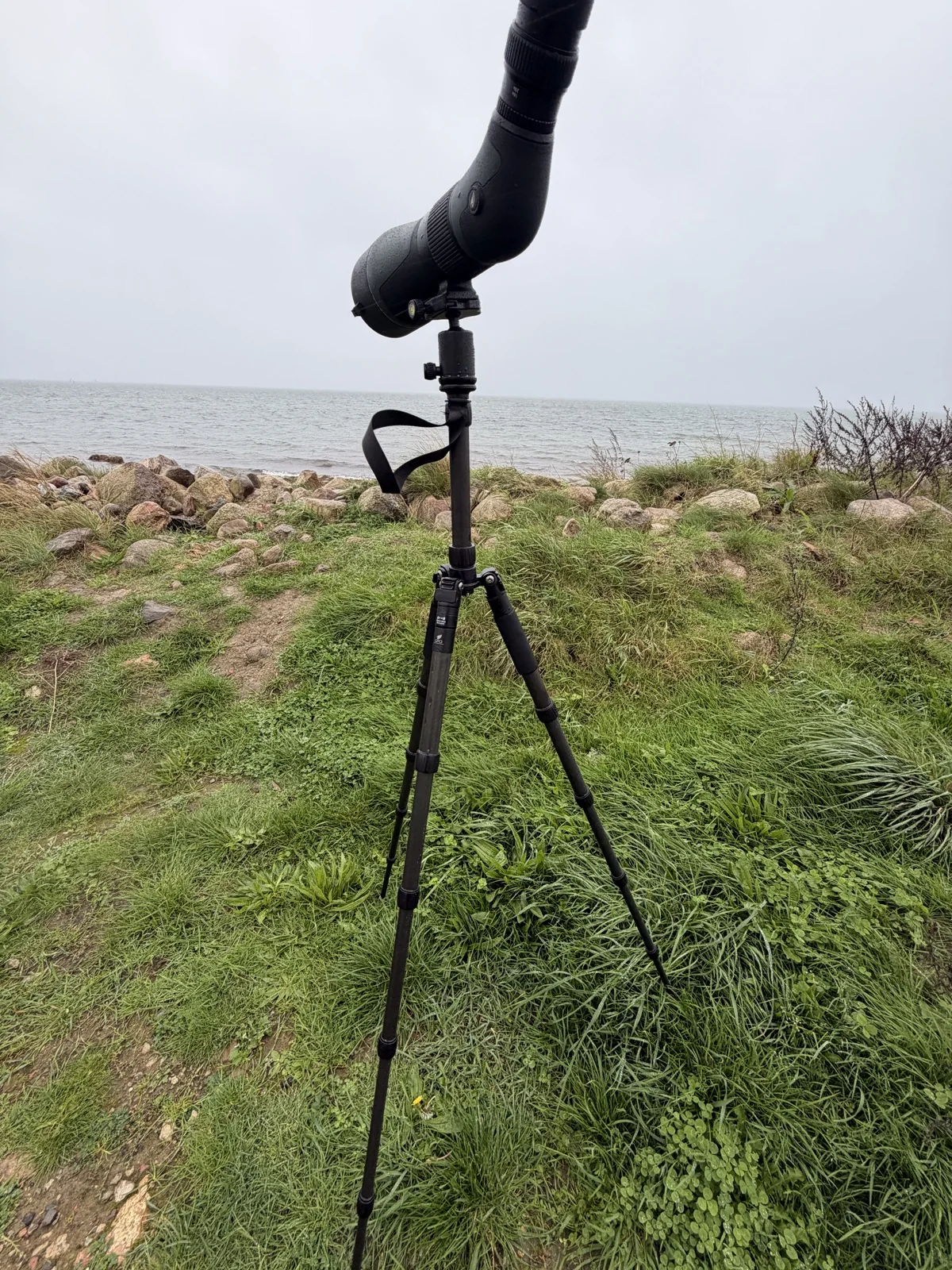
I took these photographs in wet, windy weather on the Baltic coast – exactly the conditions in which equipment must inspire confidence. The internal magnesium body, rubber armour and smoothly operating controls feel robust. Raindrops on the body, eyepiece and tripod show that this set is not intended only for fair-weather days.
The Carbon Fiber Tripod with Ballhead
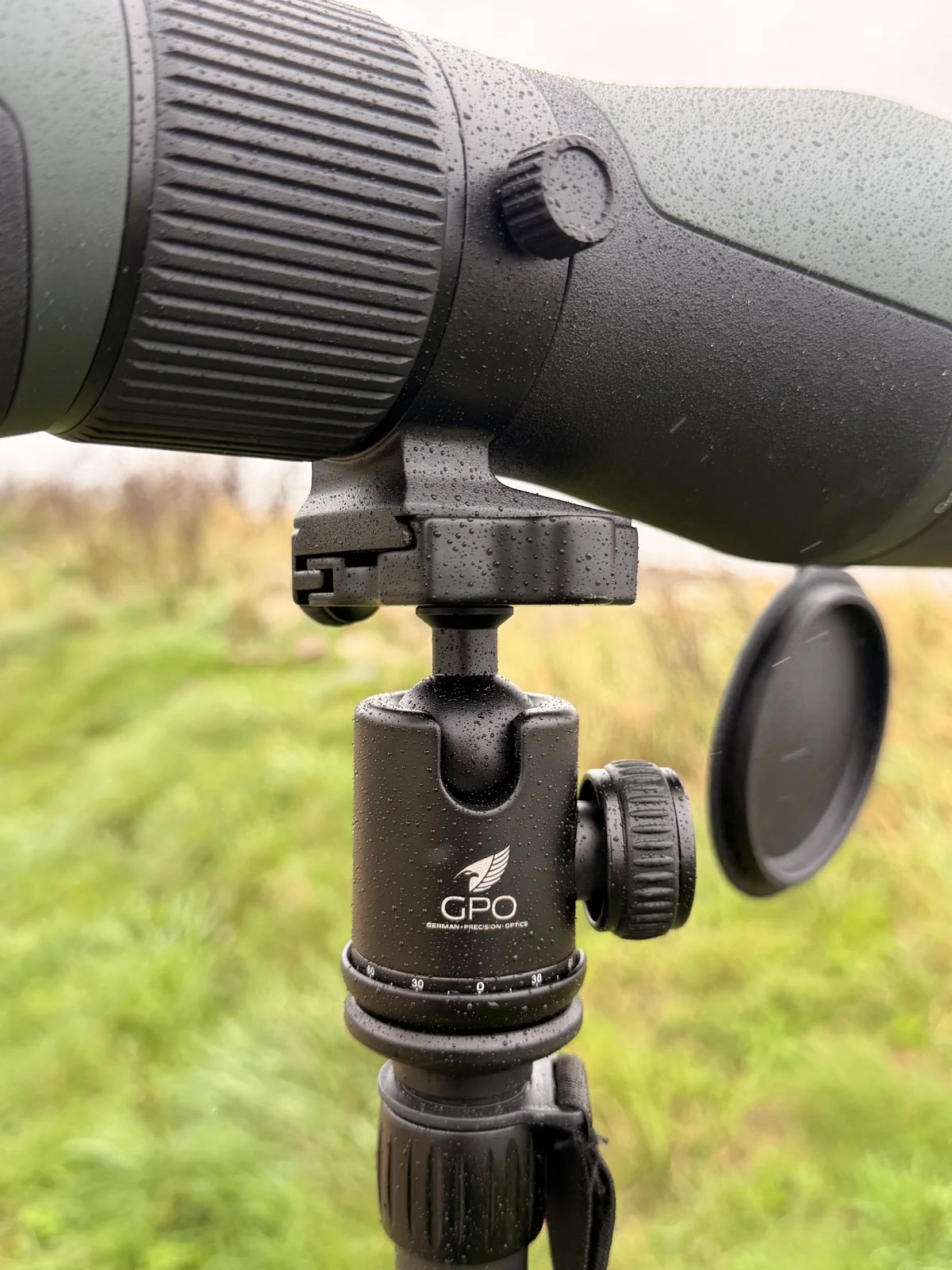
A spotting scope is only as good as its tripod. According to GPO, the Carbon Fiber Tripod weighs around 1,190 grams, reaches about 152 centimetres and folds to roughly 35 centimetres. Five leg sections use twist locks, with a stated maximum load of 15 kilograms.
The fitted 3D ball head with quick-release plate allows fast positioning. It feels direct when scanning a coastline. At 60×, however, a ball head requires a steady hand; a video head would be smoother for extended panning. In return, the GPO system remains light, compact and versatile, and one leg can be used as a monopod.
What I like less
At around 1.8 kilograms for the scope plus tripod and head, the complete package is portable but not ultralight. At maximum magnification, every touch and gust of wind is visible. It pays to extend the centre column as little as possible and place the legs securely.
The ball head is very versatile, but less fluid than a dedicated two-way or video head when tracking moving birds for long periods. For observation, travel and occasional camera use, I still find the compromise convincing.
Technical specifications at a glance
| Feature | Specification |
|---|---|
| Magnification | 20–60× |
| Objective diameter | 85 mm |
| Field of view at 1,000 m | approx. 36–20 m |
| Eye relief | approx. 20.5–18.5 mm |
| Scope length / weight | approx. 42.9 cm / 1,786 g |
| Tripod height | up to approx. 152 cm |
| Folded length / tripod weight | approx. 35 cm / 1,190 g |
| Load capacity | up to 15 kg |
| Tripod head | 3D ball head with quick-release plate |
Technical specifications are based on information supplied by GPO; some metric scope values were converted from the official US figures. The assessment reflects my personal practical experience.
Questions about the GPO PASSION APO 20–60x85
Is the GPO PASSION APO 20–60x85 suitable for bird watching?
It suits the way I observe distant birds on coasts, lakes and open landscapes. The review covers image detail, handling and the GPO carbon tripod in wet, windy weather on the Baltic coast.
When do I use 20x and when do I use 60x magnification?
At 20×, subjects are easier to find and follow. I can then increase magnification to examine plumage features or more distant birds. At 60×, atmospheric shimmer, wind and contact with the scope also become more noticeable. The highest magnification is therefore not always the best choice.
Which tripod fits the spotting scope?
In this report I am using the GPO Carbon Fiber Tripod with the associated ball head. It is a transportable system for my observation use. If you frequently pan at high magnification, you should also consider a fluid or video head. A stable stand and a central column that is as little extended as possible are important, especially at 60x.
Does the spotting scope replace binoculars?
For me both complement each other. I quickly scan an area with binoculars. I use the spotting scope when I want to take a closer look at a subject that is further away. Stabilized binoculars and a spotting scope on a tripod solve different tasks.
Further experiences with observation optics and tripod heads
These additional reports from my practice will help you decide between binoculars and spotting scopes and between different tripod heads. The products were not tested here in a direct comparison under identical conditions.
MY CONCLUSION
A strong observation set for long distances
The GPO PASSION APO 20–60x85 impresses me above all with its detailed, low-fringing image and flexible magnification. For birdwatching on coasts, lakes or open landscapes, it provides exactly the extra reach that binoculars cannot offer.
The carbon tripod complements the scope well: it is light enough to carry, quick to set up and versatile thanks to the ball head. Anyone who pans frequently at 60× may prefer a specialised head, but as a mobile complete system I find the combination highly successful.
Plenty of reach, convincing optics and a support system I will actually carry outdoors.