TESTS & EXPERIENCES
3 Legged Thing Ridley & AirHed Cine CC Review
With AirHed Cine CC, ZOOEY QD and AXIS QD
A tripod for large camera equipment must stand securely, level quickly on uneven ground and work without awkward adjustments at the decisive moment. This is exactly where the Ridley system from 3 Legged Thing comes in.
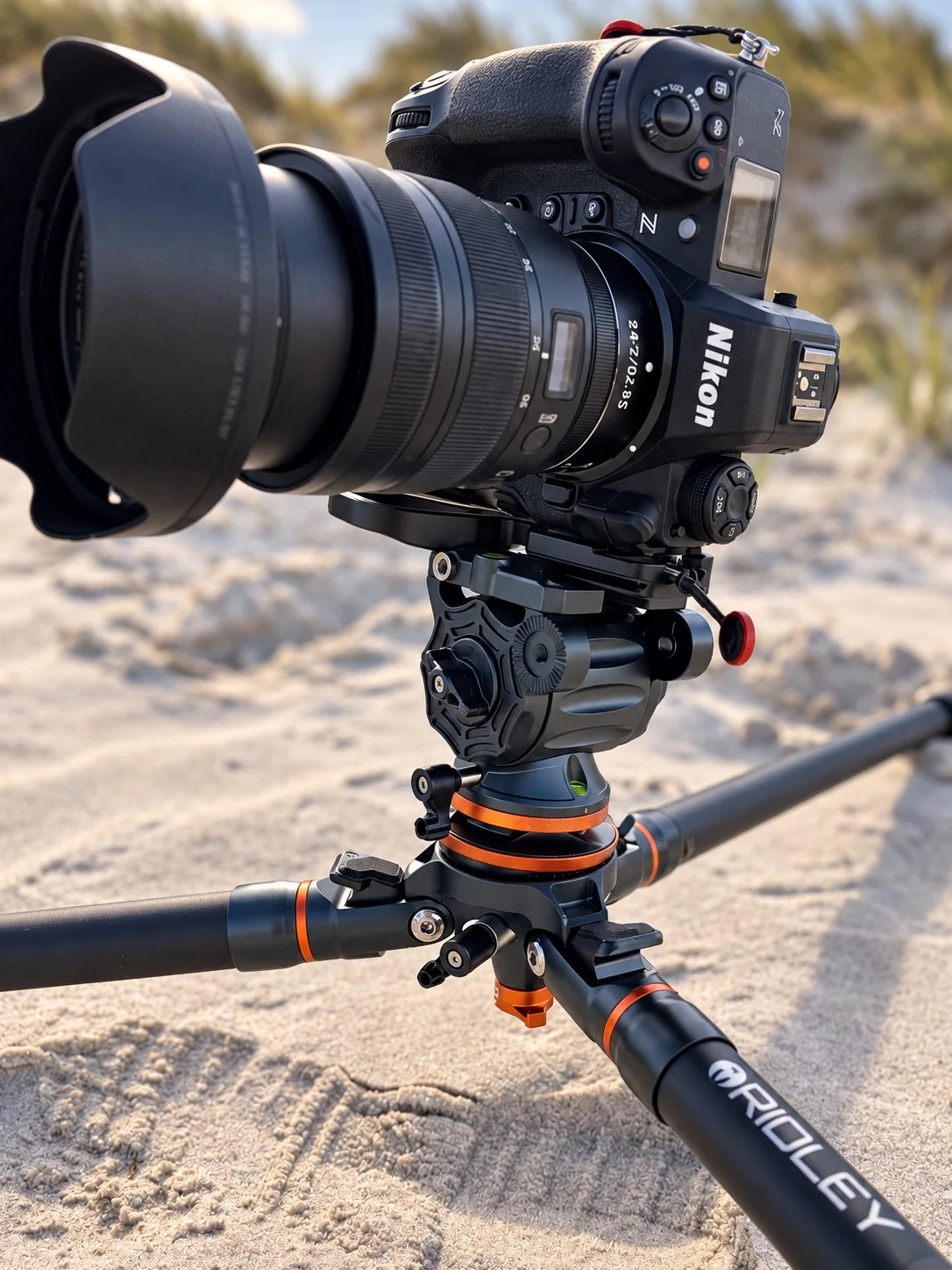
A distinctive and well-designed system
For wildlife and landscape photography, a tripod has to do more than simply support a camera. It must remain secure with a large telephoto lens, level quickly on uneven ground and work without awkward adjustments at the decisive moment. I used the Ridley Carbon Fibre Levelling Base Tripod with the AirHed Cine CC, the ZOOEY QD L-Bracket for the Nikon Z8 and an AXIS QD camera strap.
The design stands out immediately. Dark carbon and metallic surfaces feel premium, while the copper and orange accents provide carefully judged contrast. I particularly like these colour accents. They give the equipment its own character without looking playful, and they also serve a practical purpose: controls, locks and connection points are easy to identify.
To me, the combination of dark carbon, precisely machined components and warm colour accents is one of the most attractive designs in photographic accessories.
Ridley: stability comes first
Ridley is a three-section carbon tripod with a maximum tube diameter of 29 millimetres. Its construction prioritises stability rather than the smallest possible packed size. That matters at long focal lengths: the less the setup moves in wind, when touched or while tracking, the steadier the viewfinder image remains.
Large, grippy levers adjust the leg angles quickly, allowing both a normal working height and a position close to the ground. All three legs are removable and can be used as monopods or boom arms. With separately available short feet, the tripod can also become a tabletop or low-level support.
The manufacturer states a maximum height of 154.5 centimetres, a minimum height of 15 centimetres and a 14-kilogram load capacity for the tripod. At 1.67 kilograms, Ridley is not an ultralight travel tripod, so the weight must be considered on longer hikes. In return, it provides exactly the composure and security I expect with a Nikon Z8 and a large telephoto lens.
The levelling base is the decisive advantage
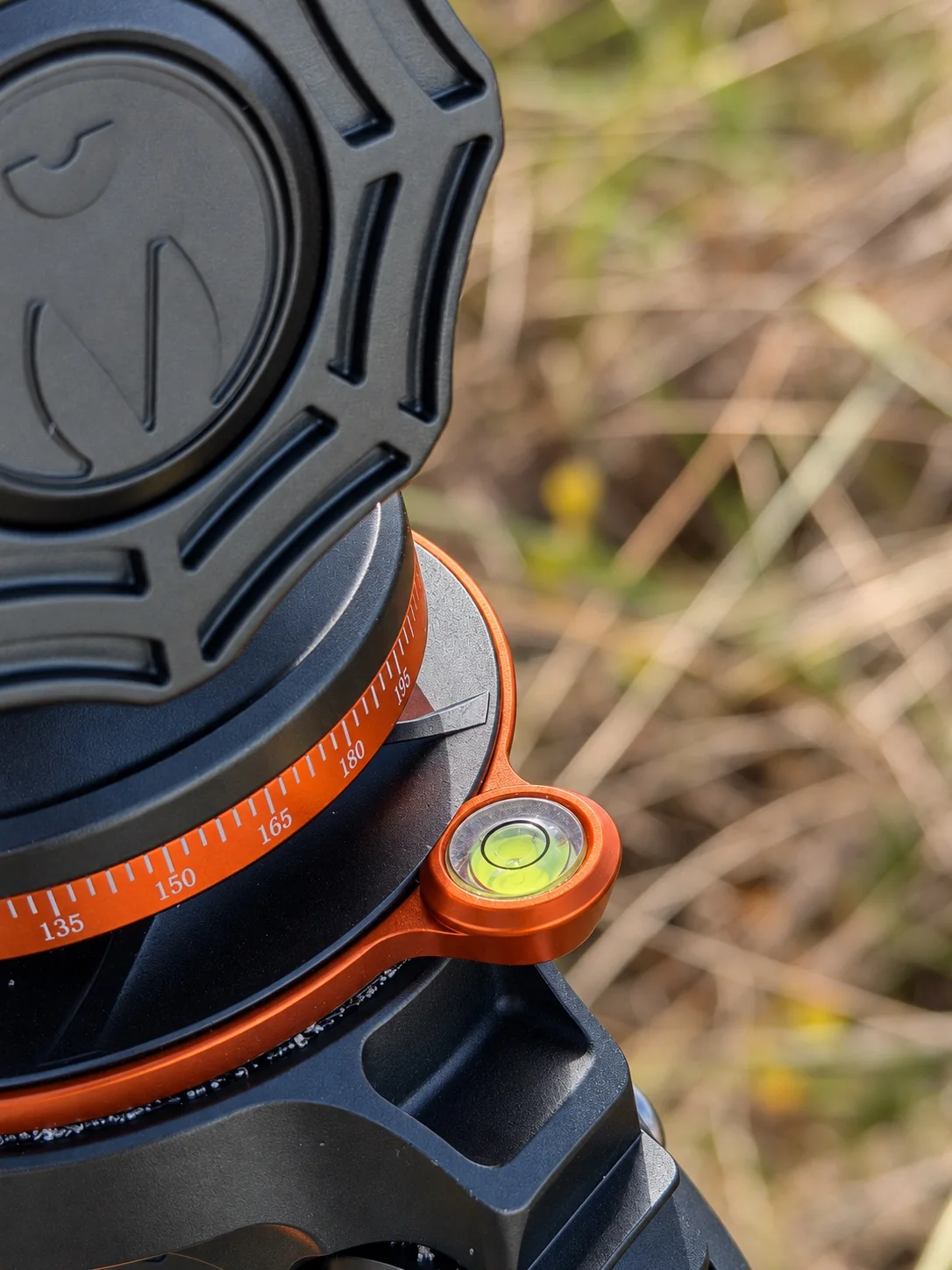
The integrated levelling base is especially important. It allows correction of up to ten degrees in every direction. Instead of readjusting each leg, I can level the entire unit directly at the base and lock it again. A rotating bubble level can be positioned so that it remains visible with the camera mounted.
This levelling plate is a major advantage for landscapes. A straight horizon is especially important at the sea, lakes and open scenery. It is even more valuable for panoramas: once the base is accurately levelled, the camera remains on a horizontal plane while panning, reducing correction work and misalignment between frames.
The levelling base also saves time on dunes, slopes and rocky ground. I can first position the legs securely and then fine-tune the horizon. To me, this is more than a convenience feature; it is one of the strongest arguments for this tripod.
AirHed Cine CC: controlled movement
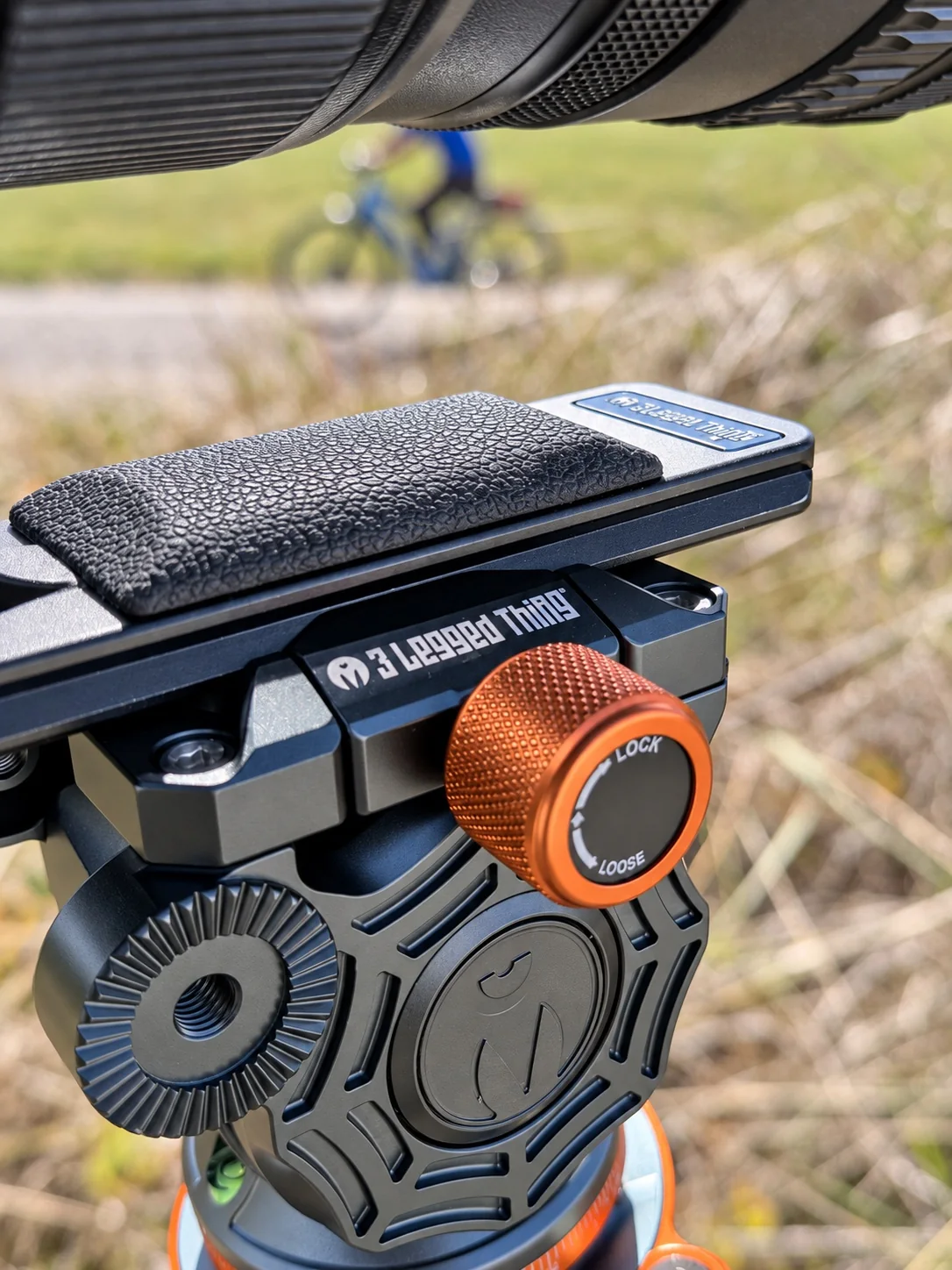
The AirHed Cine CC is a compact fluid head with separate pan and tilt controls. According to the manufacturer, it supports equipment up to ten kilograms, offers full 360-degree rotation and 165 degrees of total tilt. Its Arca-Swiss-compatible clamp rotates by 90 degrees for use with L-brackets and camera cages.
With long lenses, I particularly like the controlled movement. The camera can be guided cleanly without the head feeling nervous or imprecise. This is useful not only for video; smooth tilt movement also helps keep birds in the viewfinder while observing and photographing them.
The large quick-release plate provides plenty of contact area for a lens foot. The distinctive orange clamping knob is easy to grip and recognise. The side plate's spiderweb design is typical of 3 Legged Thing and suits Ridley very well.
ZOOEY QD: a purpose-built L-bracket for the Nikon Z8
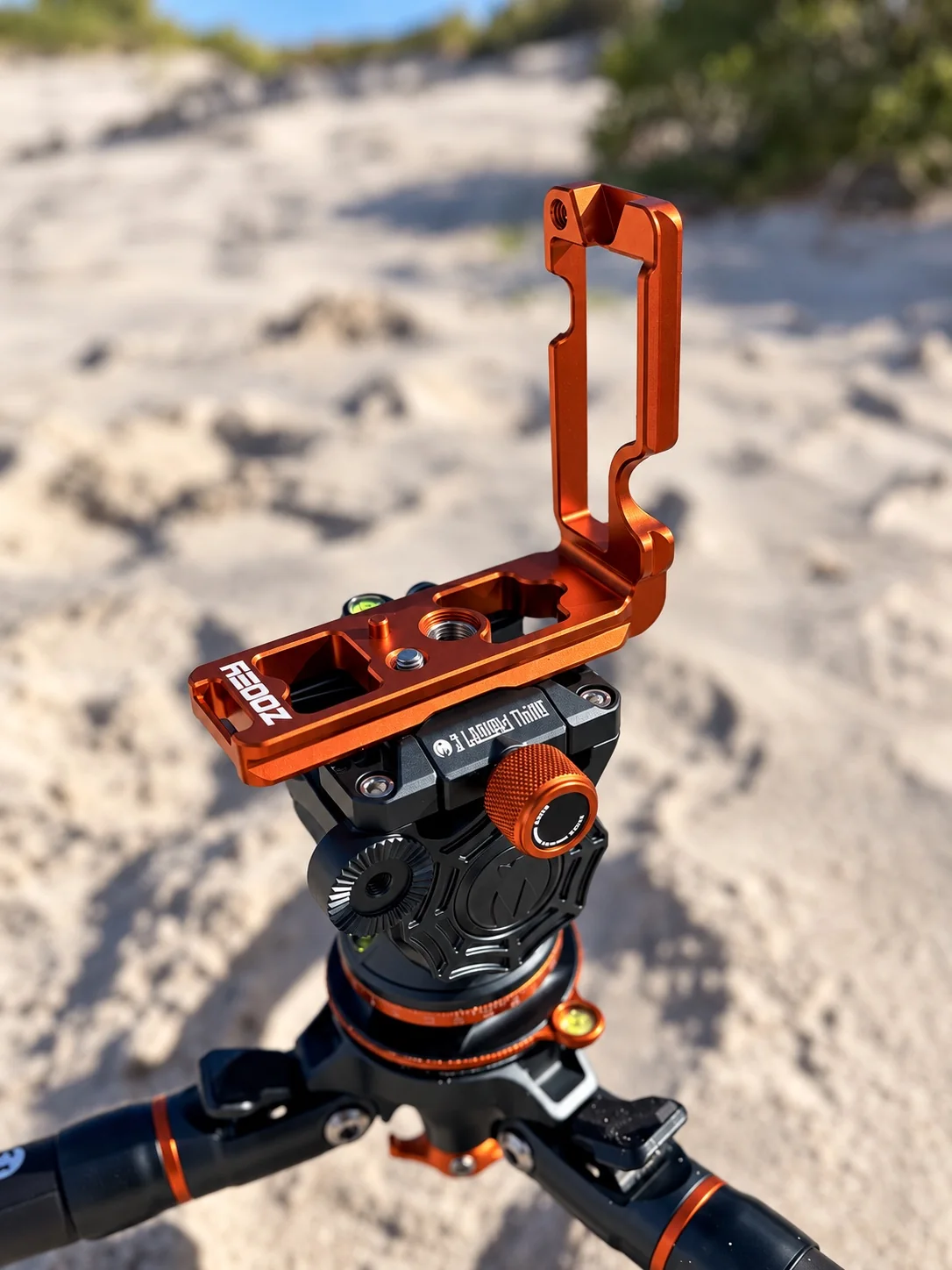
ZOOEY QD was designed specifically for the Nikon Z8. Its 38-millimetre-wide Arca-Swiss connection allows the camera to be placed directly into a compatible clamp in landscape or portrait orientation. When changing orientation, the camera remains above the tripod axis instead of tilting to the side of the head.
The fit feels very precise. The battery and connection compartments remain accessible, as do the rear tilting display, strap lug and focus-mode button. Several threads allow further accessories to be attached. At around 105 grams, the machined magnesium component adds little weight. I particularly like the copper finish here as well: it turns the L-bracket into a visible accent on the black Nikon Z8.
AXIS QD: quickly from carrying to tripod use
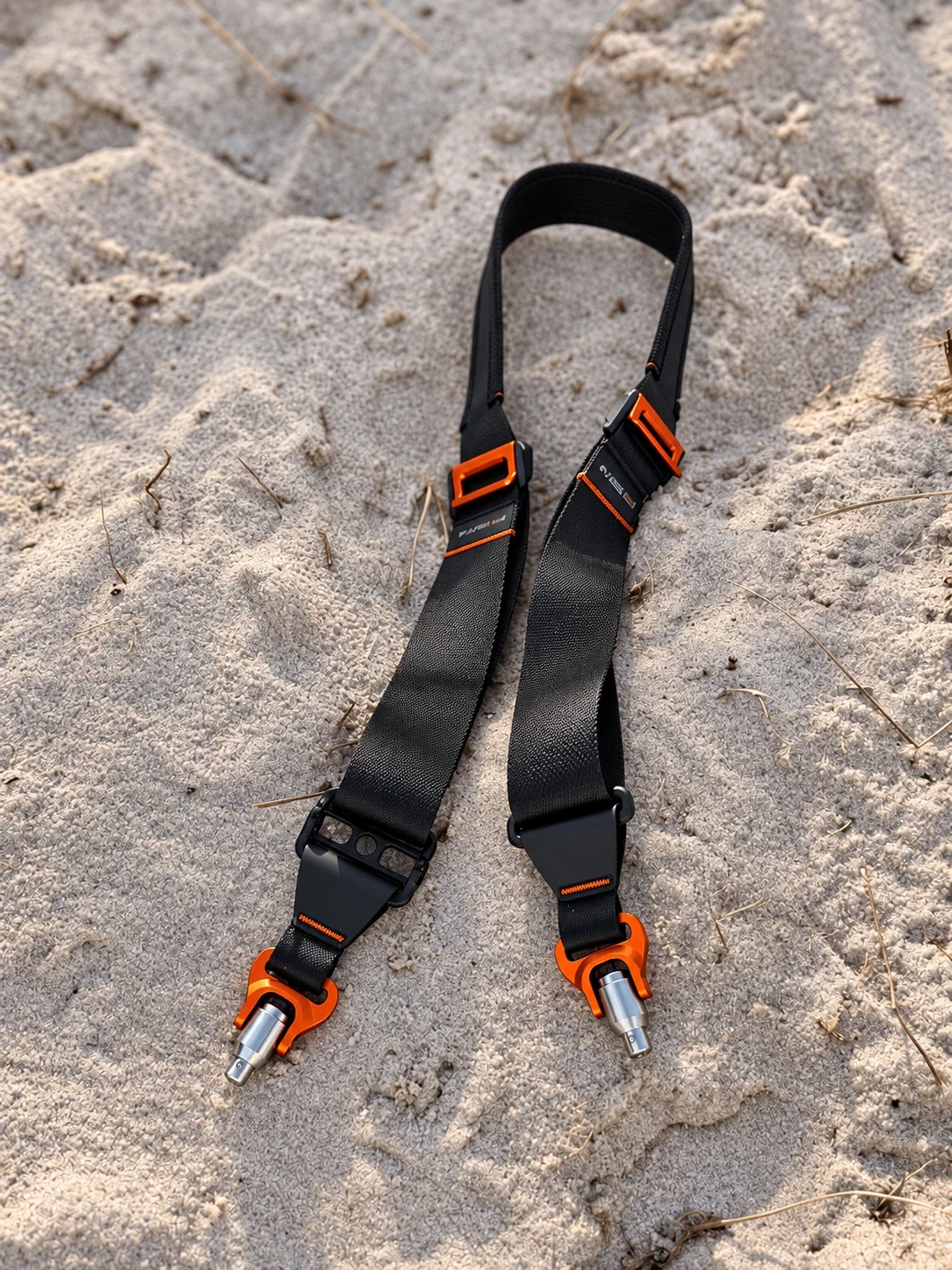
The AXIS strap uses a quick-detach system with locking QD connectors. This releases the camera quickly without threading straps through the camera lugs each time. Combined with the QD connection on the ZOOEY L-bracket, it creates a coherent workflow: carry the camera, release the connection and mount it directly on the tripod.
The metal connectors engage clearly and feel secure in use. Even so, I always give them a brief pull test before lifting the camera. That applies to every quick-release system, especially with a heavy camera and lens attached.
The black strap with orange fittings echoes the design of the other components, making the system look cohesive. I like that the colour accents are not merely decorative but appear precisely at the frequently used points.
My wish for 3 Legged Thing
For my long telephoto lenses, I would like 3 Legged Thing to offer longer tripod plates designed specifically for 400 mm and 600 mm lenses. Plates with an integrated QD socket would be especially useful, allowing the exceptionally practical AXIS strap connector to click directly into place. The heavy lens could then be carried securely and mounted on the tripod without an additional adapter.
I would also welcome a wider choice of L-brackets with an integrated QD socket. The fast and reassuringly secure strap connection is one of the strongest features of the entire AXIS system. Having it on more long lens plates and L-brackets would be an almost perfect addition to my wildlife equipment.
Very stable – with a limit at 600 mm
Overall, I find Ridley a very stable tripod. With normal camera equipment it stands securely, sets up quickly and has convinced me in almost every respect. In this regard, virtually everything about the tripod works perfectly for me.
With a heavy Nikon 600 mm lens, however, even this setup is not completely immovable. Wind or a light touch can still cause slight movement. In those situations, use the hook beneath the tripod and add weight, such as a camera bag. Ideally, the bag should touch the ground lightly rather than swing freely in the wind, adding stability without beginning to sway.
Perhaps one day I will have the opportunity to test the ETHAN 4-Section Carbon Fibre Tripod System With its especially rigid 32 mm carbon legs and substantially heavier-duty design, Ethan appears to be the more logical choice for very heavy lenses such as a 600 mm. For every other application, I like Ridley enormously: its operation, levelling base, construction and versatility work together almost perfectly for me.
When setting up, all locks and QD connections should be checked deliberately. The system's many options are a strength, but inevitably bring more controls. After a short familiarisation period the workflow is logical, although the system does require some attention.
Technical specifications at a glance
| Product | Manufacturer specifications |
|---|---|
| Ridley | Eight-layer carbon, three leg sections, 15–154.5 cm height, 70 cm packed length, 1.67 kg, 14 kg load capacity |
| Levelling base | 10° movement in every direction, rotating bubble level, 1/4-inch mount plus 3/8-inch adapter |
| AirHed Cine CC | Up to 10 kg load capacity, 360° pan, 165° total tilt, rotating Arca-Swiss clamp |
| ZOOEY QD | Magnesium alloy, Arca-Swiss compatible, QD socket, 110.5 mm base length, approx. 105 g |
| AXIS QD | Modular strap system with one-handed QD connectors |
Technical specifications according to information from 3 Legged Thing. The review reflects my personal field experience.
What my Ridley report means for selection
For me, two observations go together: The leveling base makes alignment easier, while I still notice slight movements with the heavy 600 mm setup in the event of wind or small contact. Therefore, for me, the pure load capacity is not a sufficient measure of how stable a specific structure remains.
What counts for me with the heavy Tele
I find the Ridley very stable and the leveling base extremely practical. At the same time, the slight movements with my heavy 600 mm lens in the event of wind or contact are part of my impression. What counts for me is the complete structure and not just a load rating.
Gimbal, fluid head or FlexShooter for heavy telephoto lenses? ↗
MY CONCLUSION
Stable, versatile and unmistakable
Ridley, AirHed Cine CC, ZOOEY QD and AXIS QD form a convincingly coordinated system. The tripod prioritises stability over minimum weight, the fluid head enables controlled movement, the L-bracket simplifies switching between landscape and portrait orientation, and the strap speeds up the transition from carrying to tripod use.
My personal highlight is the integrated levelling base. It can save a great deal of time on uneven ground, especially in landscape photography, and helps create straight horizons and clean panoramas. I am almost equally enthusiastic about the design: the copper and orange accents on the dark components look excellent and give the equipment an unmistakable premium appearance.
Ridley is not the smallest or lightest tripod. Anyone working with heavy camera equipment who values stability, fast levelling and versatile connections above minimum packed size will find a very well-designed overall package.
The levelling base and coloured accents in particular make the 3LT system special to me.