TESTS & EXPERIENCES
FlexShooter Pro II: a field review
Convincing with a heavy telephoto lens – especially when moving sideways
I have now used the FlexShooter Pro II several times with my heavy telephoto lens and find it very good. I particularly like the lateral tracking: Once the height has been set, I can use the silver wheel to release the movement and guide the lens to the side exactly as I want.
Strengths
My very good practical impression after several uses. Particularly convincing: lateral tracking via the silver wheel with a previously set height or vertical alignment.
Worth noting
Set up your own camera and lens combination carefully. Whether you prefer FlexShooter, Gimbal or Fluid Head depends on your working style and personal taste.
Best suited for
Wildlife photographers with heavy telephoto lenses looking for a head as an alternative to gimbals and fluid heads.
My setup
FlexShooter Pro II · Nikkor telephoto lens with long lens foot · Leofoto tripod · used several times
Three months with Nikon Z9 and Z8
I have used the FlexShooter Pro II for around three months and have tested it with both the Nikon Z9 and the Nikon Z8. My most frequently used lenses were my 400 mm f/2.8 and 600 mm f/4. My impressions therefore come from working with large telephoto lenses and both camera bodies.
My experiences in different hides
An important part of my previous assignments took place in different photo huts, the so-called hides. There I used the head with my camera and the heavy telephoto lens. After these uses, my impression is very positive: the operation suits my style of photography well.
Tracking flying birds of prey
Photographing birds of prey in flight worked particularly well. What mattered to me was following their movement: with the camera supported on the head, I panned with the flying bird to keep it in the frame. This worked very well with my telephoto setup and is one of my most convincing experiences with the FlexShooter.
I find it particularly pleasant to initially set the height or vertical alignment. I then turn the silver wheel and can move the camera with the lens sideways. It was exactly this interaction that worked for me when tightening. So my positive impression is based on actually working with flying subjects and not just looking at the construction.
When switching between cameras or lenses, the balance of the complete combination should be reassessed. For me, the right setting is part of choosing a tripod head. A head must fit the equipment used and how you handle it.
Anyone who photographs animals with long focal lengths needs a tripod head that suits their way of working. With a heavy telephoto lens, the equipment should be well supported while the framing can be changed in a targeted manner. Especially when tracking, you quickly notice whether a system suits you.
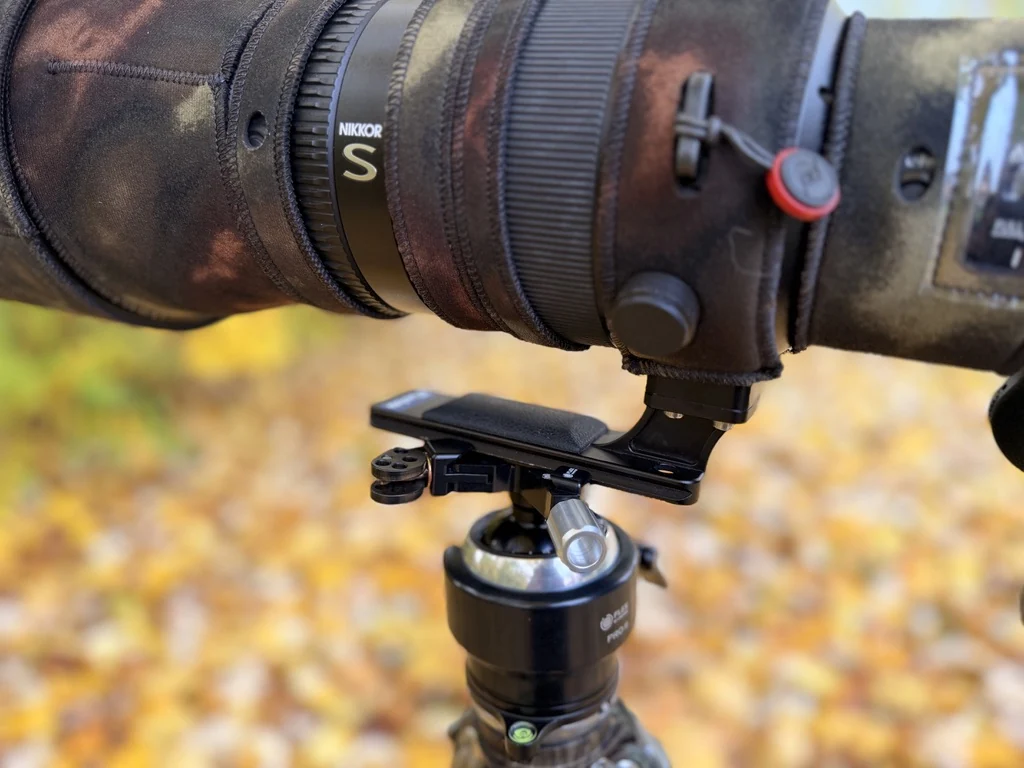
I have already used the FlexShooter Pro II on several outings. My impression is very positive: the head suits my way of working and I enjoy using it. My photographs show it on a Leofoto tripod with my Nikkor telephoto lens.
Solid housing, low-profile mount
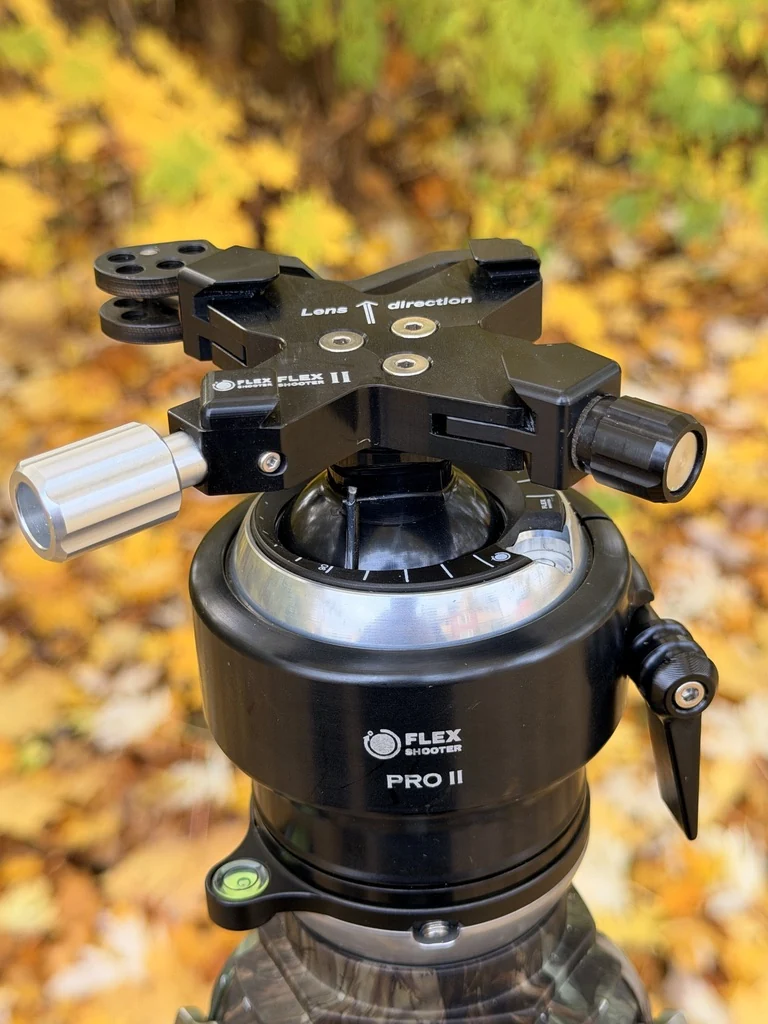
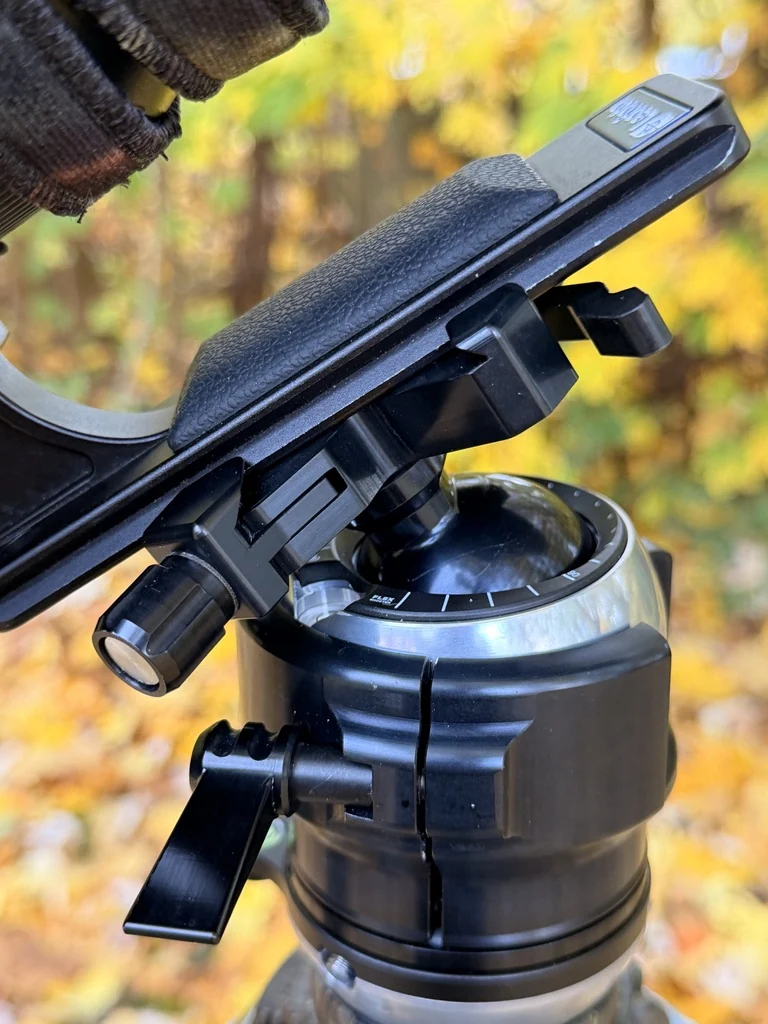
The wide black base body, the silver-colored surround and the visible ball construction give the head its characteristic structure. The lens mount sits close above. This creates a setup under the large telephoto lens without the high side bracket of a classic gimbal.
The double-ball system: levelling and movement
According to the manufacturer, the design uses a patented double-ball system. The outer ball levels the horizon, while the inner ball allows the aligned equipment to move. Levelling here refers to a level horizon, rather than the working height of the tripod.
Spring counterbalance for a heavy telephoto lens
According to the manufacturer, an integrated spring supports the tilting movement. If the equipment is correctly balanced, the lens should remain in the selected position. Spring balancing does not replace careful setup.
The manufacturer also advertises “No Image Creep”: the framing should not shift downwards when the head is locked. This is a manufacturer claim; I have not carried out a dedicated test of this behaviour.
Friction, Arca-Swiss clamp and low-profile design
For the Pro version with a lever clamp, the manufacturer mentions adjustable friction on both balls, a spirit level and an Arca-Swiss-compatible two-way clamp. This allows the movement resistance to be adapted to the equipment and the camera or lens foot to be equipped accordingly.
The low design keeps the equipment close to the tripod and, according to the features overview, is suitable for shooting close to the ground. The manufacturer also cites a lower susceptibility to vibration as an advantage; This report does not contain its own comparative measurements.
The lens clamp in detail
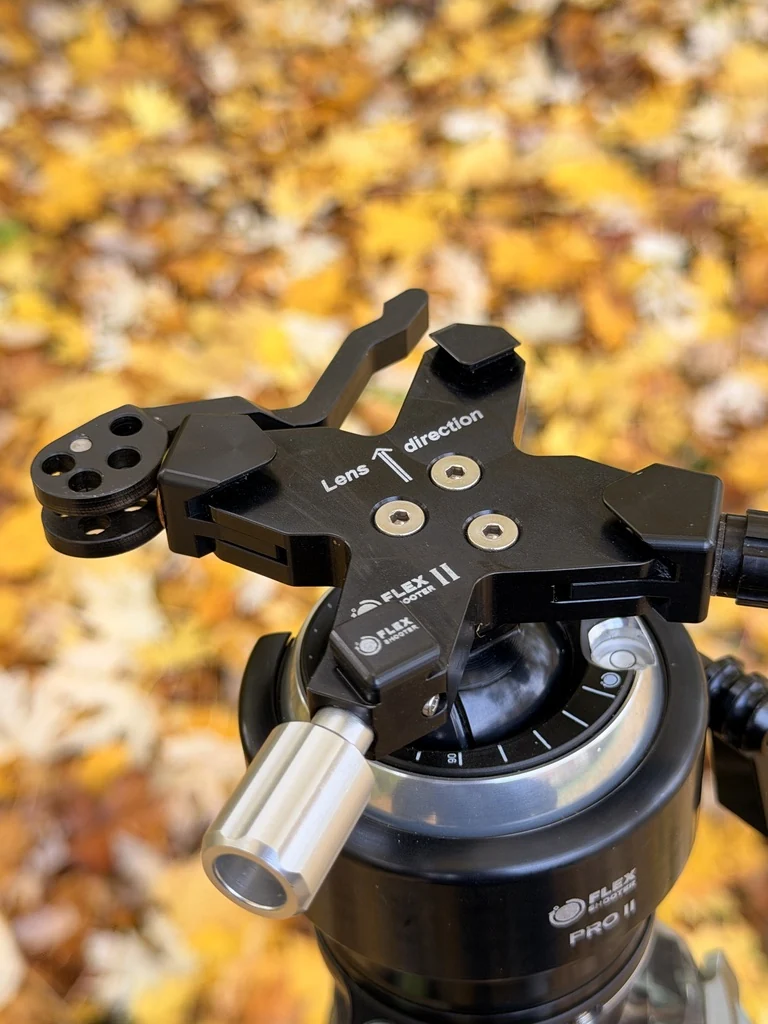
The upper mount is wide. The arrow with the label “Lens direction” indicates the intended lens direction. In my pictures you can clearly see how the long lens foot sits on the head.
If I have heavy equipment, I take my time setting it up. Not only the weight, but also its distribution plays a role. That's why you should try out the head with your own camera-lens combination and adjust the position appropriately.
This applies regardless of which system you prefer: The best way to see whether a head fits your equipment is to look at the complete setup, which will later be used outdoors.
My highlight: lateral tracking with the silver knob
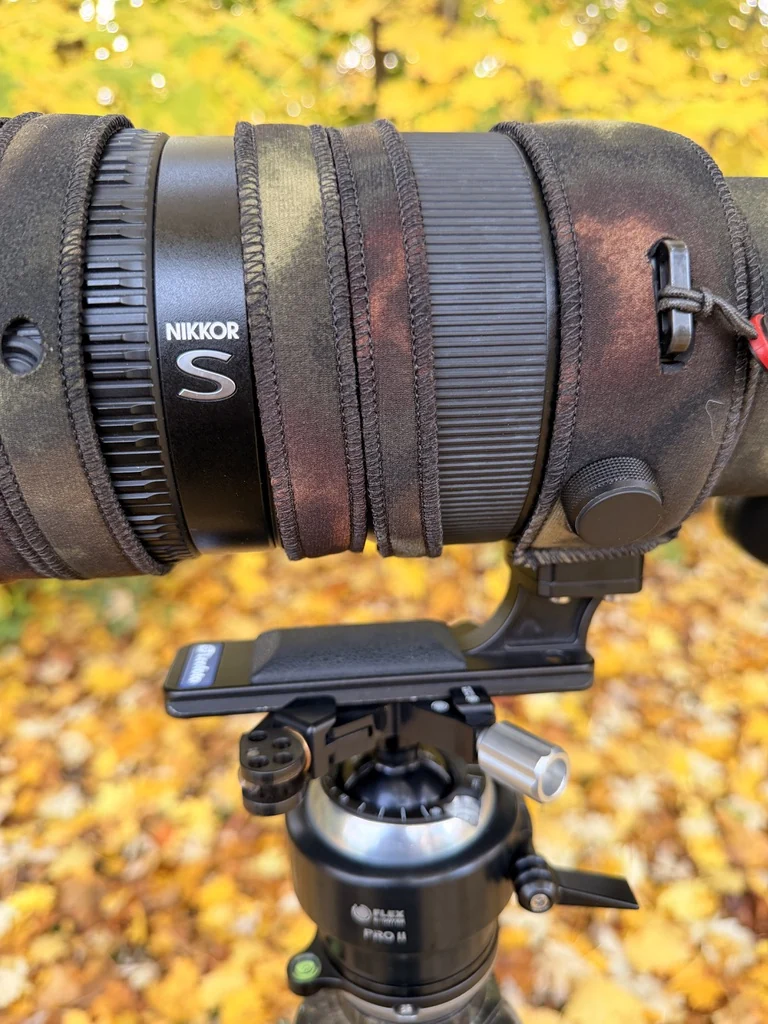
I particularly like the FlexShooter when I have set the height or vertical alignment and then want to adjust it laterally. Then I turn the silver wheel and can easily move the telephoto lens left and right. I really like this way of working.
I can concentrate on the lateral movement and my framing. In my previous uses, this was one of the most convincing points about this head for me. Especially with a heavy lens, it makes a big difference if the operation feels right for your own use.
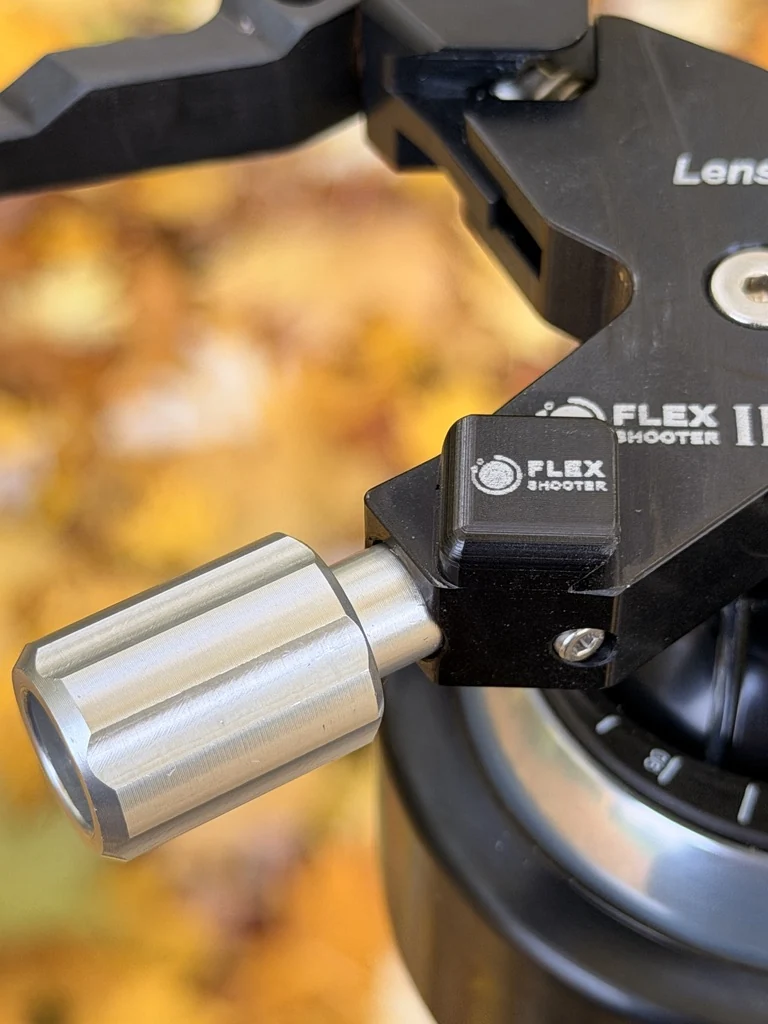
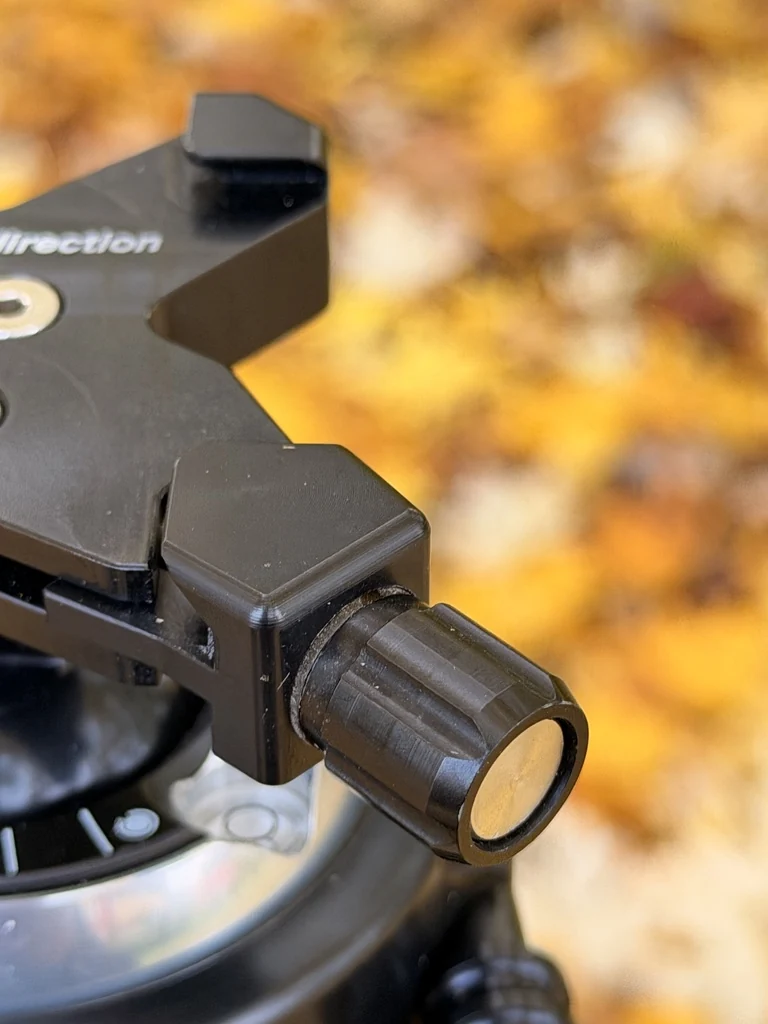
The silver wheel is easy to recognize due to its size and the pronounced recessed grips. The black knob and levers are clearly different. The two rotary knobs can be seen up close in the following detailed images.
Handling as part of the overall experience
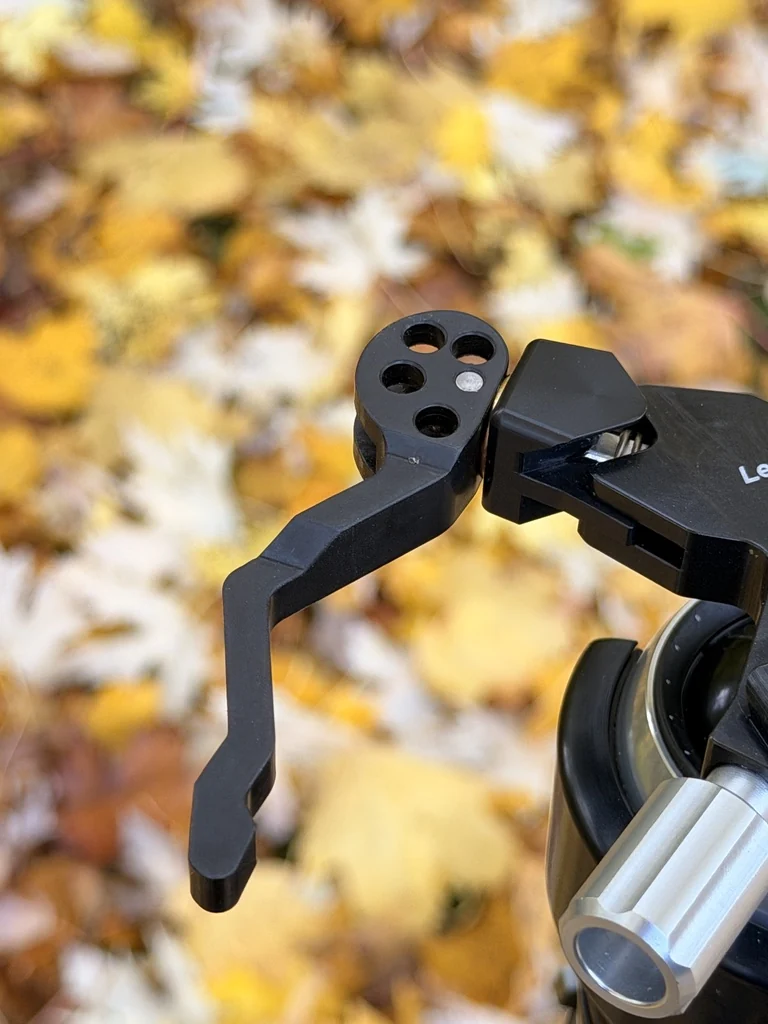
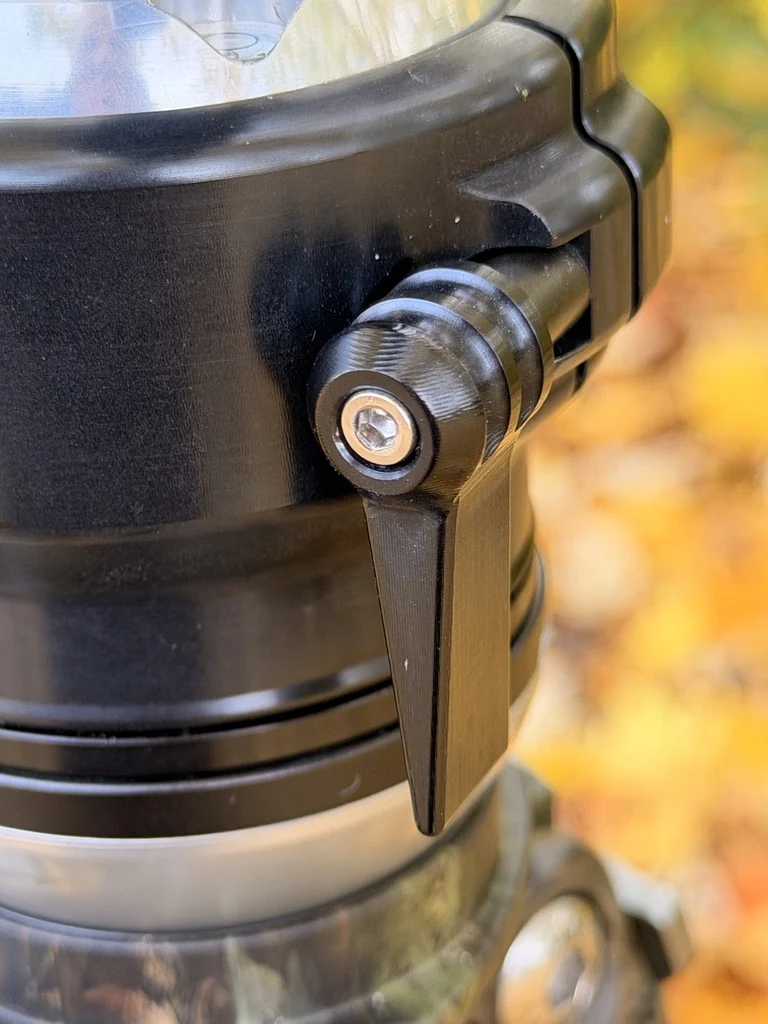
One lever is located on the upper mount, another on the side of the base body. The detailed shots show their position and the shape of the handles. With the telephoto lens mounted, the setup looks different than with an empty head - that's why it's worth getting to know it with the equipment on.
A closer look at the tilted position
The side close-up shows my telephoto lens in an inclined position. Here the position of the ball in the housing and the distance between the mount, lens foot and controls become particularly clear.
Which movements you need most often depends on the subject and the location. For me, the lateral tracking is particularly comfortable when the height is previously set. If you work differently or frequently switch between very different orientations, you can set different priorities.
My tested equipment
| Cameras | Nikon Z9 · Nikon Z8 |
|---|---|
| Predominantly used lenses | 400 mm f/2.8 · 600 mm f/4 |
| Previous usage | Around three months, including in different hides |
| Particularly convincing | Tracking flying birds of prey with a camera and telephoto lens on the tripod head |
Gimbal, fluid head or FlexShooter?
For me there is no blanket winner here. Everyone has to decide for themselves whether they prefer to use a gimbal, a fluid head or a head like the FlexShooter. Your own handling, equipment and personal taste play a big role.
Fortunately, there is now a really good choice of support systems for heavy lenses. You can choose the system that you feel most comfortable with and enjoy taking photos with. For me, the FlexShooter Pro II is a very convincing option within this selection.
Manufacturer and specialist camera shops
Further information about the FlexShooter Pro II is available directly from the manufacturer ballhead.eu. Well-run camera shops also stock such specialized tripod heads and have the FlexShooter in stock depending on the range. You should ask about the current inventory before visiting.
When choosing a tripod head, it is worth visiting a specialist camera shop: If you have the opportunity, you can try out with your own camera and lens combination to see whether the operation suits your personal taste.
Gimbal, fluid head or FlexShooter: how I see the options
All three concepts are a way to work with heavy telephoto lenses. For me, it's not just the design that matters, but rather how well the operation suits my own photography. You can find my experiences with the other systems in the following linked tests.
| system | Way of working | Appropriate test report |
|---|---|---|
| Gimbal | Balanced telephoto lens with pan and tilt movement around separate axes. | SUNWAYFOTO GH-04 · SUNWAYFOTO GH-03II |
| Fluid head | Damped pan and tilt movements; in my Ridley test with the AirHed Cine CC. | Ridley / AirHed Cine CC |
| FlexShooter | Double ball system with spring compensation. I particularly like the side tracking via the silver wheel. | Current review |
This comparison is not a direct comparison under identical test conditions. It classifies the different concepts and my existing reports. Whether a gimbal, fluid tilt or FlexShooter is the best fit remains a question of equipment, working method and personal taste.
What can be specifically derived from my operations
My positive impression has a clear reference: three months of use, Nikon Z9 and Z8, predominantly 400 mm f/2.8 and 600 mm f/4 as well as tracking flying birds of prey from different hides. I particularly like the sideways movement via the silver wheel after adjusting the vertical alignment.
Why I like this service
I particularly like that I can track laterally after adjusting the vertical alignment. With my heavy telephoto lens I was able to pull the camera along with the flying birds of prey. It is precisely this experience from different hides that makes the head so convincing for me.
Gimbal, fluid head or FlexShooter for heavy telephoto lenses? ↗
MY VERDICT
A very good choice for my wildlife photography
I have used the FlexShooter Pro II several times and find it very good. I am particularly impressed by the lateral tracking via the silver wheel after I have set the height or vertical alignment. This means my heavy telephoto lens can be moved sideways perfectly for my taste.
Whether you prefer a gimbal, a fluid head or this head remains a personal decision. Fortunately, there is now a selection for heavy lenses from which everyone can find the right system for their own way of working.
I really like the FlexShooter Pro II. In the end, everyone decides for themselves which head is the right one – depending on their own equipment and personal taste.