TESTS & EXPERIENCES
SUNWAYFOTO GH-03II field review
Finally, space for two of my heavy telephoto lenses.
A tripod head that allows me to use two of my heavy lenses simultaneously: That's exactly what I love about the SUNWAYFOTO GH-03II. Two cameras, two large telephoto lenses, and a shared base – for my wildlife photography, this concept is an extremely exciting solution.
Strengths
Two heavy camera-lens combinations on one tripod head, both setups directly available, separate adjustment options and foldable supports.
Please note
According to the manufacturer, it weighs approximately 2.14 kg, has a wide design with two telephoto lenses, and requires careful balancing. The 30 kg weight limit applies to the head as a whole.
Suitable for
Wildlife photographers who work at one location with two heavy telephoto setups and want to have both cameras mounted and ready.
Important data
Dual camera gimbal · up to 30 kg total payload · approx. 2.14 kg · 10 cm vertical adjustment · 80 mm panoramic base · 3/8-inch tripod mount; specifications according to the manufacturer.
A head for two of my heavy lenses
Anyone who photographs with large telephoto lenses knows the question of finding a suitable tripod solution. In my case, there's the added factor that I don't always want to use just one camera-lens combination. I need two heavy lenses to have a designated spot and be readily available when needed.
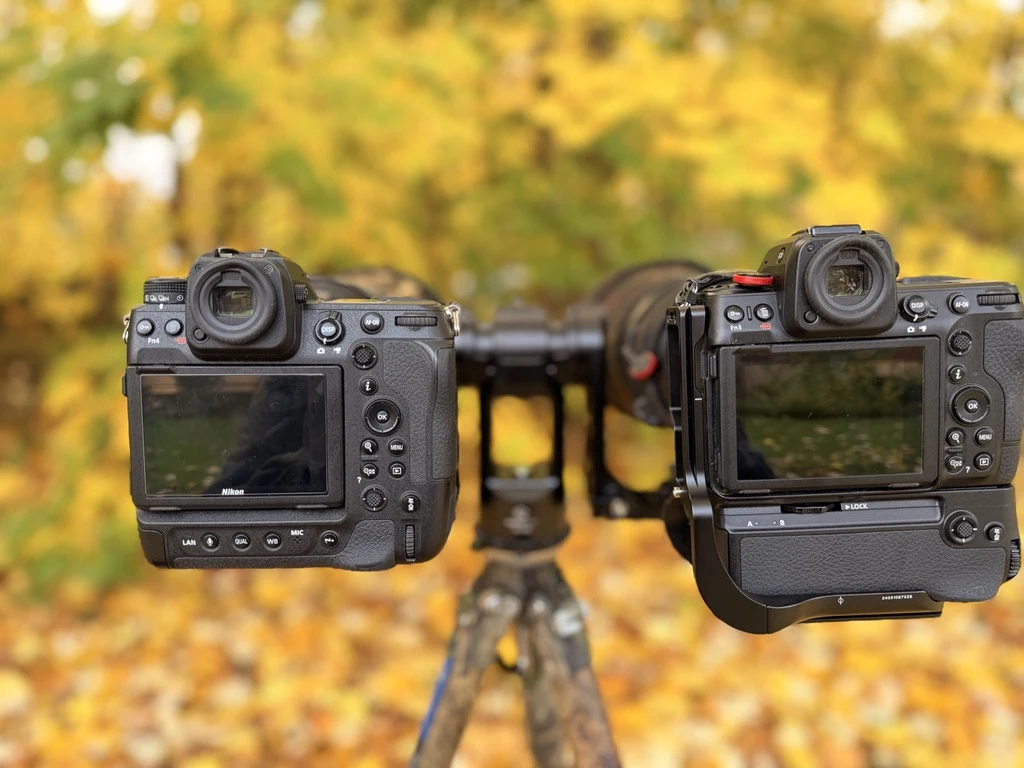
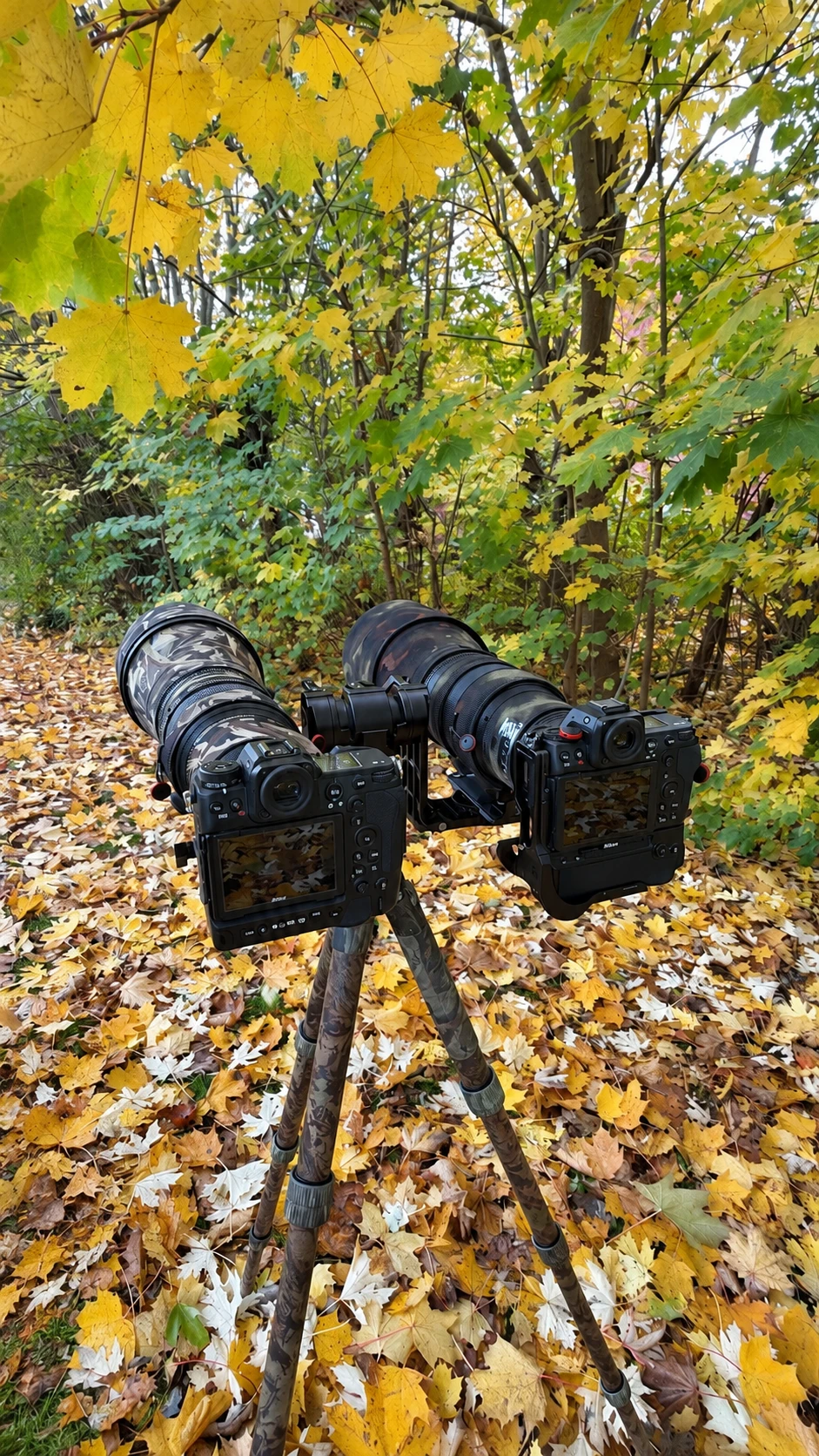
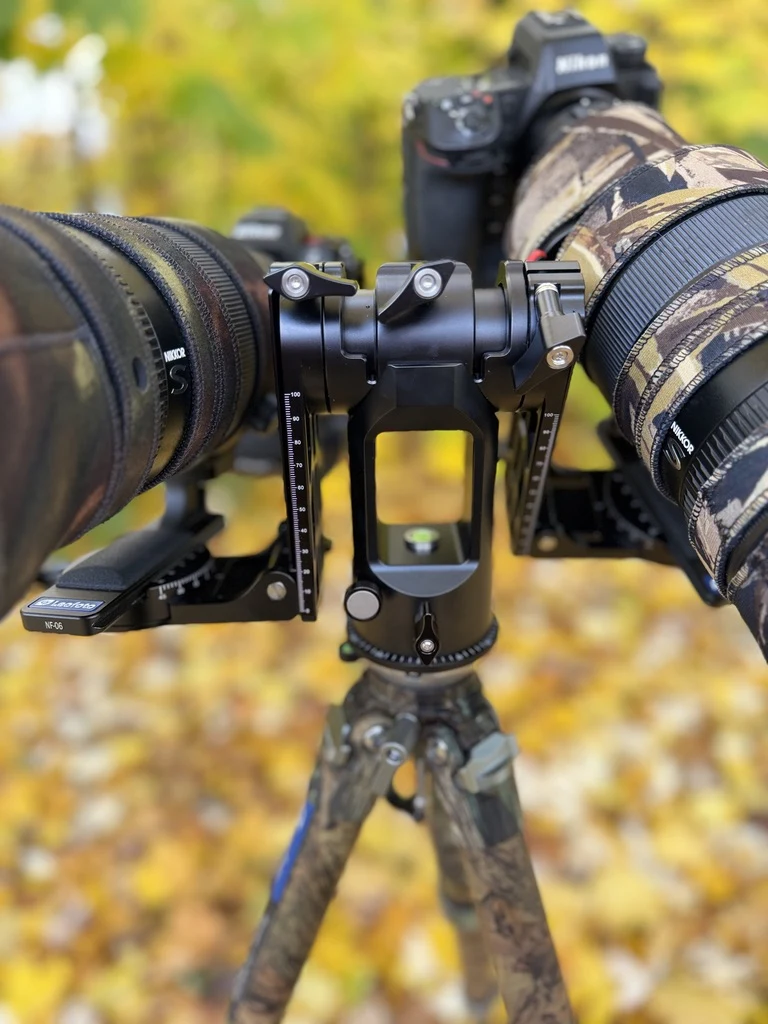
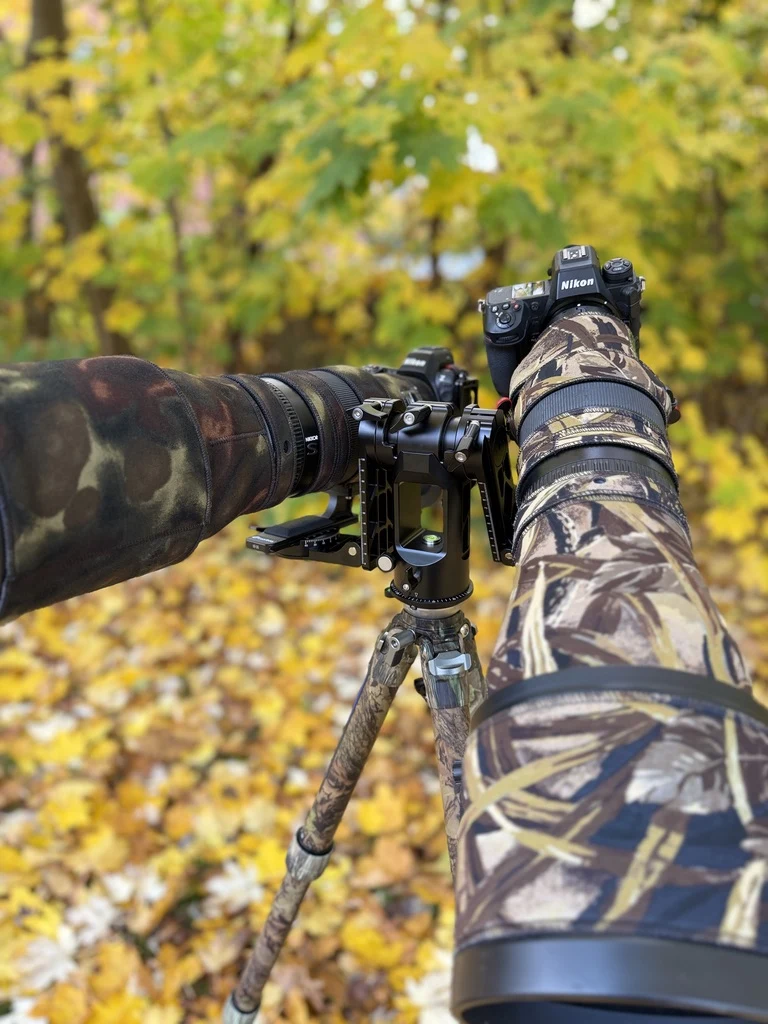
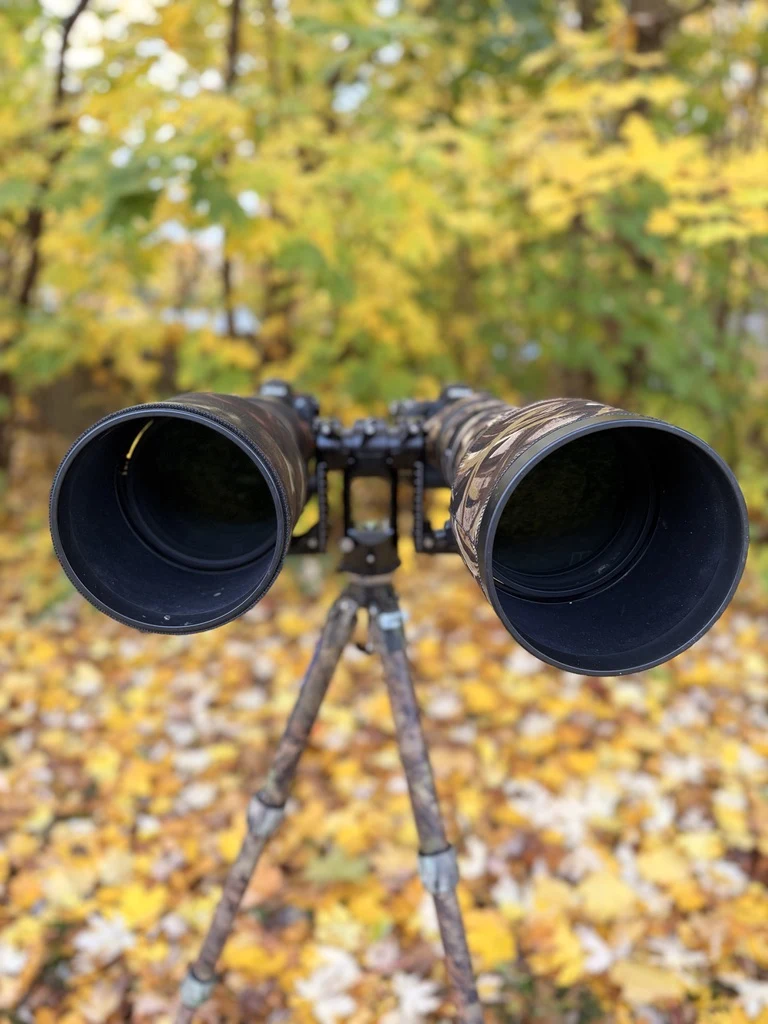
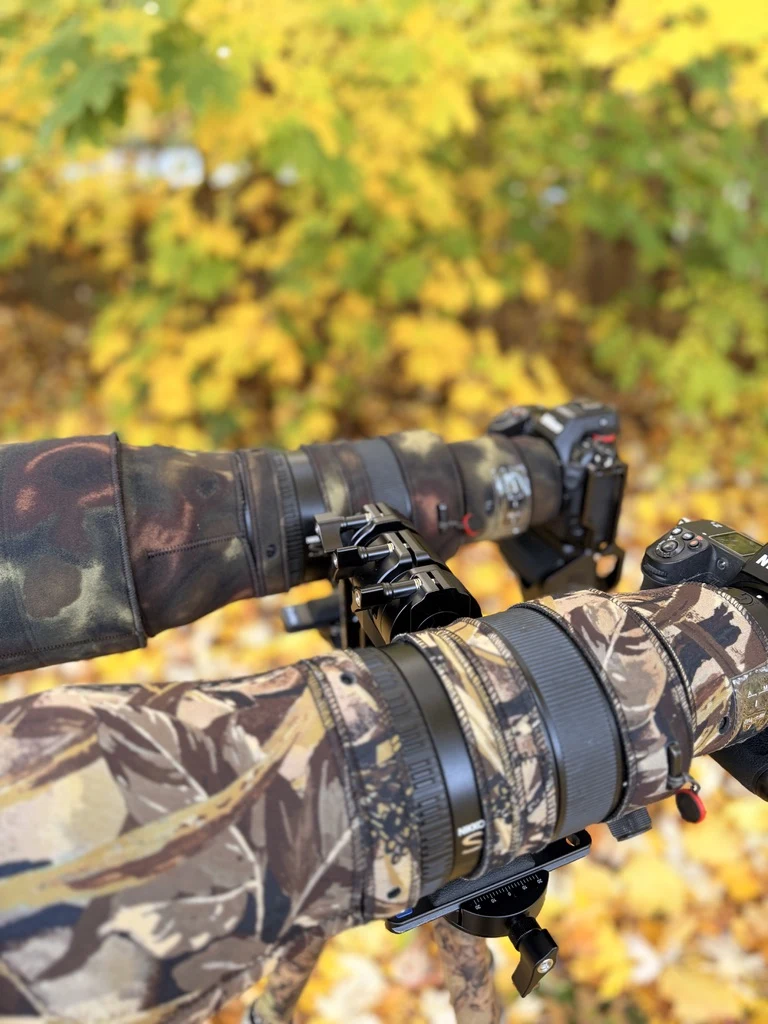
The SUNWAYFOTO GH-03II hits the mark perfectly for me. I'm absolutely thrilled with the ability to mount two of my heavy telephoto lenses on a single tripod head. My photos show the complete setup: two cameras, two long lenses, and a single tripod underneath.
For me, that's the real appeal of this head. Both combinations can remain mounted. I don't have to remove one large lens from the shared tripod base to attach the other.
My dual camera setup in the forest
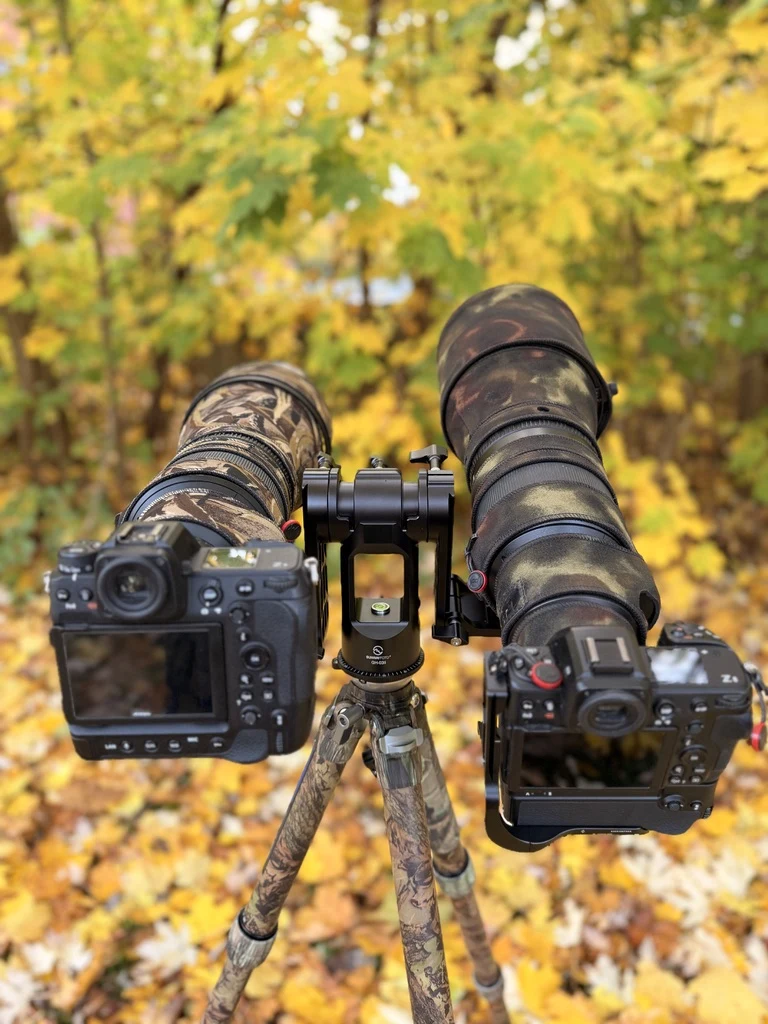
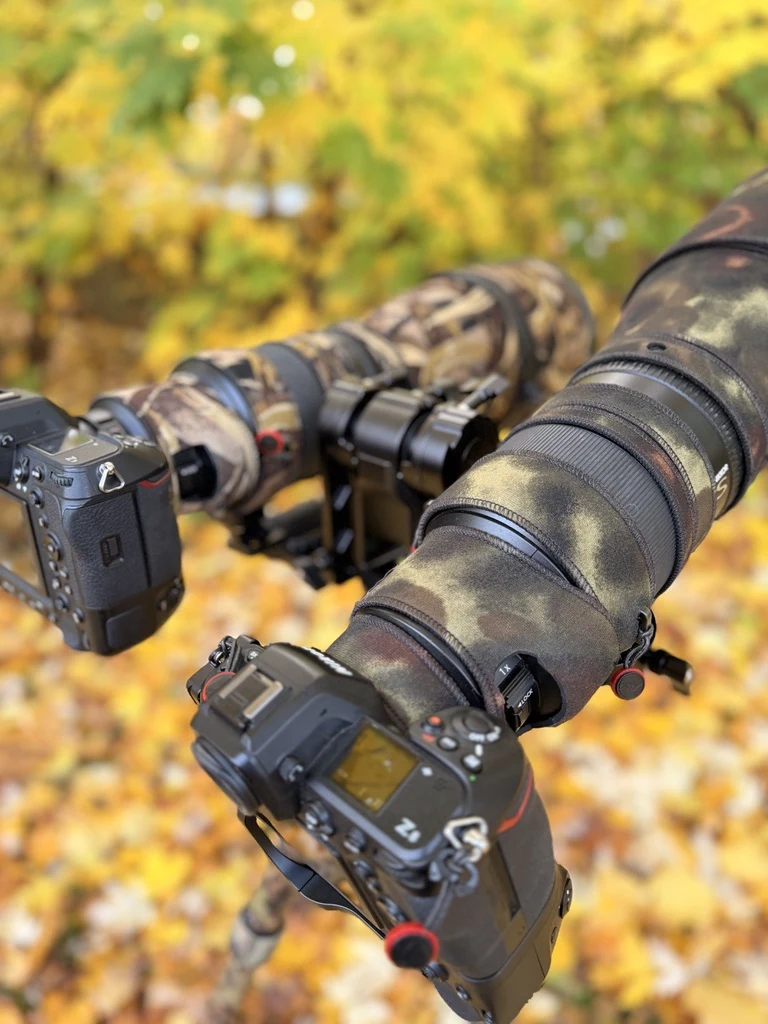
The images show the GH-03II at an autumnal location. From behind, it's particularly clear how the two cameras are positioned side by side. Each combination has its own camera at the top.
This gives me the option of having two differently configured sets ready. I can adapt which focal lengths and cameras I combine to the specific task. Crucially for me, the most important thing is quite simple: even two large telephoto lenses can fit here simultaneously.
The design: two supports, one central base
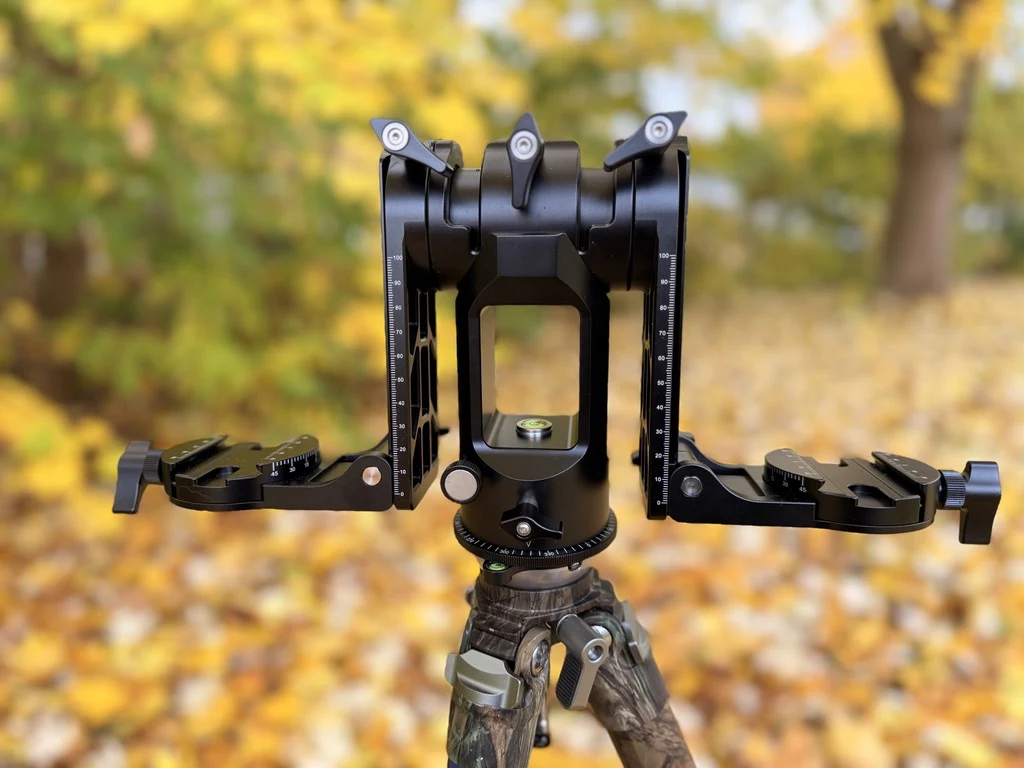
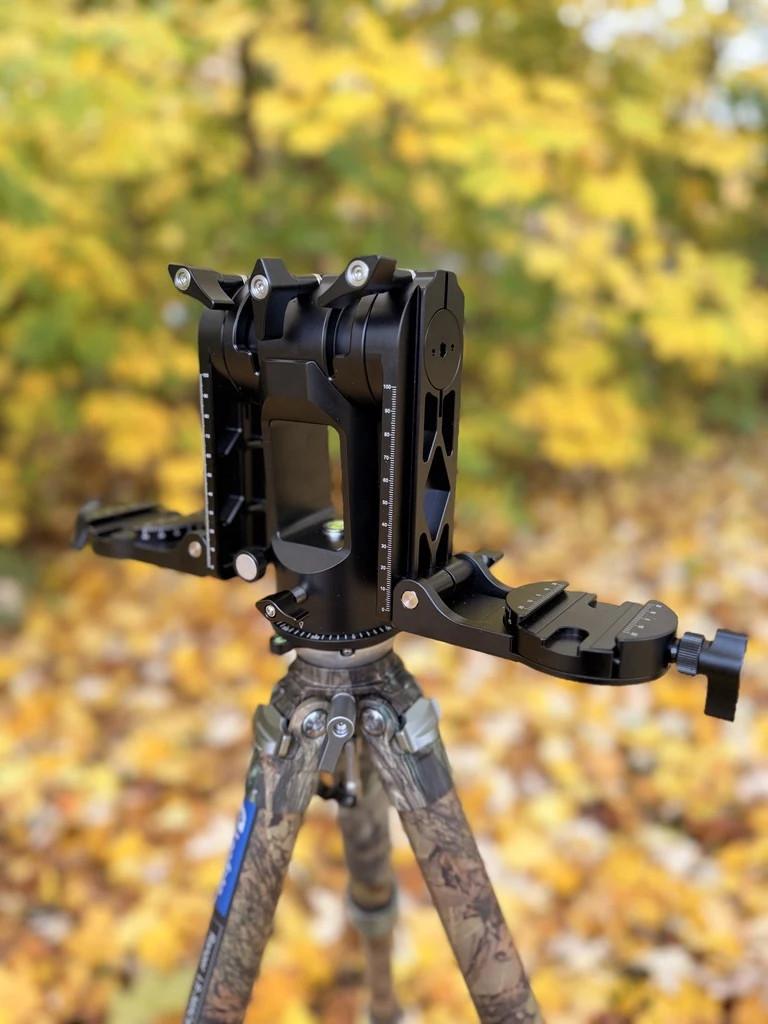
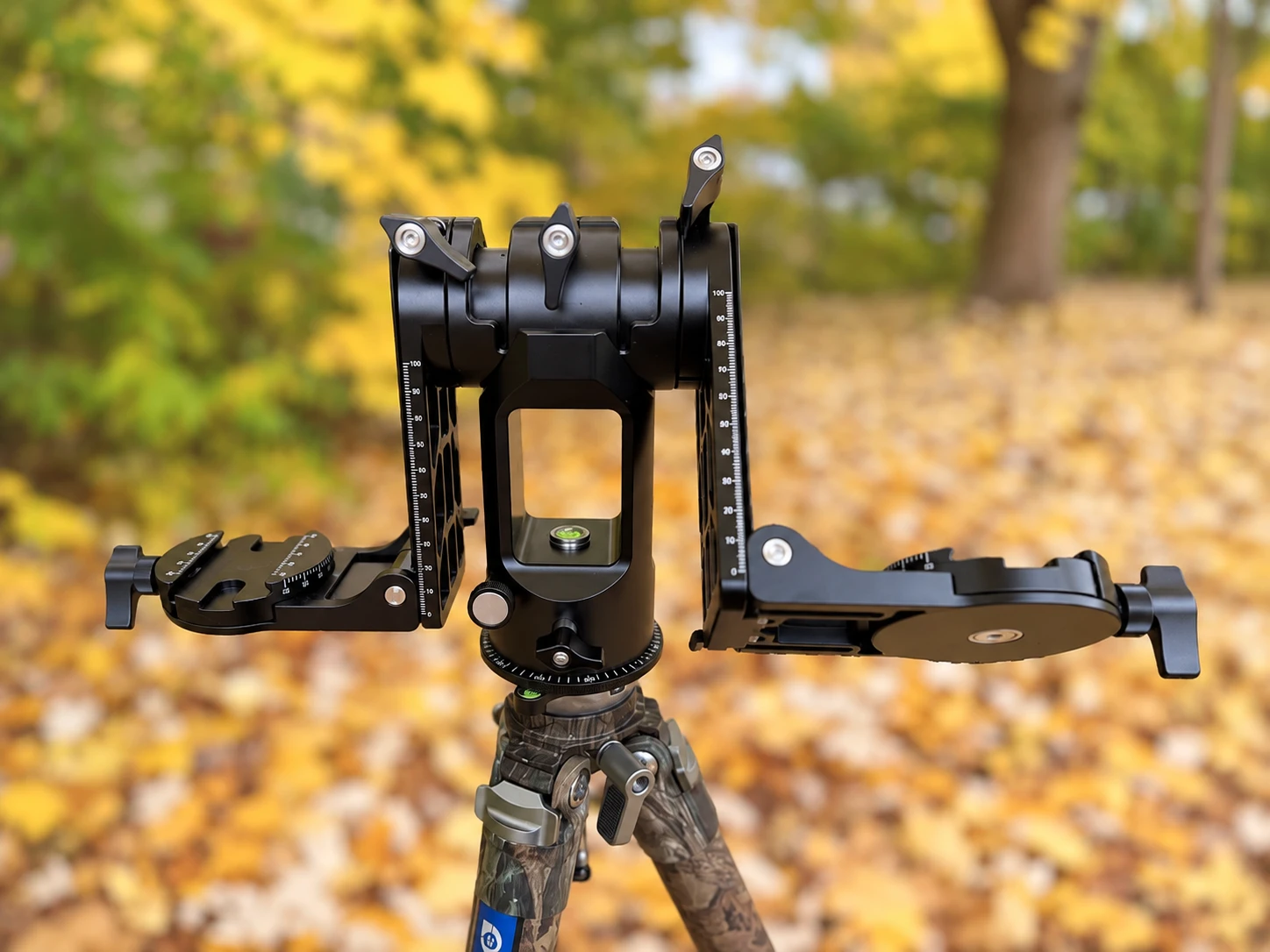
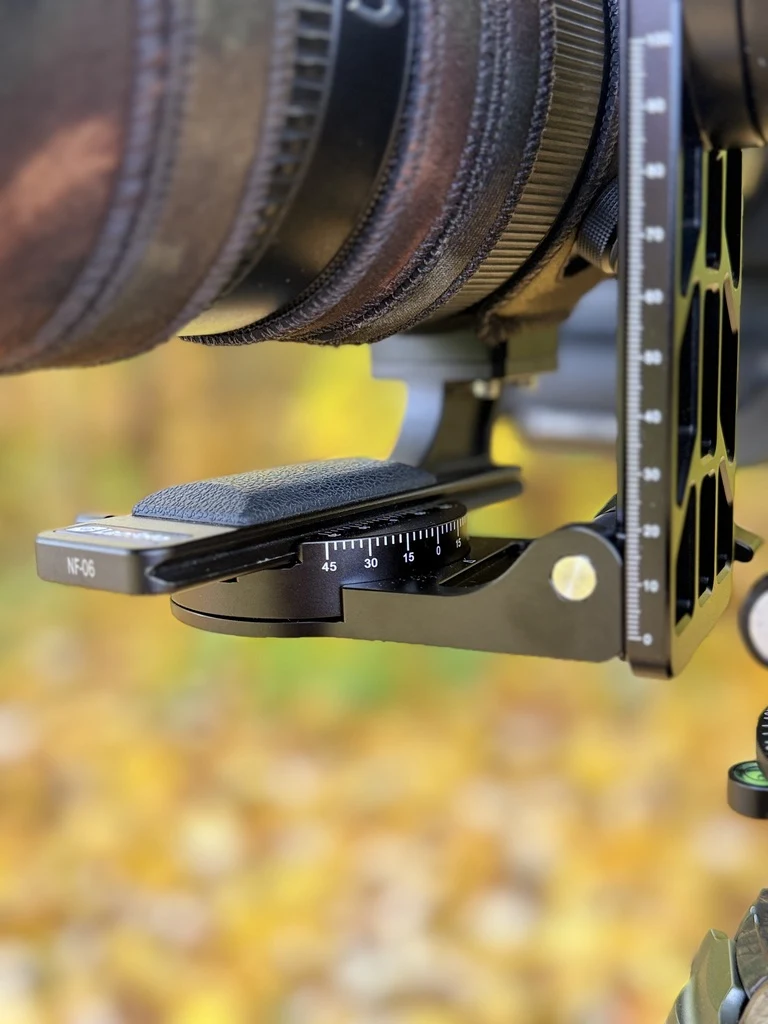
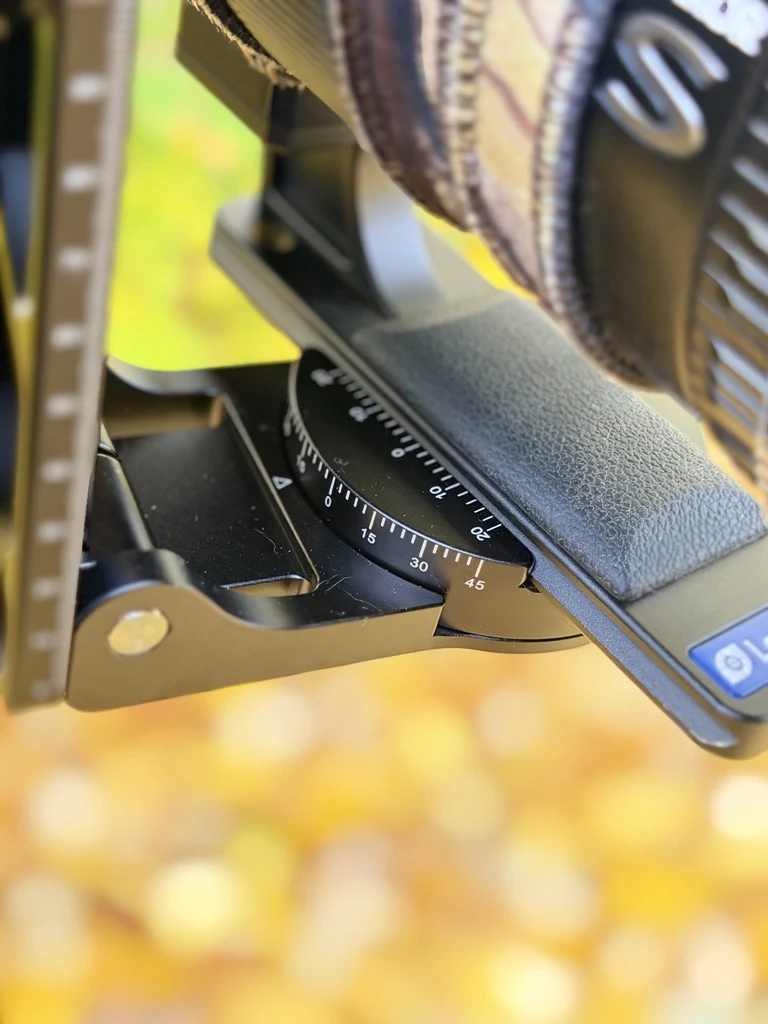
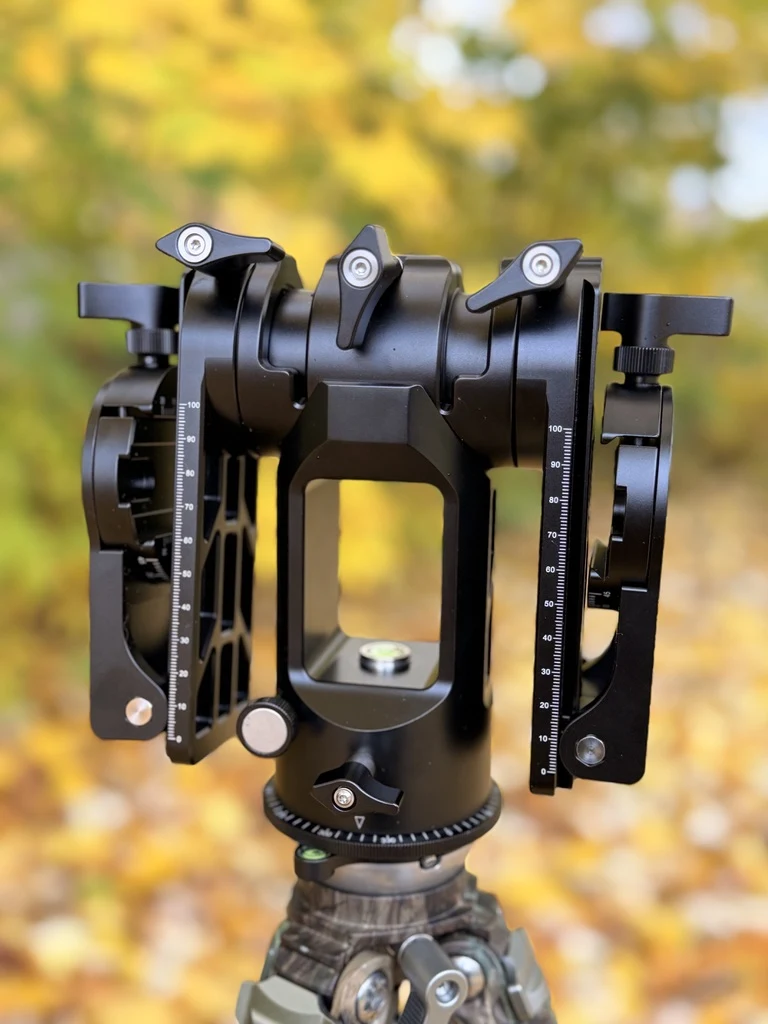
The concept is easy to understand even without any equipment mounted. Two lateral arms with lens mounts extend from the central section. The scales on the vertical guides make it easy to track the set positions.
I like that the design isn't simply a fixed cross plate. There are various adjustment options for both sides. SUNWAYFOTO describes how the camera positions can be adjusted together or independently.
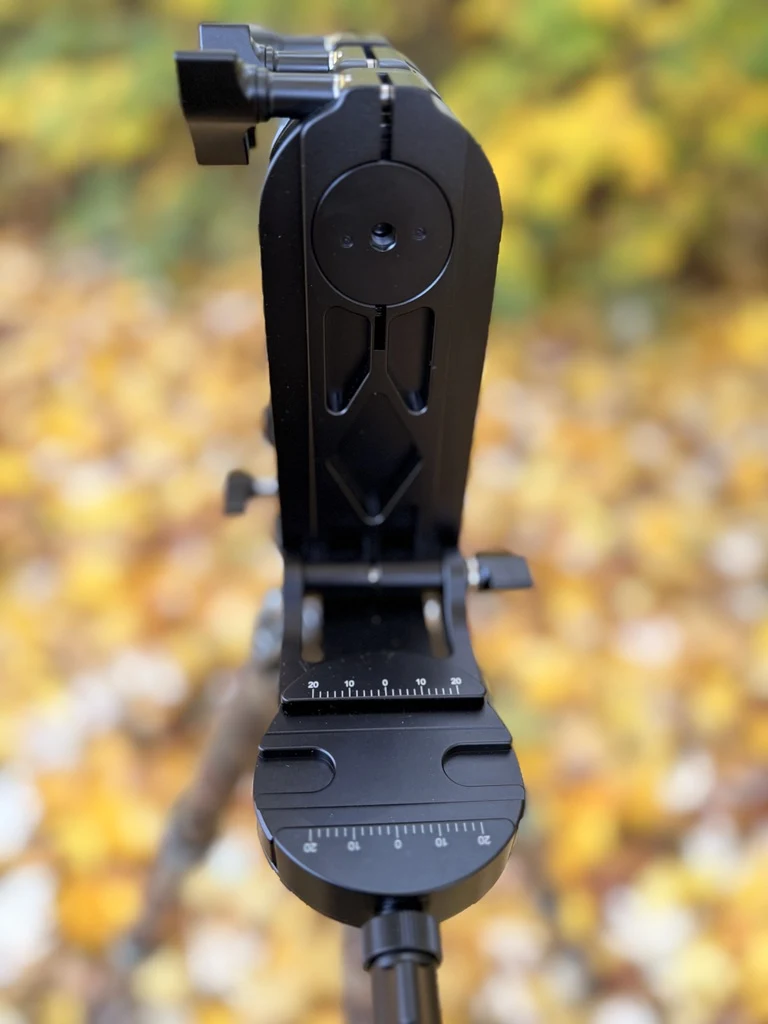
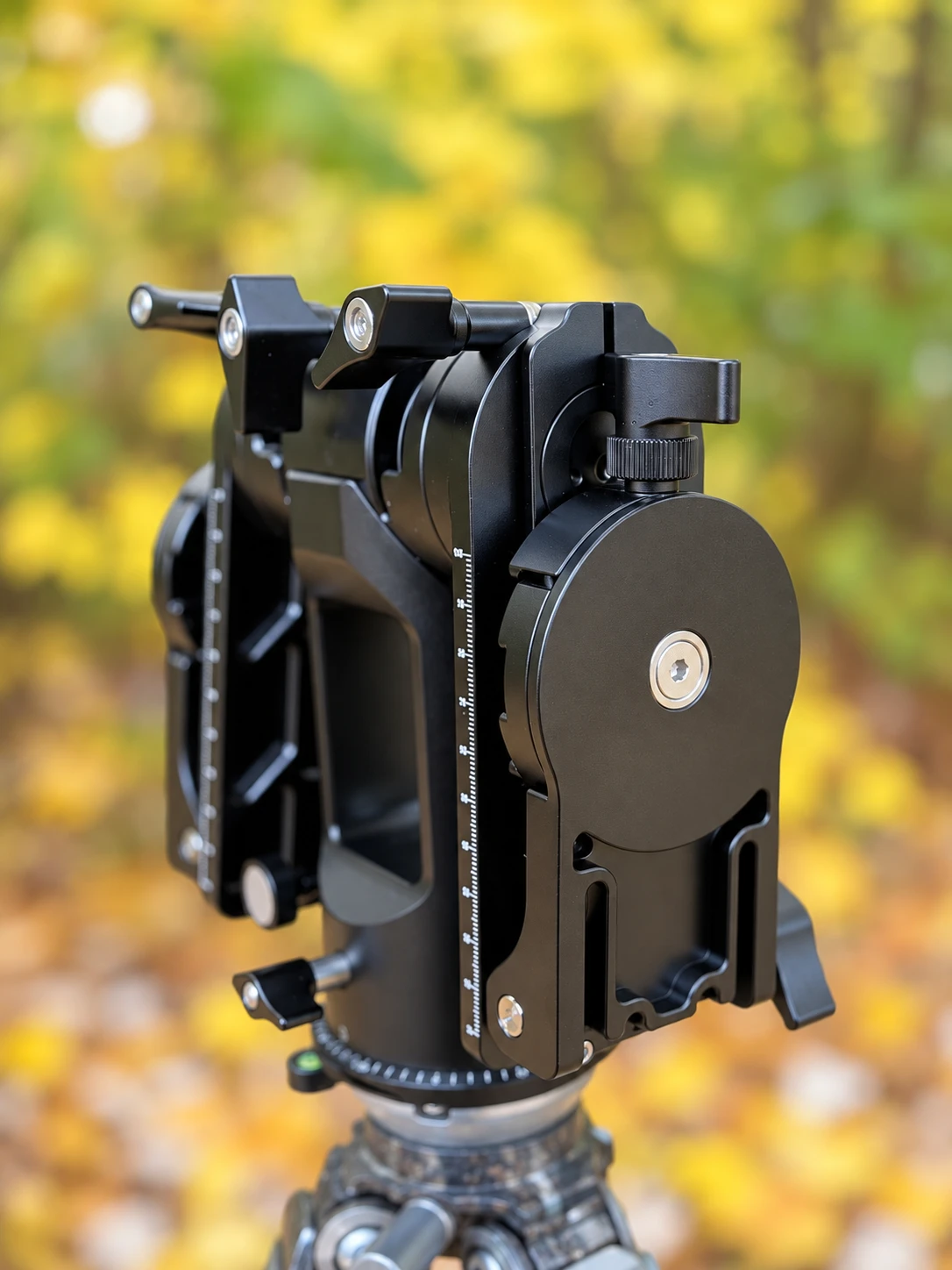
My pictures show both the unfolded head and the two supports at different angles. This clearly illustrates how much adjustability is incorporated into this design.
Balancing is part of the setup
Especially when working with two heavy camera-lens combinations, I take my time setting everything up. Each side must be properly adjusted for its respective equipment. The mounted lenses and cameras should be positioned so that they don't tip over uncontrollably when one axis is loosened.
The various scales help to identify and later find positions. This also includes correctly positioning the lens foot in the clamp. If I change a setup, for example by using different accessories, I check the balance again.
For me, this is not a step I want to skip. The advantage of such a head can be used most effectively when all the equipment is properly set up.
Two combinations, different orientations
A closer look at my setup reveals that the two lenses don't always have to be aligned in the same way. In one of the photos, one combination is positioned quite differently than the other. For me, it's precisely this flexibility that makes the dual-camera concept so appealing.
During setup, I check whether there is enough space between the camera body, lenses, and controls. This applies not only to a single position but also to movement and handling of the camera. After all, two large telephoto lenses result in a correspondingly bulky setup.
Panoramic base and spirit level
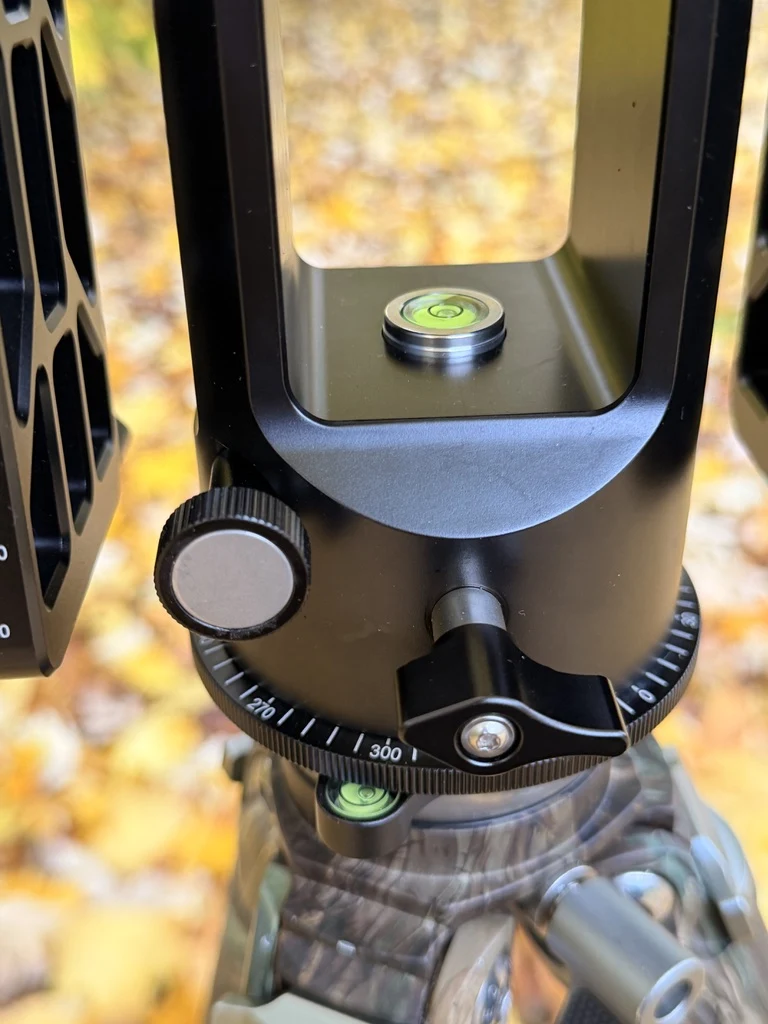
The panoramic scale and a clearly visible locking lever are located at the bottom of the head. A spirit level is embedded in the open middle section. Both details are visible in my close-up photographs.
Before use, I make sure the tripod is stable and the base is properly aligned. With two heavy lenses, the entire system is crucial – tripod, mount, head, and all mounted equipment.
The supports fold up for transport
With its arms extended, the GH-03II has a correspondingly wide head. However, the photos without cameras also show its more compact position: the supports are folded upwards and are closer to the center section.
This is practical for storage. However, such a dual-camera head remains a deliberately chosen piece of equipment. For my purposes, the primary advantage is the ability to keep two heavy lenses readily available on a single tripod base.
Things to consider
The enthusiasm for mounting two telephoto lenses doesn't change the fact that this setup takes up weight and space. For longer distances, the entire load matters, not just the weight of the head. Furthermore, sufficient space is needed at the shooting location to operate both combinations effectively.
The manufacturer's 30 kg load capacity refers to the entire head. It doesn't mean that an additional 30 kg should be mounted on each side. The tripod's load capacity and stability are separate considerations.
When attaching or detaching a heavy setup, I hold the equipment securely and secure the affected axles. Especially when a load is removed from one side, I recheck the setup. I have not conducted my own load test up to the manufacturer's maximum load capacity.
Technical features at a glance
| feature | SUNWAYFOTO GH-03II |
|---|---|
| design | Gimbal head for two cameras or telephoto setups |
| Total load capacity | Up to 30 kg according to the manufacturer |
| Dead weight | Approximately 2.14 kg according to the manufacturer |
| Pack size | Approximately 170 × 190 × 110 mm according to the manufacturer. |
| Vertical adjustment | 10 cm according to the manufacturer |
| Panorama base | 80 mm diameter according to the manufacturer |
| tripod mount | 3/8 inch according to the manufacturer |
| quick-release plate | The manufacturer mentions a supplied 12cm lens plate. |
Technical specifications according to the GH-03II product page from SUNWAYFOTOAccessed November 3, 2026. The metric specifications for weight and packed dimensions are converted from rounded inch and pound measurements. The photos show my own setup; the maximum load capacity was not measured by me.
The concrete advantage over just one recording
In my photos, two heavy camera-lens combinations remain mounted at the same time. This is the crucial difference to the individual shooting position: When switching between these two combinations, you don't have to remove a lens from the same tripod base.
Why the double setup excites me
I'm thrilled that both heavy camera-lens combinations can remain mounted on a tripod base at the same time. This is exactly the opportunity I was missing. I don't have to remove one of the large lenses to use the other on the same base. The two recordings and their different setting options make the setup particularly interesting for me.
Gimbal, fluid head or FlexShooter for heavy telephoto lenses? ↗
MY CONCLUSION
This is exactly the option I was missing.
The SUNWAYFOTO GH-03II impresses me primarily for one very specific reason: I can use two of my heavy lenses on a single tripod head. Both camera-lens combinations remain mounted and readily available at my location.
The various adjustment options and the foldable supports make the concept even more appealing to me. Weight, space requirements, and careful balancing are all part of the equation. But if, like me, you want to use two heavy telephoto setups on a single base, you should definitely take a closer look at this head.
Finally, a tripod head that can hold two of my heavy lenses at the same time. I'm thrilled about that.