TESTS & EXPERIENCES
Frontier Labs BAR-V2 in practical testing
From the first call to the photograph of a Tengmalm's owl – a special find in Schleswig-Holstein
What animals live in a forest, and when do they make their presence known? The Frontier Labs BAR-V2 gives me access that a camera alone cannot offer. Its audio recordings and subsequent analysis have already enabled me to have an extraordinary encounter: Thanks to the device, I found a Tengmalm's owl and was even able to photograph it. This is a huge gain for my wildlife photography – and a sensation for me personally.
Strengths
Recording animal sounds even when I'm away and planning photo tours more effectively. My highlight so far: finding and photographing a Tengmalm's owl. Compact device with two microphones and GPS time synchronization.
Please note
Species identification is carried out in the subsequent analysis. Listen to the automatic matches; identifications do not represent the number of individual animals. Call activity and photographic visibility are not the same.
Suitable for
Wildlife photographers and nature observers who want to get to know an area acoustically over a longer period of time – especially at dusk and at night.
Important data
Two microphones · GPS · WAV and FLAC · SD card up to 1 TB · up to 800 hours of recording according to the manufacturer, depending on operating conditions and settings.
UPDATE · OCTOBER 2026
My special find: a Tengmalm's owl in Schleswig-Holstein
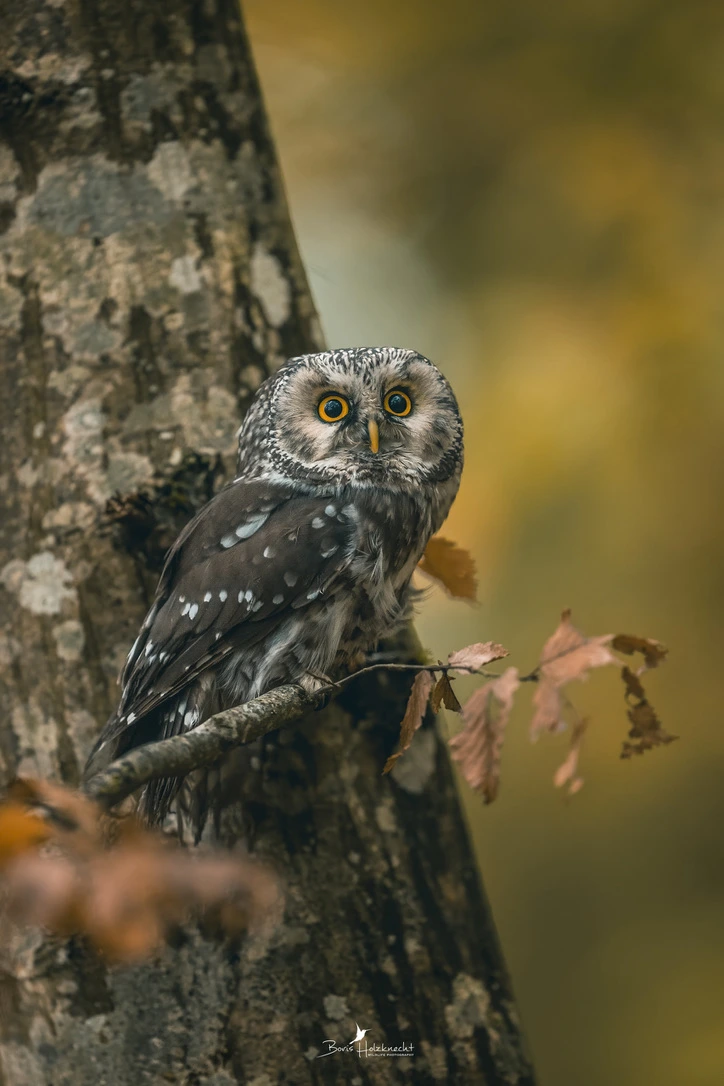
Sometimes the true value of a device is revealed in a single experience. That's exactly what happened to me with the BAR-V2: thanks to the sound recordings and their analysis, I found a Tengmalm's owl – and was even able to photograph it afterwards. A sound in the forest turned into an encounter that I was privileged to capture with my camera.
This is sensational for me. I had used the recorder to better understand which animals inhabit this forest. The fact that this acoustic exploration would lead me to a Tengmalm's owl makes the BAR-V2 far more than just an interesting accessory.
The crucial added value for me lies in this combination: The recorder gathers the voices, the analysis provides a clue, and this leads to more targeted observation in the field. For me, the photograph is the most beautiful proof so far of what this tool can open up for my photography.
Why this encounter is so special
The Tengmalm's owl is a great rarity in Schleswig-Holstein. The 2021 Red List of breeding birds of Schleswig-Holstein lists it in category 1, meaning it is "critically endangered." The 2025 annual report of the Tengmalm's owl Working Group mentions the last confirmed breeding in 2019 and reports that the species has not been recorded as maintaining a territory since 2022.
Against this background, my encounter has a very special significance for me. It documents my observation of a Tengmalm's owl; from this alone I derive neither proof of breeding nor a permanent return of the species.
Classification according to the Red List of Breeding Birds of Schleswig-Holstein 2021 and the Tengmalm's owl Annual Report 2025Sources checked on October 27, 2026.
The acoustic signal and the specific times
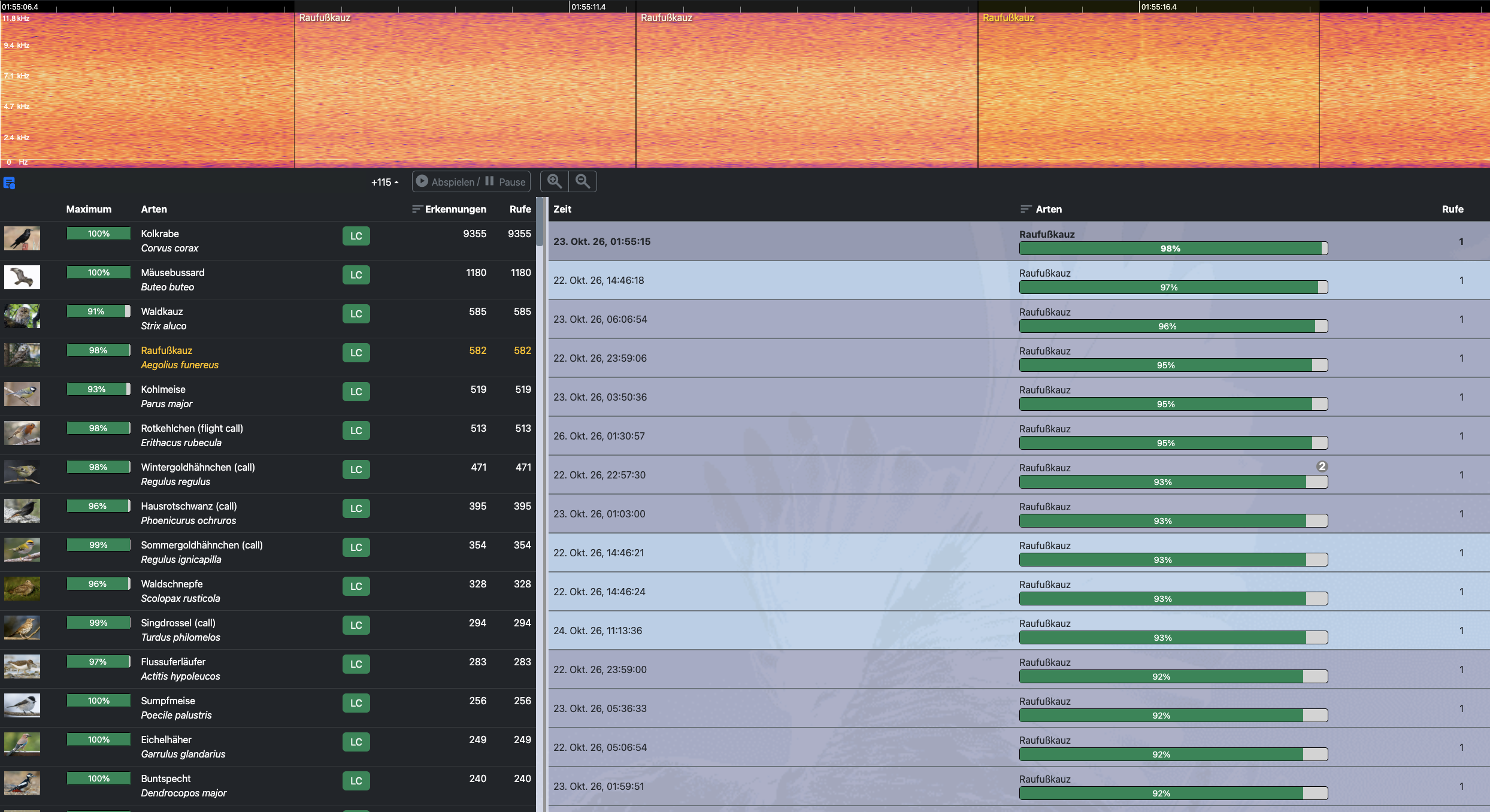
The new analysis shows the Tengmalm's owl (Aegolius funereus) in the species list. On the right are individual, associated events with date and time, and above them the spectrogram. This allows users to see at which points in the recordings the software detects corresponding calls.
The screenshot shows, for example, hits on October 23, 2026, at 1:55:15 a.m. and 6:06:54 a.m. Such temporal reference points help me plan my observations more effectively. They show recorded calling events and do not guarantee that the bird will be visible again at the same time.
The displayed 582 detections do not represent 582 animals. The percentages are also assessments by the analysis software. The significant step in my case was that the acoustic cues led to my own observation with a photo.
A new perspective on my photographic forest
When I explore a forest with my camera, I only ever capture a fragment of it. I arrive at a specific time, follow a particular path, and might hear a call I can't immediately identify. What happens before my arrival or after my departure often remains hidden from me.
This is precisely where the great strength of the Frontier Labs BAR-V2 lies for me. I can record the soundscape of a location and then analyze the files. This allows me to quickly get an overview of which calling species might be present and at what times they make themselves heard.
This is a huge advantage for my photography. I go into an area with more concrete points of reference and can use my time outdoors more consciously. The anticipation begins with the evaluation: What did the forest record while I was away?
My analysis: two owl species in one forest
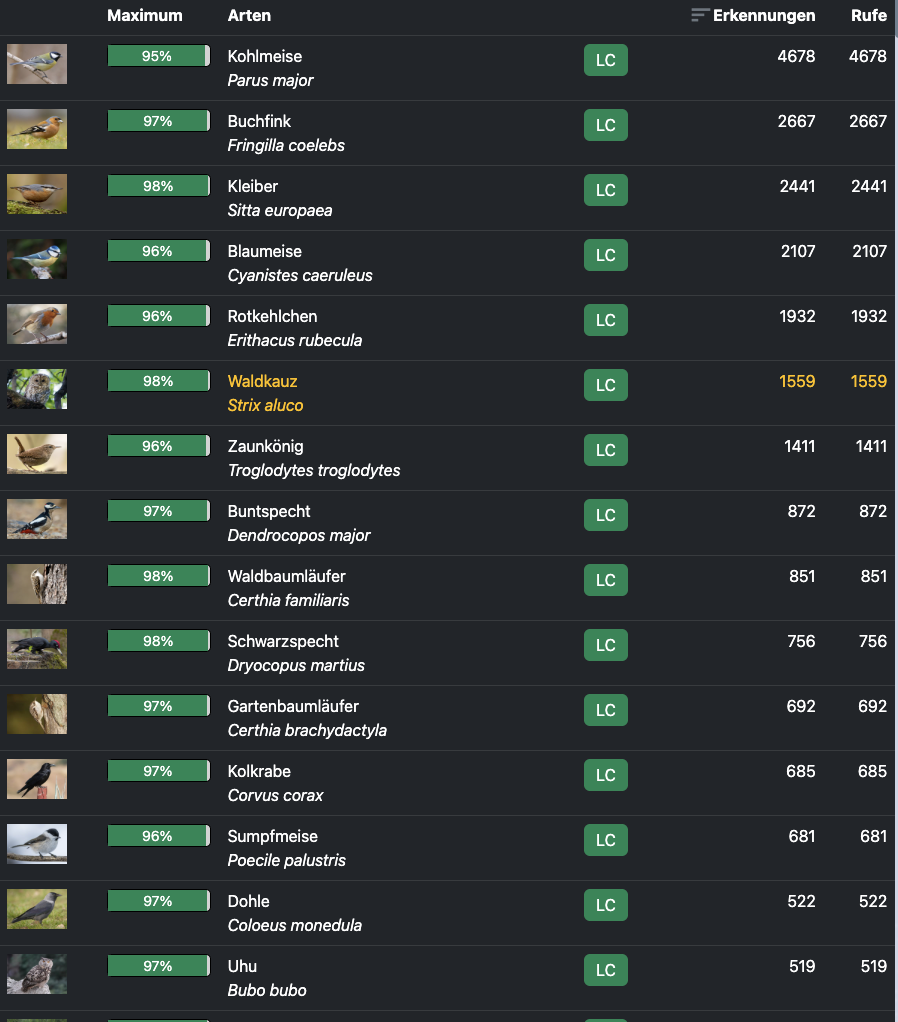
The following image shows the analysis of my sound files. Among common woodland birds like the great tit, chaffinch, nuthatch, and robin are two species that particularly excite me as a photographer: the tawny owl and the eagle owl. Two different owl species in the same surveyed forest—it's precisely these kinds of clues that make this form of exploration so exciting for me.
My overall analysis also includes evidence of the common buzzard. It is not visible in the image shown here; the tawny owl and eagle owl, on the other hand, are clearly identifiable in the list. The recordings thus open up new avenues for observations during the day and at dusk.
What the list actually reveals to me
The list serves as a starting point for me to listen more attentively. Automatic categorization remains a suggestion that I should verify using the recording. I listen to particularly interesting or surprising matches before determining my next steps.
Even high numbers need to be interpreted correctly: The 1,559 detections for tawny owls shown in the screenshot do not mean that 1,559 tawny owls live there. One bird can call multiple times and thus trigger numerous matches. Likewise, a high displayed detection value is not conclusive proof of every single identification.
The BAR-V2 records the sounds; the species list shown is generated during the subsequent analysis of the files. For me, recording and analysis complement each other, forming a tool that allows me to gain a much deeper understanding of a habitat.
Recognizing times and planning photo tours more effectively
At least as interesting to me as the question of species is the question of timing. Using the timestamps of the recordings and the corresponding hits, I can see when specific calls were recorded. The exact times help me to identify recurring time periods.
If several recordings show that a species calls particularly frequently at similar times, I can adjust my observation times accordingly. Instead of simply setting off at some random time, I have a concrete indication of when it might be particularly worthwhile to be attentively present for this species.
This is about the recorded calling activity. A silent animal can also be present and active; many calls don't guarantee a visible photo opportunity. Nevertheless, this temporal insight is extremely valuable to me. The exact temporal distribution is not shown in the excerpt of the species list.
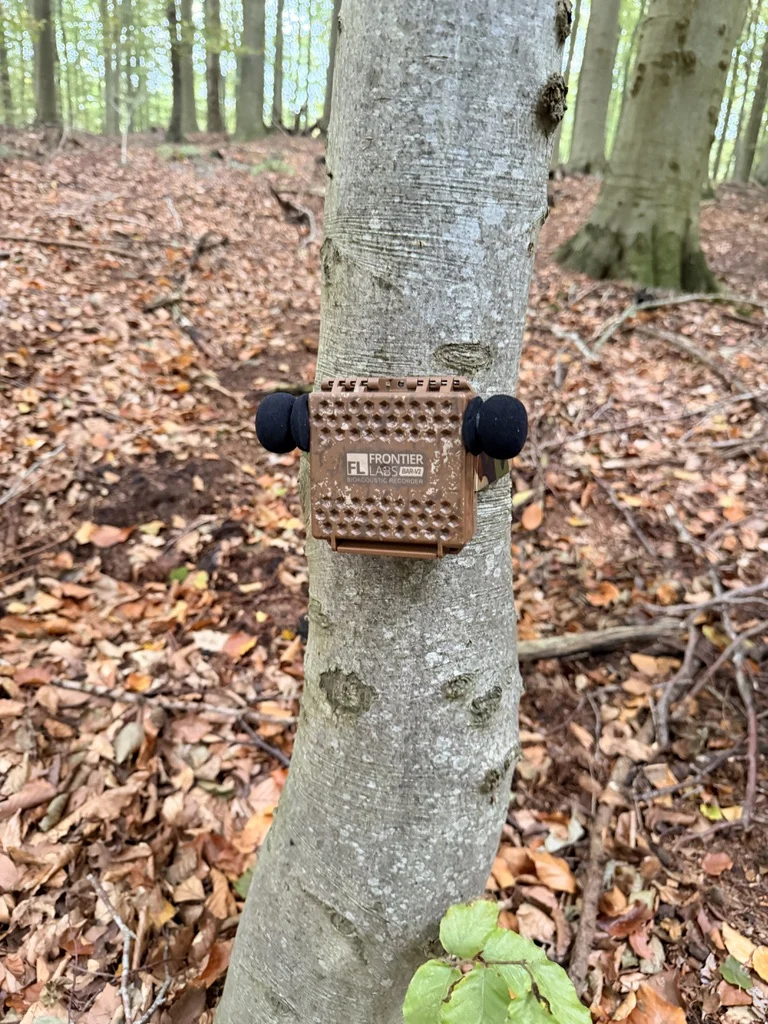
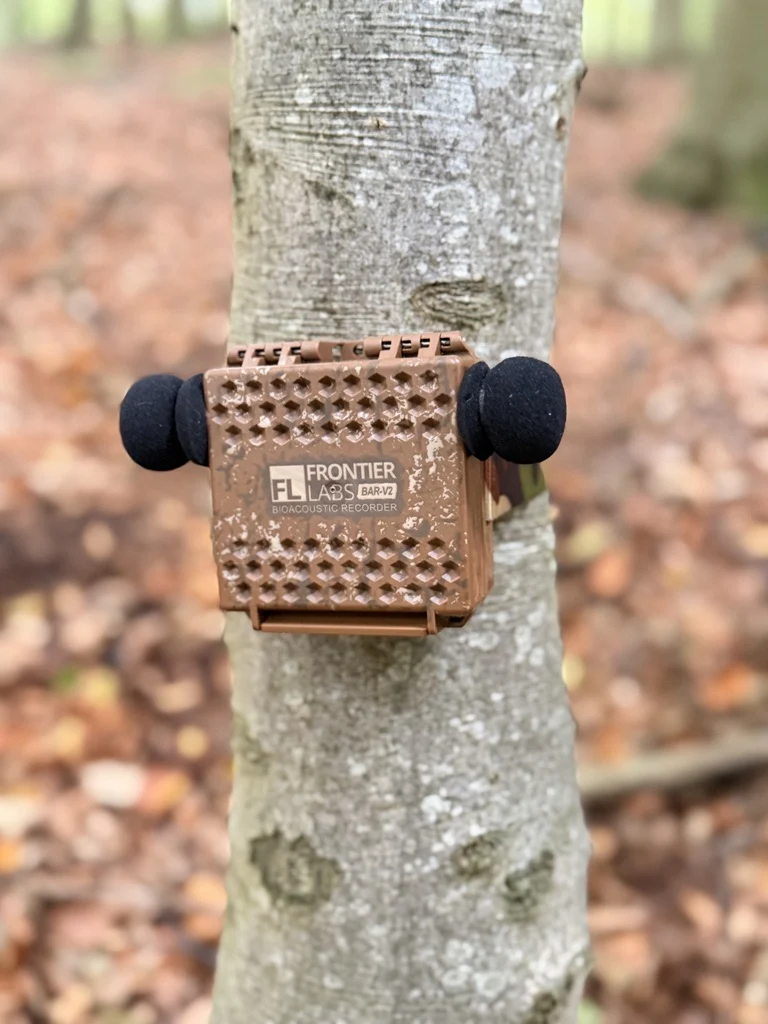
Mounted on the tree and right in the middle of things
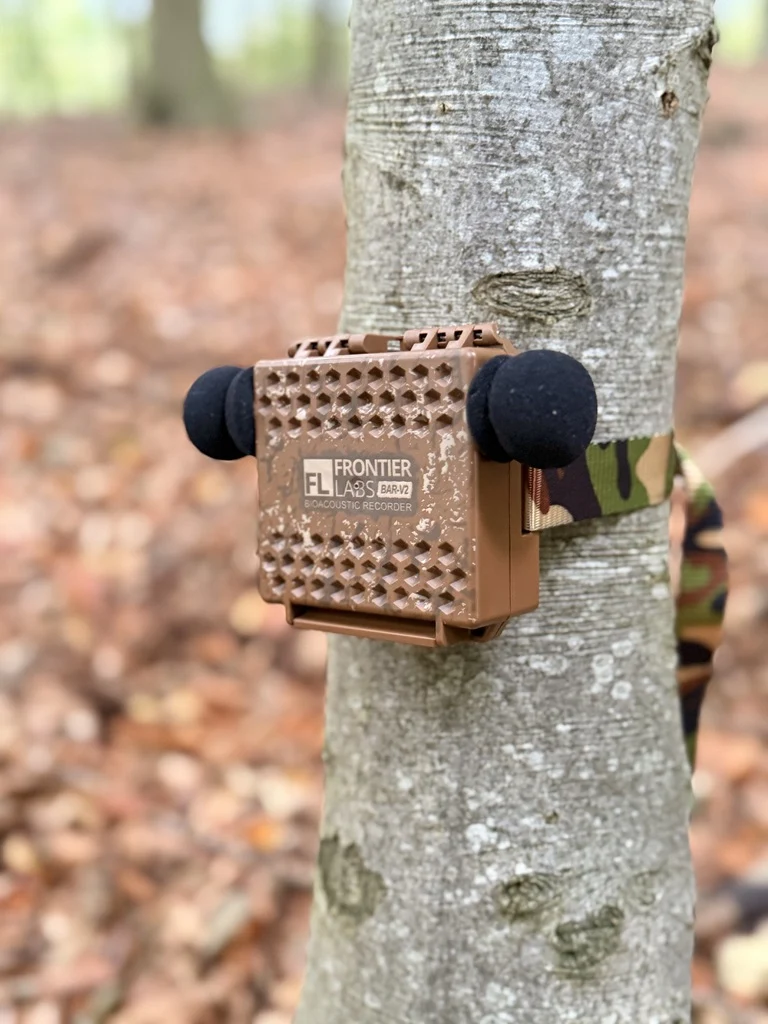
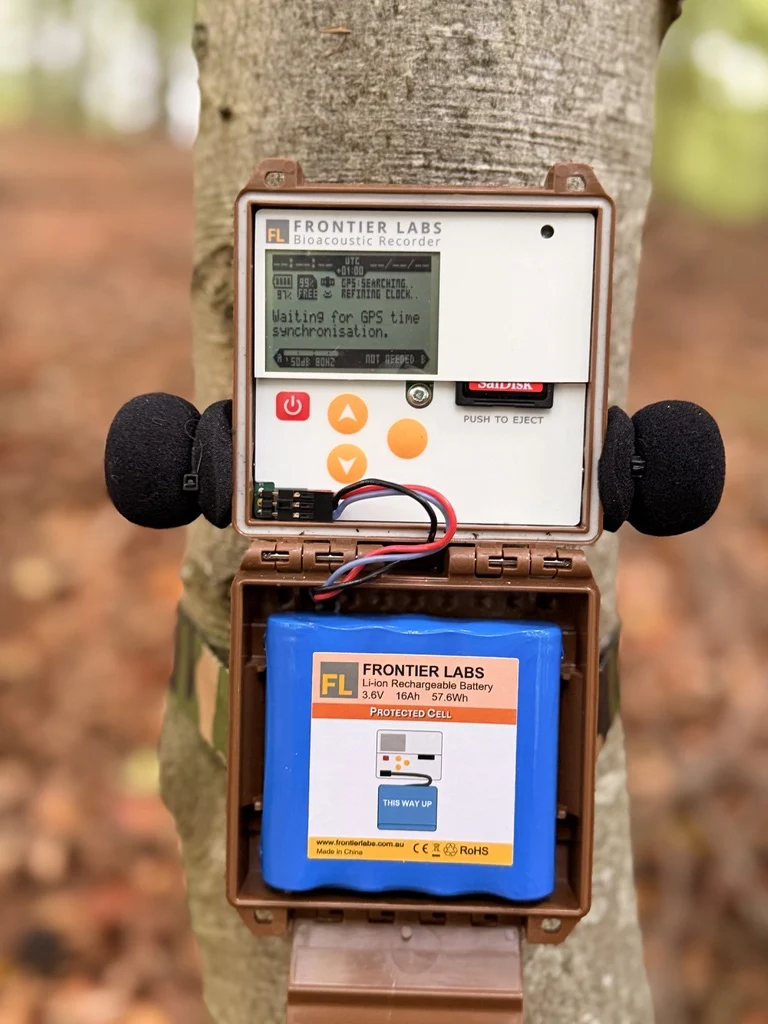
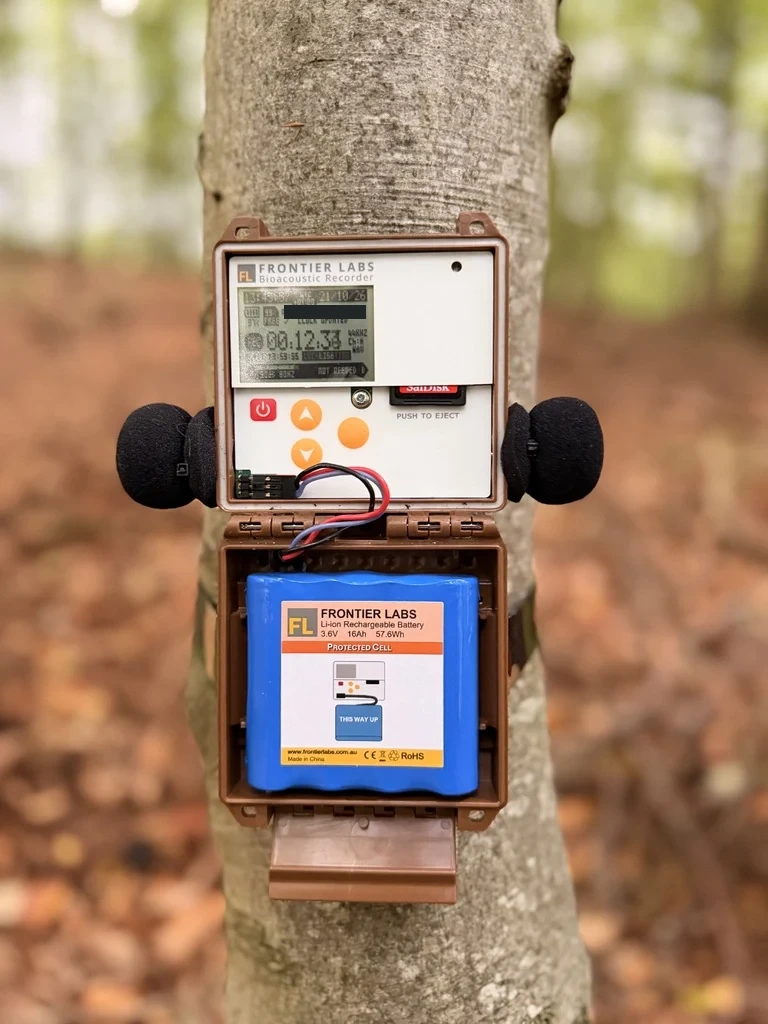
In my pictures, the recorder hangs from the tree with a strap. The brown housing blends unobtrusively into the surroundings, and the two microphones protrude from the sides. I particularly like the compact design: The device can be easily placed in a chosen location.
I choose the spot so that the microphones remain unobstructed and no branches or loose objects directly hit them. A quiet location helps with later analysis, because wind, rustling leaves, and other ambient noises also end up in the files.
Two microphones and a look inside the housing
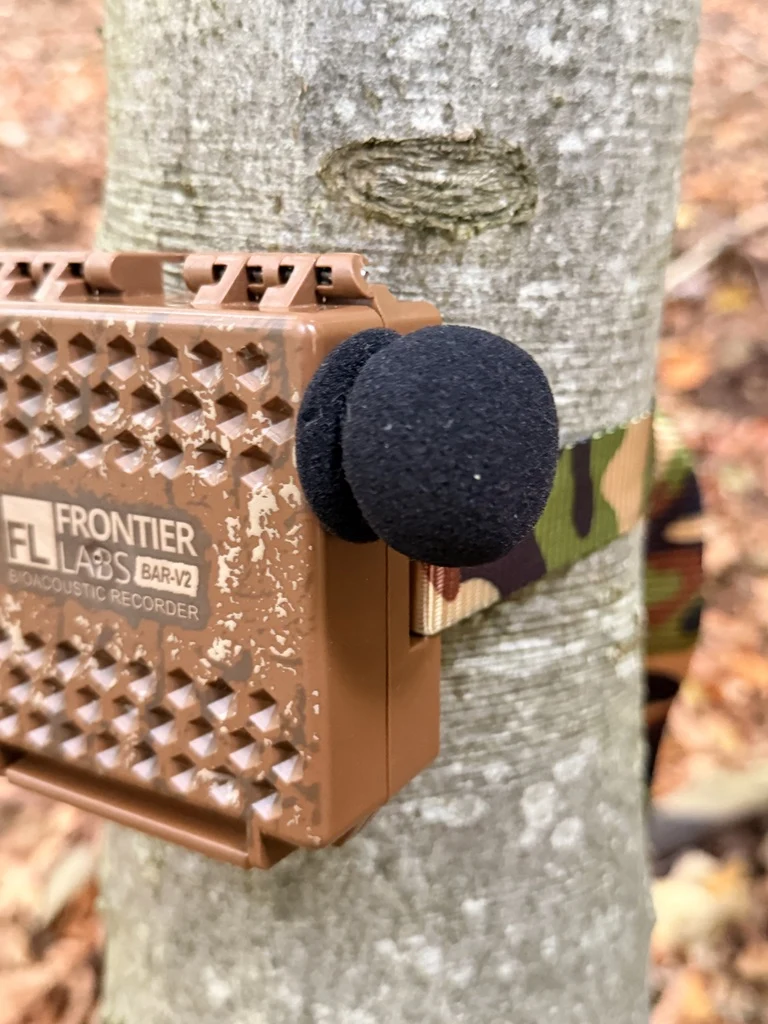
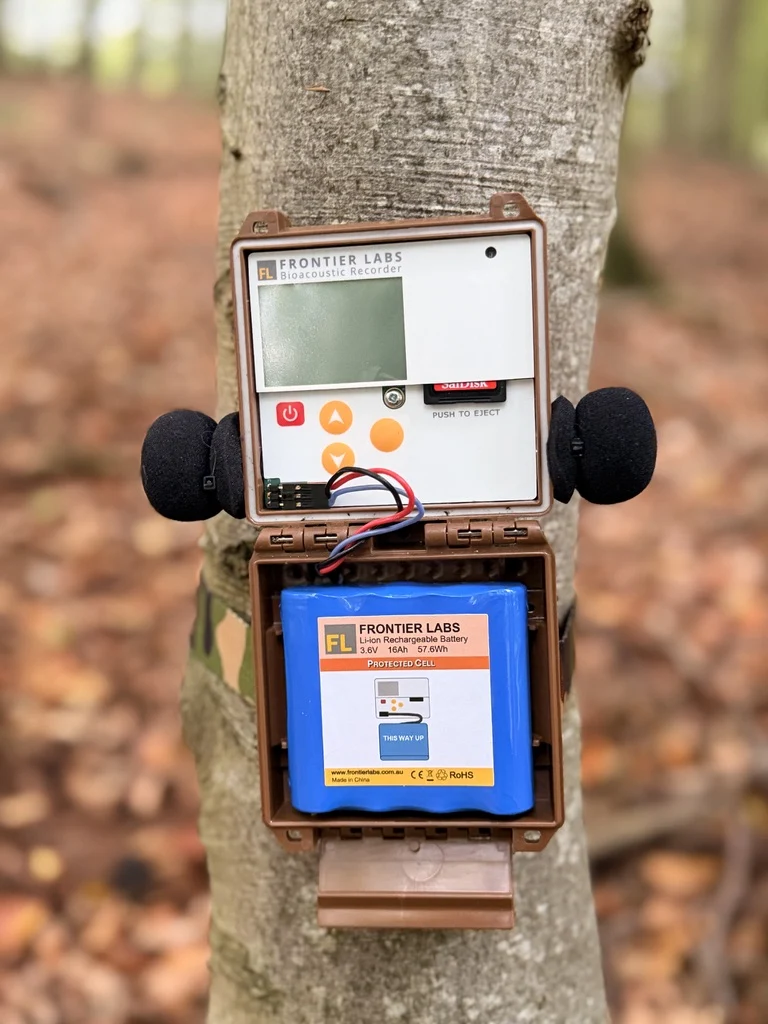
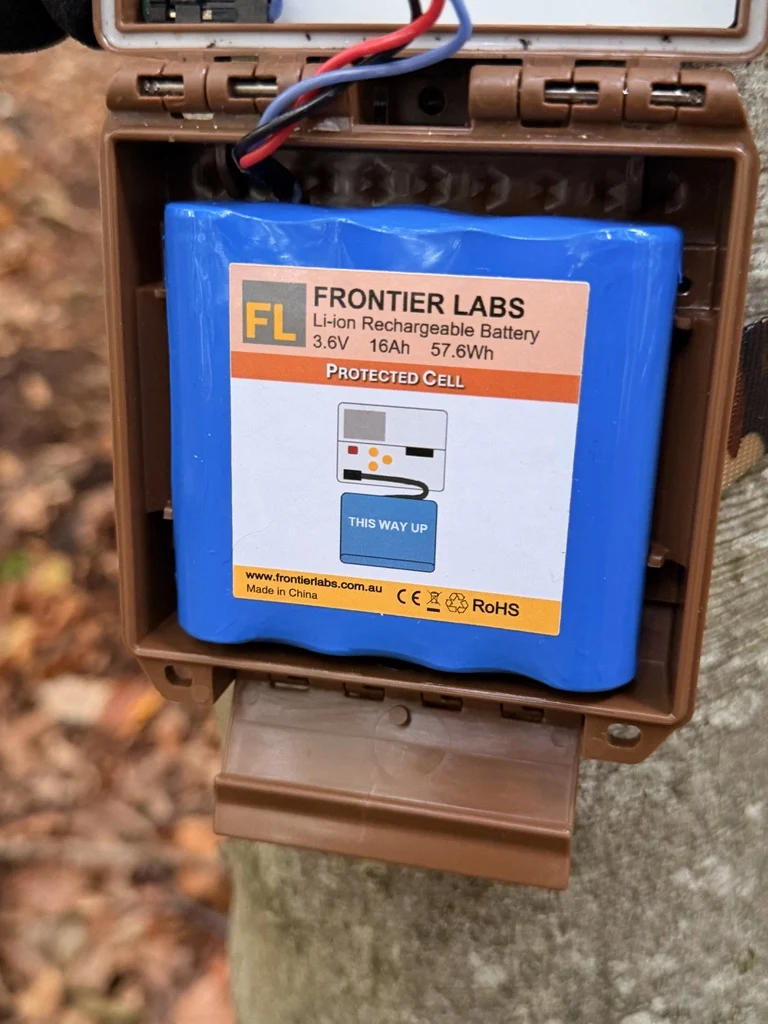
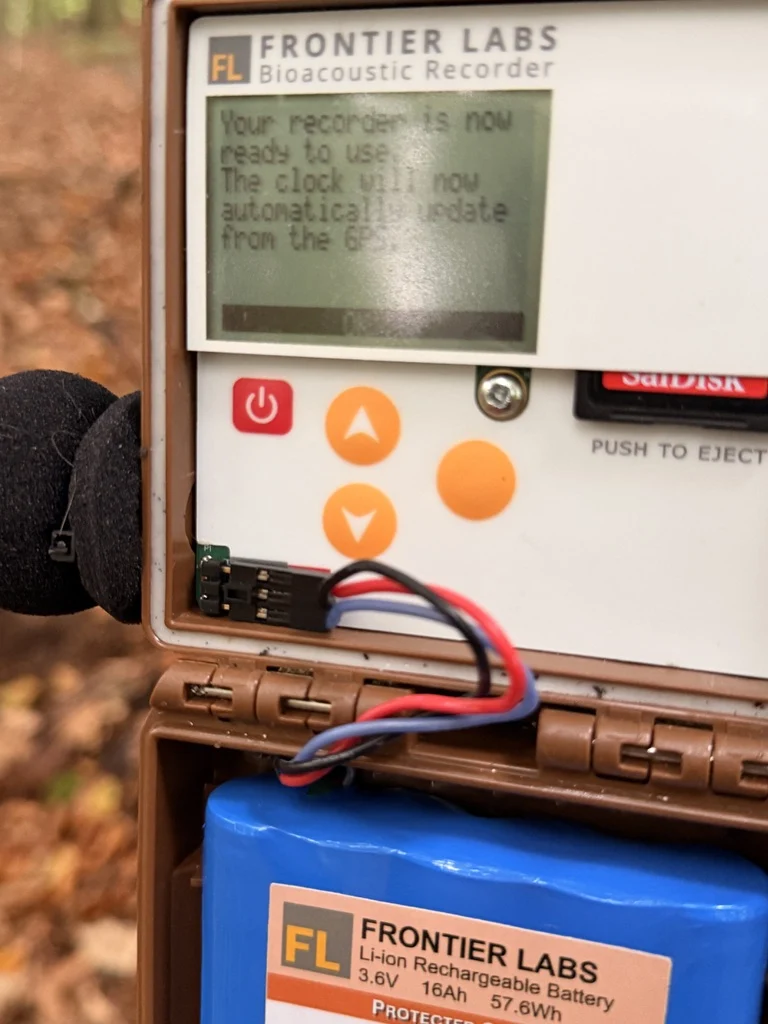
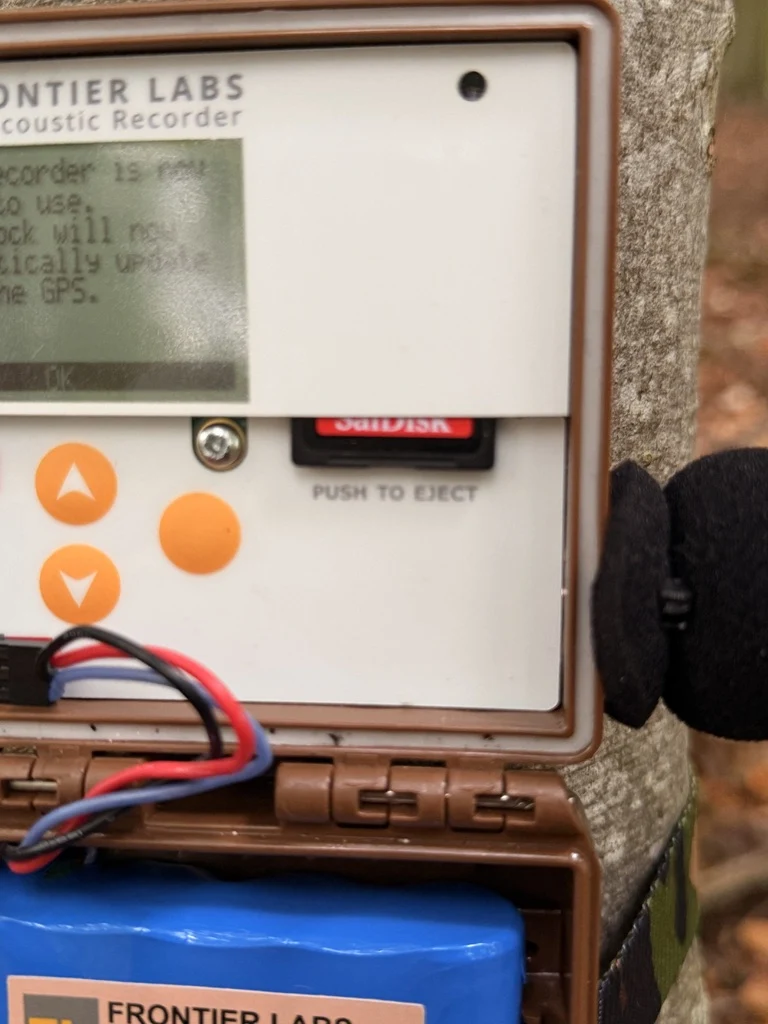
The side microphones with their black windscreens define the appearance. Inside, I find the display, control buttons, SD card slot, and battery. It's particularly convenient during setup to be able to read the device status directly on the display.
The photos also show the surrounding seal. When closing, I make sure the edge is clean and that no cables are pinched. After setup, the device should continue to work reliably at its location.
Power supply for longer recording phases
My device is equipped with a rechargeable lithium-ion battery pack in the pictures. Its label states 3.6 V, 16 Ah and 57.6 Wh. For my purposes, it's important that I check the charge level and available storage before deployment and that the recording program matches the planned time period.
How long a deployment is actually possible depends, among other things, on the recording plan and the selected settings. The maximum manufacturer's specification is therefore not a runtime I have measured. For planning my observations, it is important that the power supply, memory, and schedule are compatible.
GPS time: important for my later analysis
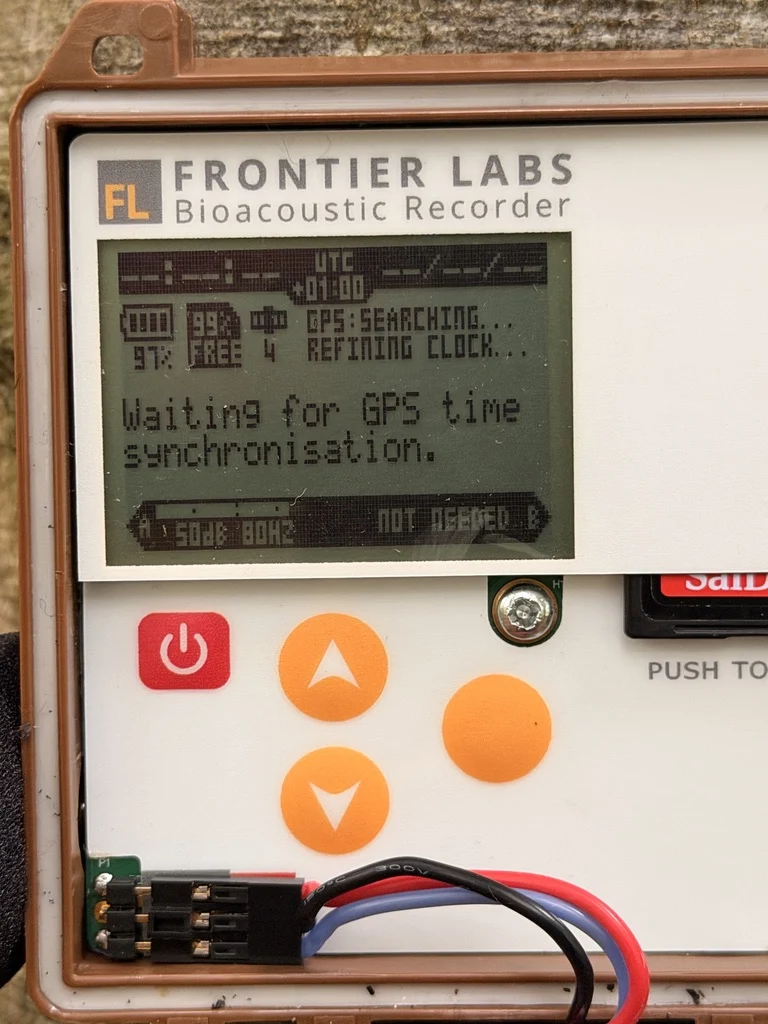
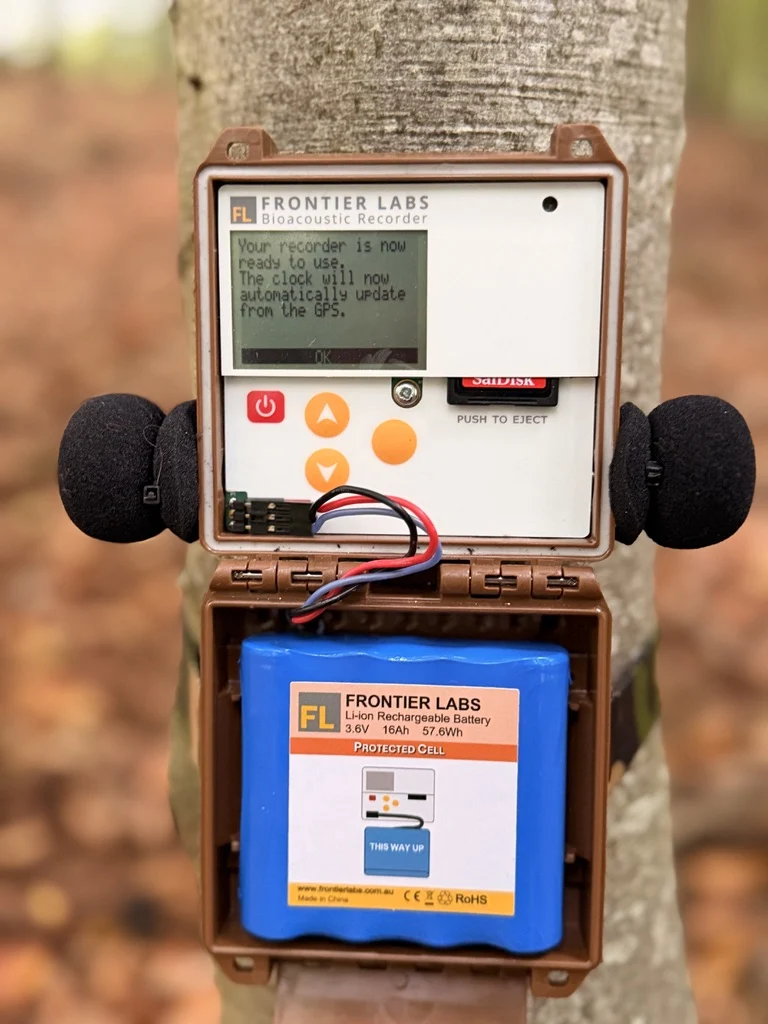
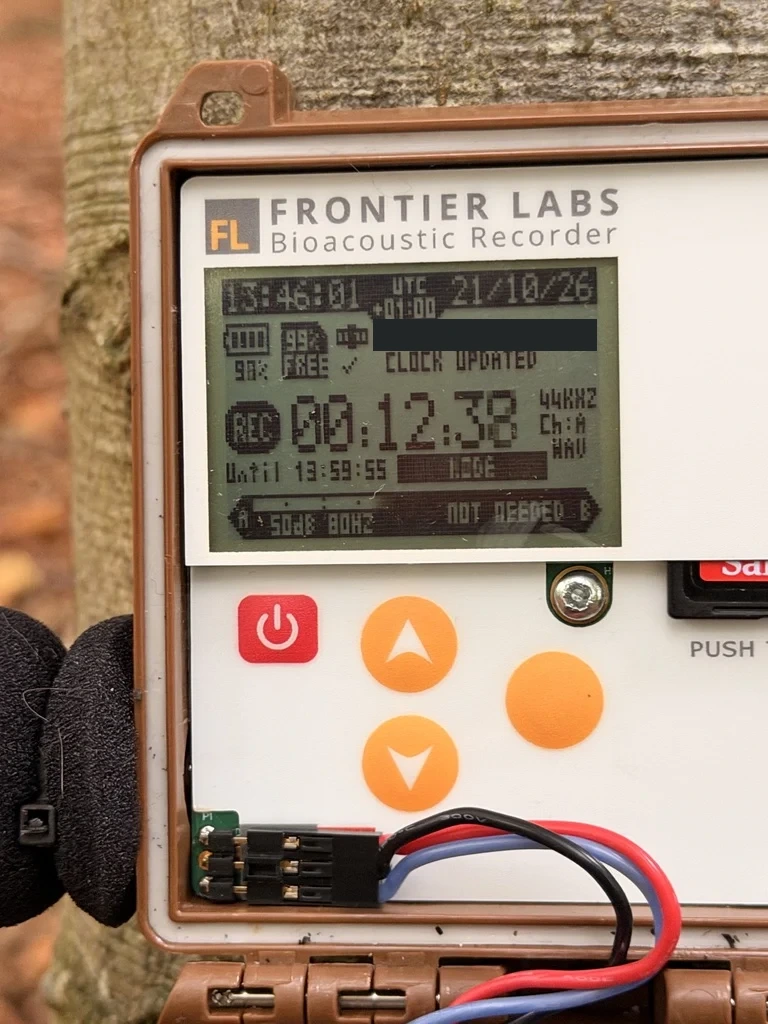
The setup process can be seen in my display photos: First, the device waits for GPS time synchronization; later, it reports the updated clock and displays a recording in progress. For my purposes, the correct timing is particularly important.
If I later want to compare call events with my visit time in the forest, the times must match. Therefore, during the analysis, I also pay attention to which time zone is displayed and whether daylight saving time or standard time is taken into account.
Things to consider
The process also involves time spent at the computer. Recordings need to be backed up, analyzed, and interesting results reviewed. For me, this effort is worthwhile because it provides me with concrete ideas for my photography.
Furthermore, a recording only shows what was audible at the location. Distance, weather, and background noise affect the result. Therefore, no detection does not automatically mean that a species is missing from the forest.
I use the information for quiet observations from a distance. Especially with owls, I want to better understand their habitat without disturbing the animals by stalking them or playing recordings of their calls.
Technical features at a glance
| feature | Frontier Labs BAR-V2 |
|---|---|
| Recording | Two interchangeable omnidirectional microphones; 16-bit WAV or FLAC |
| Sampling rates | 8 to 96 kHz |
| memory | One SD card slot, up to 1 TB |
| Time and location | GPS for time synchronization and location tracking |
| Admission planning | Schedules, including those relating to sunrise and sunset |
| power supply | Lithium battery pack or four AA alkaline batteries |
| Recording duration | Up to 800 hours according to the manufacturer with lithium battery pack; no independent runtime measurement. |
| Weight | 360 g including battery pack and microphones according to the manufacturer |
Technical specifications according to the Frontier Labs BAR-V2 product pageAccessed on October 21, 2026. My assessment refers to its usefulness for my photography and the demonstrated application. The species list is derived from the subsequent sound analysis.
MY CONCLUSION
A huge benefit for my photography.
The Frontier Labs BAR-V2 has completely transformed how I prepare for a day of photography. I can learn about a forest through its sounds and receive clues that I would easily have missed on a brief visit. My highlight so far has been the Tengmalm's owl: thanks to the device, I was able to find and even photograph it. Given its rarity in Schleswig-Holstein, this encounter is truly special for me.
The connection between species and time is particularly valuable: Which calls were recorded, and when? This allows me to plan my next trips more effectively. It doesn't replace patience in the field, but it provides an additional basis for my search.
I'm thrilled with this device. It's a huge asset for my wildlife photography – and personally, a dream come true.
From the recorded call to my Tengmalm's owl photo: The BAR-V2 enabled me to have an encounter I will not forget.