TESTS & EXPERIENCES
Leofoto MPG-01 and MPC-366C: A Real-World Test
A monopod I finally truly enjoy using with a heavy telephoto lens
The Leofoto MPG-01 has fundamentally changed how I work with a monopod: instead of constantly moving the entire support back and forth, I can follow my subject smoothly and precisely using the head.
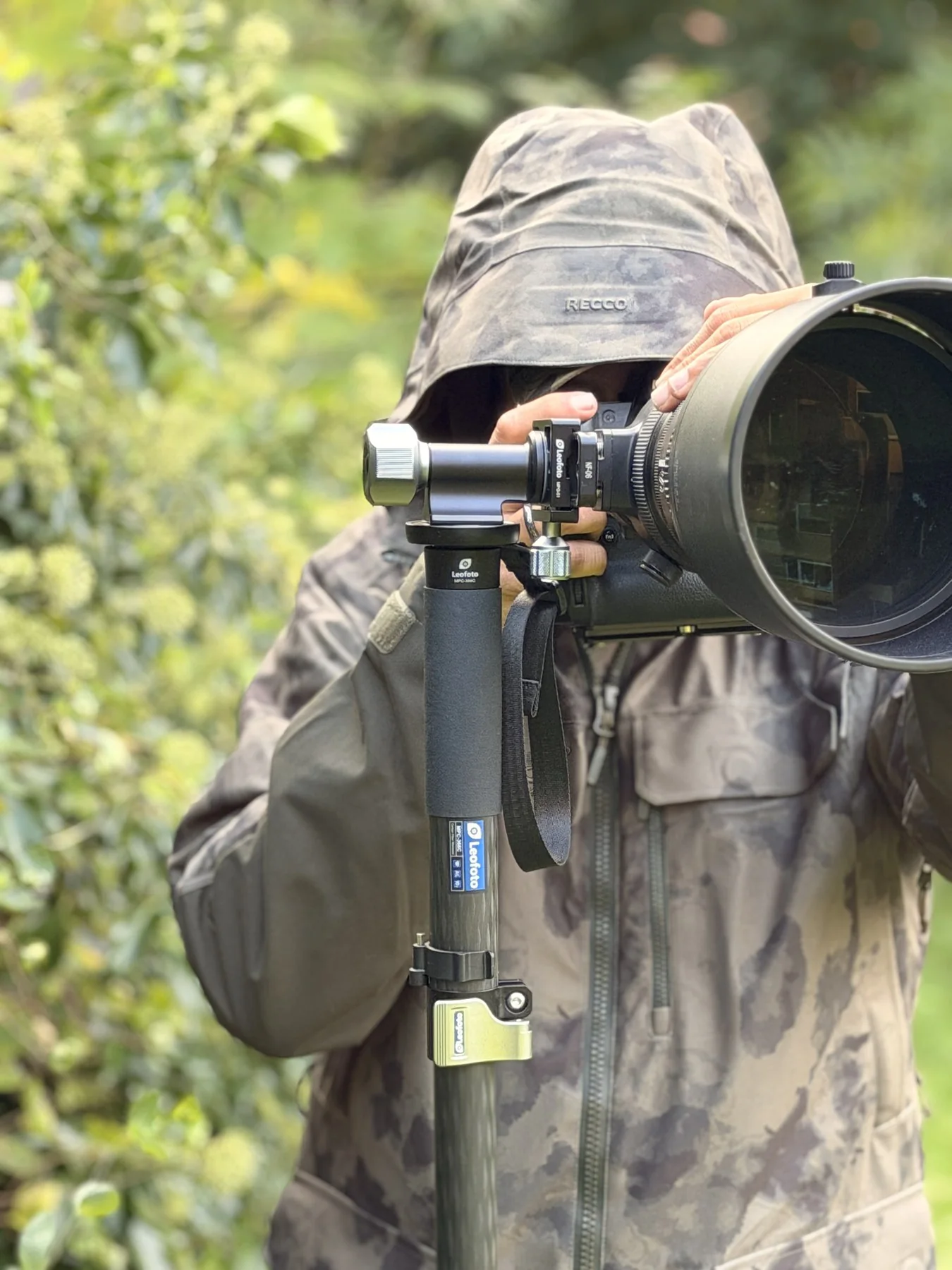
Monopods are ideal for large, heavy telephoto lenses: they take the strain off your arms and shoulders, are quick to set up and require far less space than a tripod. Even so, I never entirely enjoyed using them. Stability was not the problem; movement was. Whenever I wanted to follow an animal upwards or downwards, I often had to tilt and reposition the entire monopod.
With the Leofoto MPG-01 on the MPC-366C carbon monopod the experience is different. The head gives the camera exactly the freedom of movement I had been missing from a conventional monopod. To me, that is the defining feature of this system.
The MPG-01 makes the difference
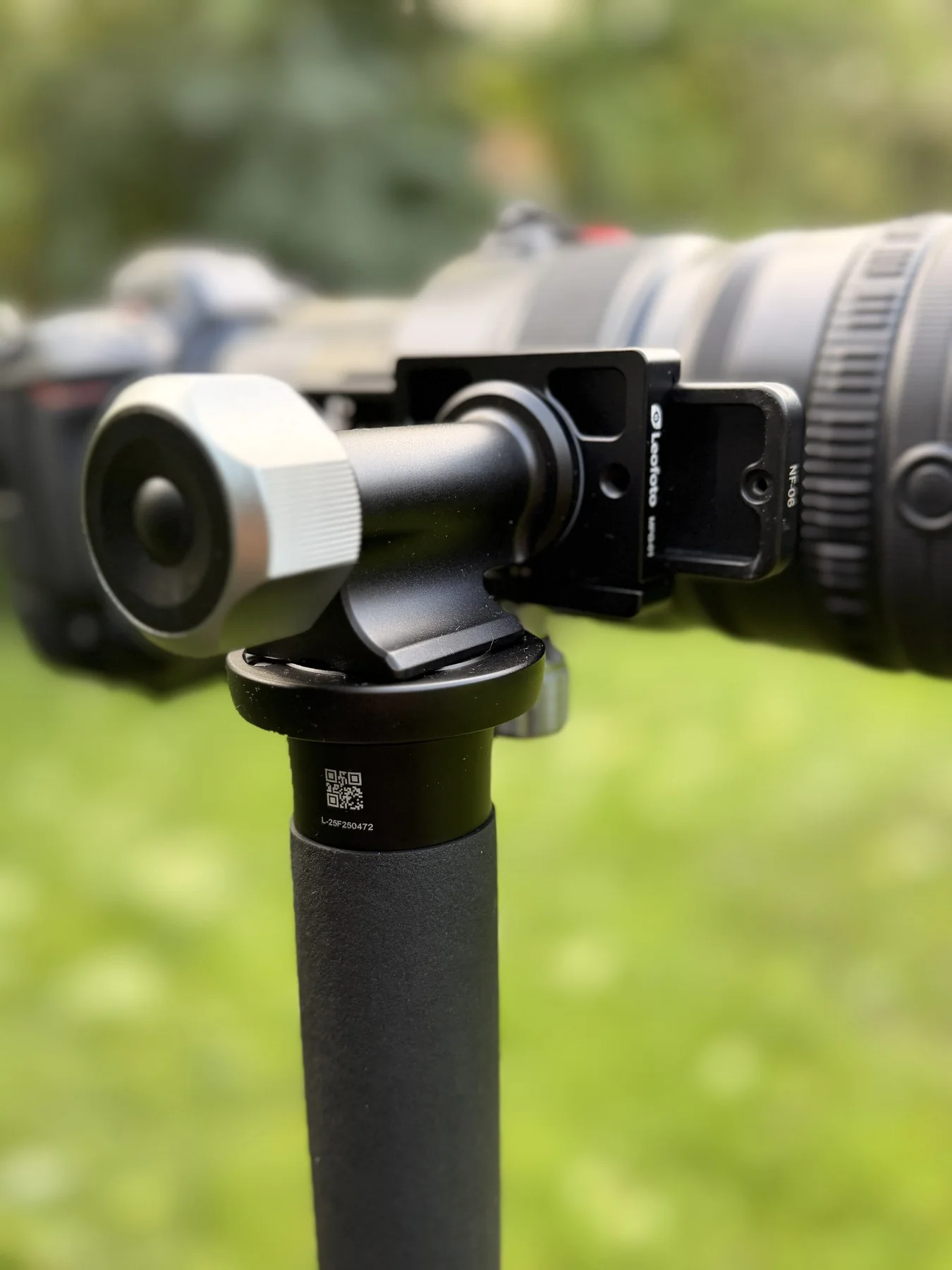
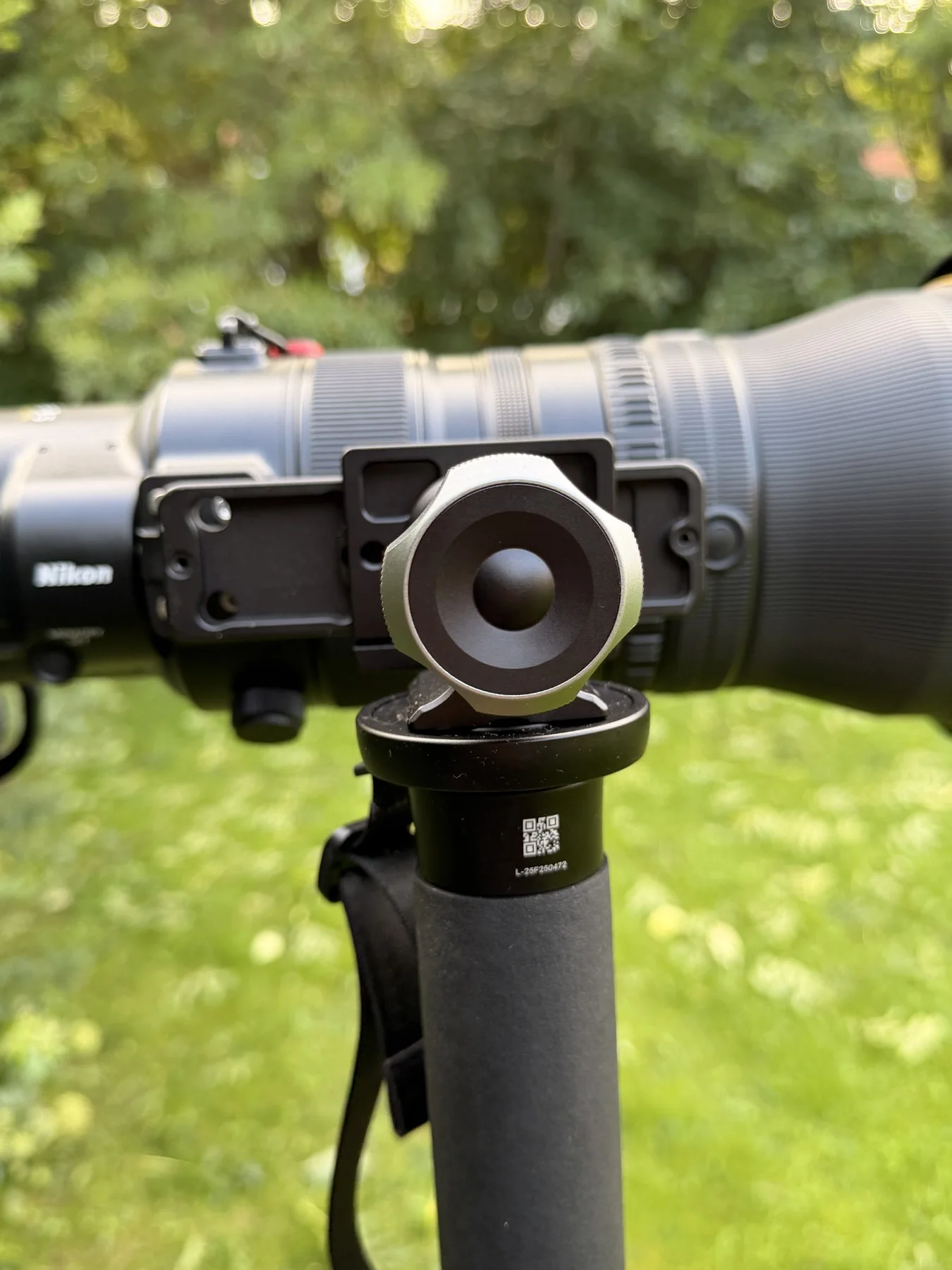
The side-mounted monopod head accepts Arca-Swiss lens feet and plates. Its vertical tilt axis offers a full range of movement. In practice, the monopod can remain planted on its foot while I guide the lens upwards or downwards. For horizontal movement, I rotate the monopod smoothly around its own axis.
This combination creates a natural two-way feel. I can follow birds, mammals or other moving subjects without tilting the entire system forwards and backwards each time. Movement is smooth, direct and surprisingly intuitive.
Convincing with a heavy telephoto lens
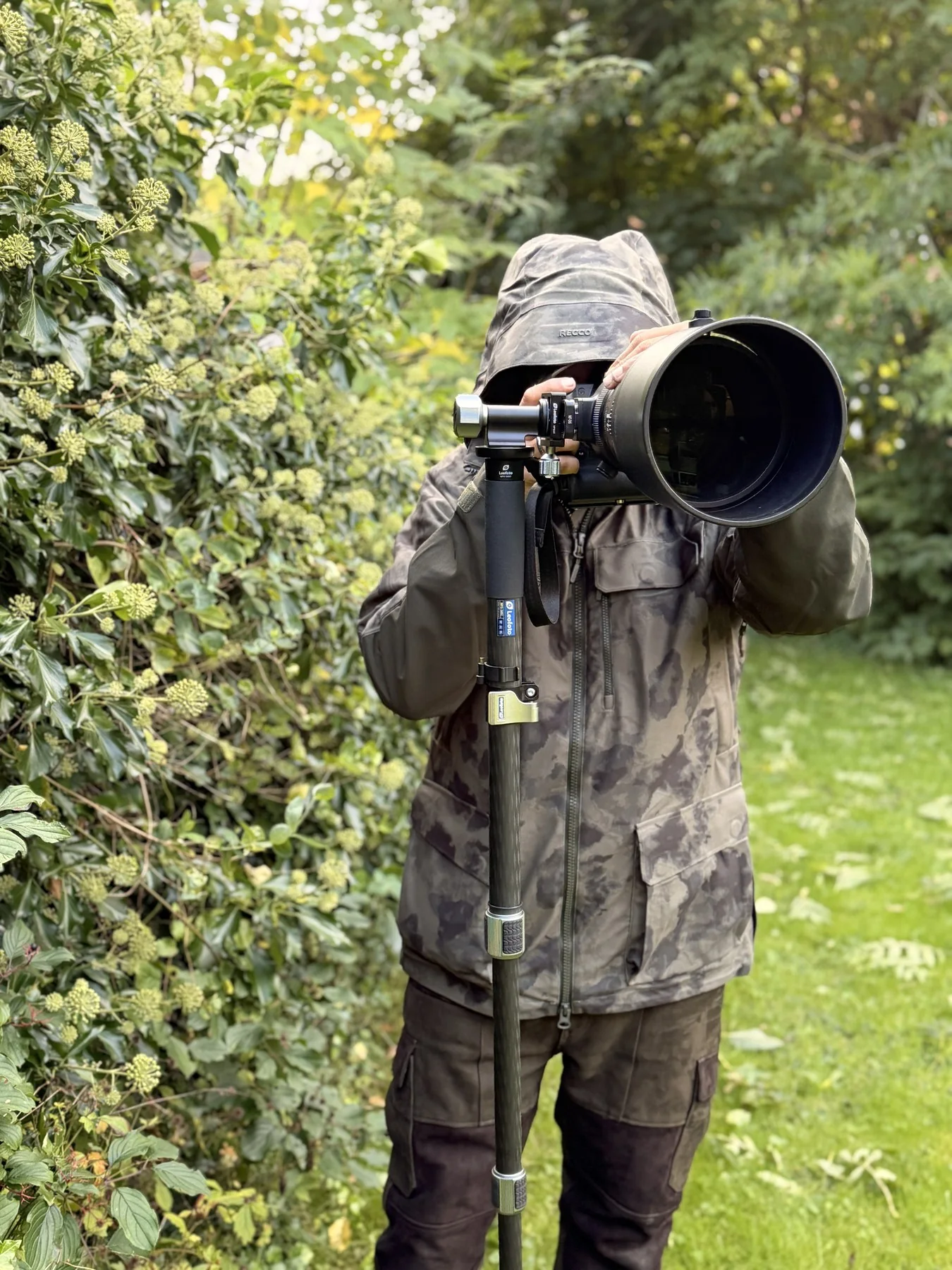
The advantage becomes especially clear with a large telephoto lens. The monopod reliably carries the weight while I can still aim the camera quickly. My left hand stays on the lens, my right on the camera, and the head follows the movement without forcing me to fight a rigid system.
For me, this is not only more comfortable but also more precise. If an animal changes position or a bird perches higher in the branches, I can fine-tune the framing. At the same time, I retain the compact working style of a monopod—an important advantage in confined spots, between bushes or on narrow paths.
Secure clamping and easy handling
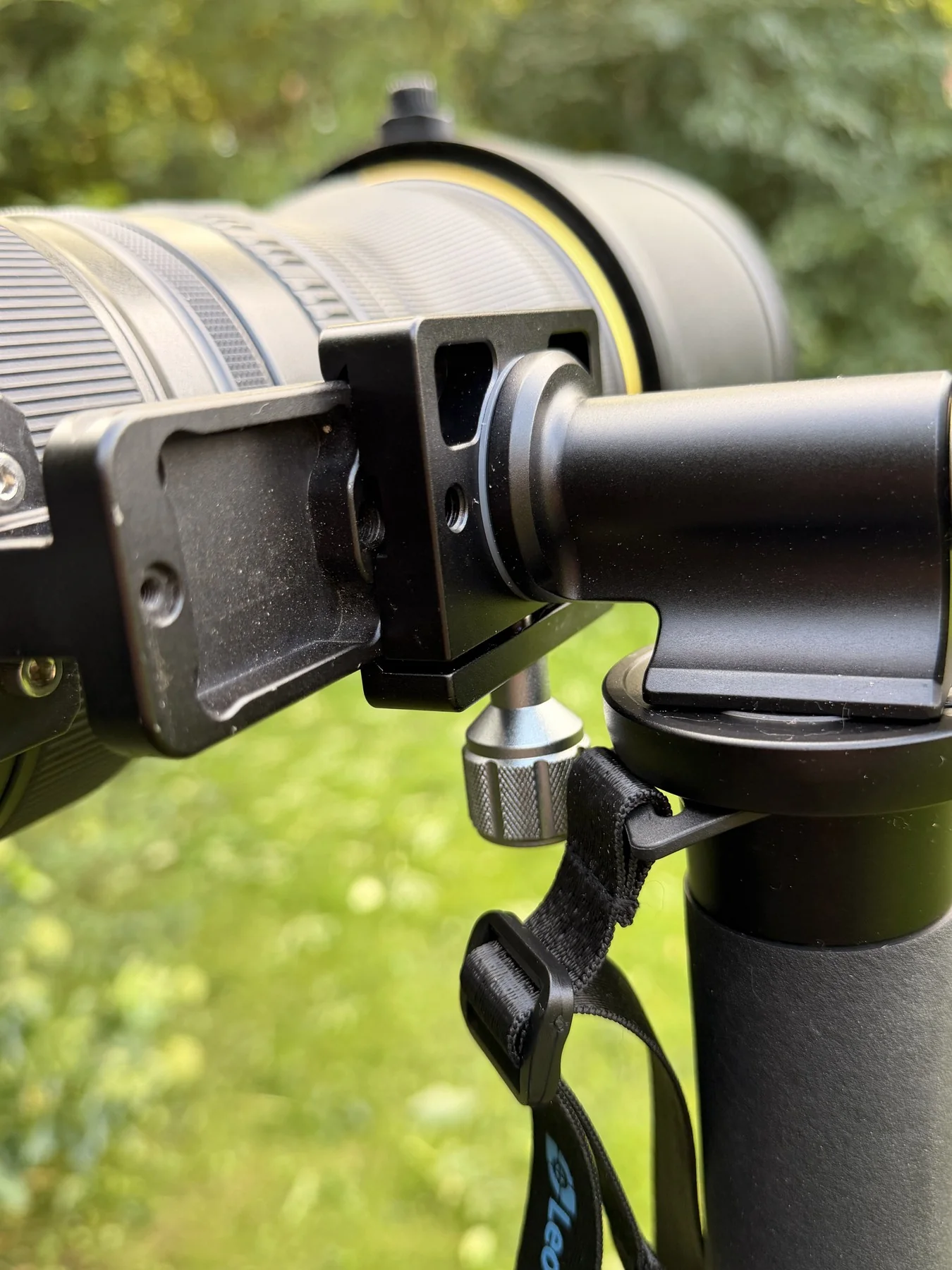
The MPG-01 version uses a conventional screw clamp, allowing the lens foot to be secured firmly and with control. The large, grippy controls are easy to reach and remain safe to operate with cold hands. According to Leofoto, the head is made from an aluminium alloy; its fixed Arca clamp is not removable.
The model designation MPG-01 can be seen in my photographs. Leofoto also offers versions in this series with a lever clamp. My field impressions refer to the screw-clamp version shown here.
The MPC-366C: quick height changes and precise adjustment
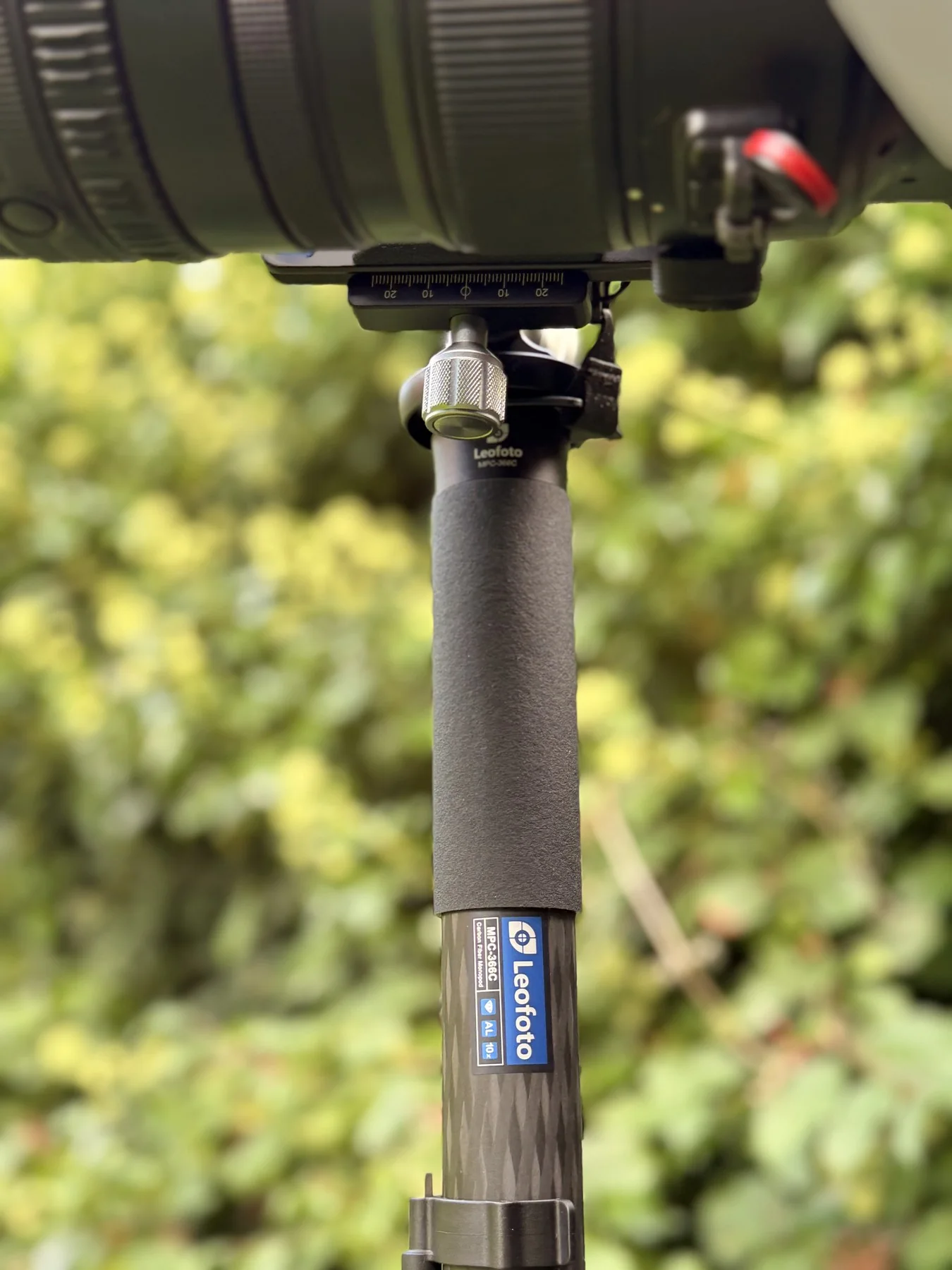
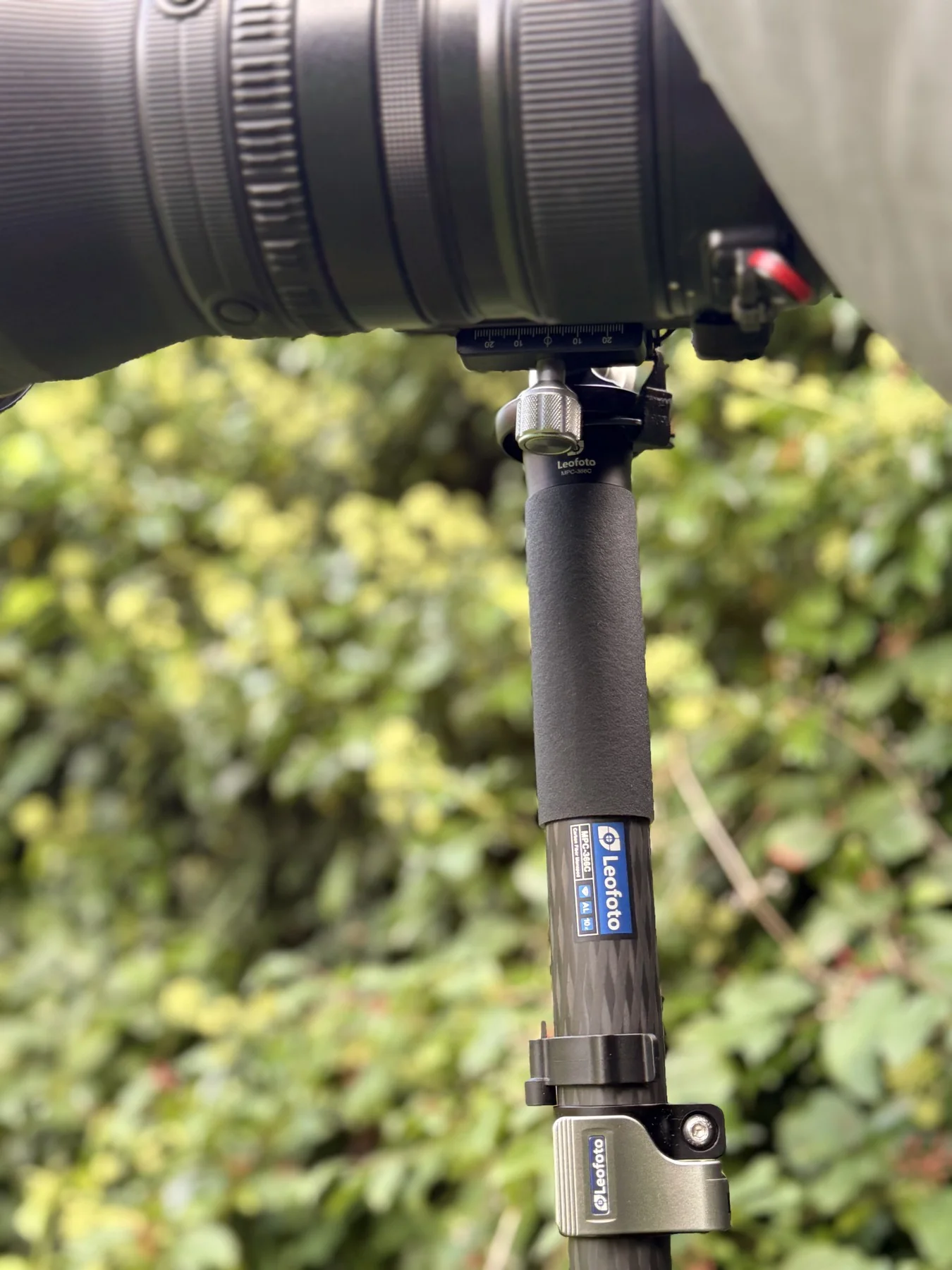
The MPC-366C is a six-section carbon monopod. Its distinctive feature is the combination of a flip lock and twist locks. The lever lets me change the overall height quickly, while the twist locks provide finer adjustment and a compact packed size.
This handling suits wildlife photography well. When my position changes quickly, I can react immediately. Smaller corrections do not require readjusting the entire monopod. The generous foam grip is comfortable, and the wrist strap adds security while carrying it.
Made for outdoor use
Leofoto equips the MPC-366C with water-resistant twist locks. A rubber foot and spike are included, allowing the monopod to adapt to different surfaces. The reversible top stud provides either a 1/4-inch or 3/8-inch thread.
In use, the combination feels high-quality and appropriately sized. The carbon tube saves weight without making the system feel delicate. With the large telephoto lens, I felt well supported at all times.
What I particularly like
The MPG-01 is the clear highlight for me. It solves exactly the problem that had always bothered me about monopods. I can follow the subject without constantly moving the support back and forth. This lets me work more calmly, remain mobile and concentrate more fully on the animal and the right moment.
I also like the MPC-366C's quick height adjustment. Together, they create a system that combines the support of a monopod with freedom of movement much closer to that of a large telephoto head.
What you should know
A monopod remains a monopod: it does not stand on its own and must always be held securely with heavy equipment. Horizontal movement still comes from rotating the monopod. The head primarily handles vertical tilt—but that is exactly where I see the greatest practical benefit.
Technical features at a glance
| Product | Key features |
|---|---|
| Leofoto MPG-01 | Aluminium-alloy monopod head · vertical tilt axis with 360° range of movement · fixed screw-lock Arca clamp · 3/8″-16 mount |
| Leofoto MPC-366C | Six-section carbon monopod · flip lock plus twist locks · water-resistant locking system · interchangeable rubber and spike feet · reversible 1/4″-20 / 3/8″-16 mount |
Technical specifications are based on information from Leofoto. The assessment reflects my personal field experience with a heavy telephoto lens.
Questions about the Leofoto MPG-01 and MPC-366C
What does the MPG-01 offer compared to a rigidly mounted lens?
The head allows the lens to be tilted vertically while the monopod can remain standing on its base. This is exactly what improves handling for me: I don't have to constantly tilt the entire monopod to make changes up or down.
How do I track the subject horizontally?
In my setup, the horizontal movement is created by the controlled rotation of the monopod around its axis. The MPG-01 handles the vertical tilt. This distribution of tasks is more important for understanding the system than the expectation of a freely pivoting tripod head.
Does the test refer to the MPG-01 or a lever clamp variant?
I tested the MPG-01 with the screw clamp shown in my photographs. This is not a hands-on review of other versions in the range. Check the exact model designation and clamp type before buying.
Can I release a heavy telephoto lens on the monopod?
A monopod does not stand independently with this equipment. It must be held and guided safely. The system relieves the burden when taking photos, but does not replace a free-standing tripod for situations in which the equipment needs to stand without support.
Monopod or tripod: suitable additional test reports
If you are looking for a tripod solution instead of a monopod, you will find my experiences with the gimbal, fluid head and FlexShooter here. These are additional operational reports, not a joint stress test of the systems.
The concrete change compared to my previous one-leg
For me, the difference is vertical movement: I used to have to tilt the entire monopod more often to frame higher or lower. With the MPG-01, I can make this adjustment using the tripod head. For horizontal movement, I still rotate the monopod around its axis.
Why I like using the monopod with it
With the MPG-01 I finally really enjoy using my monopod. I can move the lens up and down without having to constantly tilt the entire monopod. This mobility is the decisive advantage for me; I continue to guide the combination from the side by turning the monopod.
Gimbal, fluid head or FlexShooter for heavy telephoto lenses? ↗
MY CONCLUSION
Finally, a monopod I truly enjoy using
The MPC-366C supports heavy equipment reliably and adjusts quickly to my working height. For me, however, the real star is the MPG-01: it gives the monopod exactly the freedom of movement I had been missing.
Instead of constantly tilting and repositioning the entire support, I can track smoothly with the lens. That is an enormous advantage for my wildlife photography. I was genuinely impressed by this combination.
The MPG-01 turns a good monopod into a tool that finally lets me move heavy telephoto lenses smoothly and intuitively.